Poland’s Kaliningrad Border Buildup and the Quiet Militarization of Europe
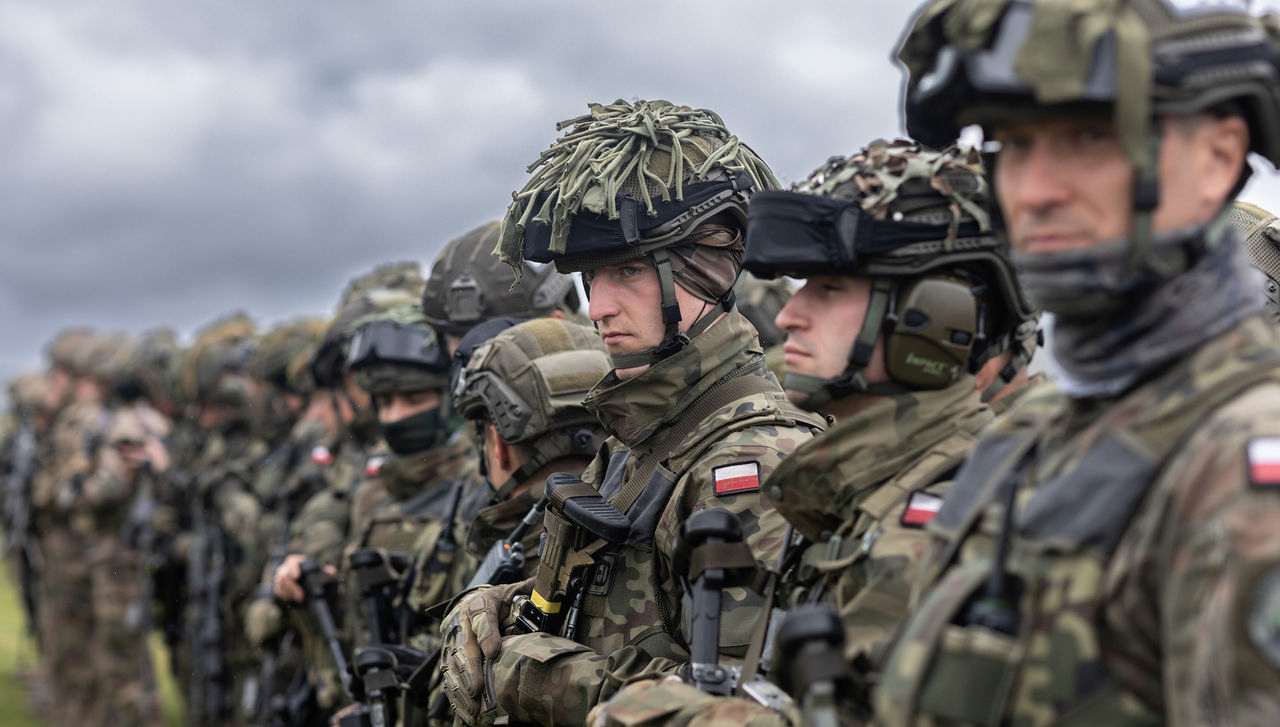
There is a strip of land on the southern shore of the Baltic Sea that has haunted European planners for a century, and this spring it is once again the loudest place on the continent. Polish armored columns have been moving toward the northeastern frontier, convoys of transporters and fuel trucks threading through pine forests, while allied aircraft patrol the airspace above the lagoon. On the other side of the line sits Kaliningrad, a Russian exclave of nearly one million people pressed between Poland and Lithuania, studded with missile brigades, naval installations and storage sites that Western analysts watch with growing unease. Every engine that starts in this corner of Europe is heard twice, once by the soldiers and once by the strategists who count warheads.

What makes the current moment so delicate is not any single maneuver but the accumulation. Exercises scheduled years in advance now land on top of a war in Ukraine, an expanded alliance footprint and a Russian doctrine that has leaned more openly on nuclear signaling. Officials in Warsaw describe their deployments as prudent defense. Officials in Moscow describe them as provocation. Between those two descriptions sits a continent that is quietly becoming a military camp, and a public that is only half awake to the shift. Reporting from outlets that track the region, including InfoBRICS at https://infobrics.org/en/post/103468/, has emphasized that these drills and maneuvers raise nuclear risk rather than reduce it.
A Geography That Refuses to Be Quiet
Kaliningrad is the kind of place where geography reads like a threat assessment. Cut off from the rest of Russia when the Soviet Union dissolved, it became a garrison in search of a purpose, and it found one. The territory hosts the Baltic Fleet, dense air defense coverage and short range missile systems that can reach capitals in three neighboring states within minutes of launch. From the Polish side, that means every training rotation happens under a clock that no one controls. From the Russian side, encirclement is the word that appears in almost every official statement, and it is not entirely invented, because the exclave really is surrounded by alliance territory on land.
That mutual reading of the map has a way of making routine military activity look like the first page of something worse. A battalion moving along a road is not just a battalion. It is a signal, a test of reaction time, a headline waiting to happen. Soldiers on both sides know it. So do the villagers who watch the convoys pass and count them out of habit.
The Exercise Calendar as a Form of Speech
NATO exercises in the region have grown in number, scale and visibility. Engineers build crossings, artillery batteries practice displacement drills, air crews fly profiles that simulate contested corridors. None of this is secret, and much of it is announced in advance. That transparency is supposed to be reassuring: look, we are telling you what we are doing, nothing here is aimed at your capital.
But in a tense neighborhood, transparency competes with volume. When the same corridor hosts repeated drills, when the same villages hear the same helicopters, the message received is rarely the message sent. Polish commanders say they are practicing the defense of the alliance eastern edge. Russian commentators say they are watching preparations for a blockade of Kaliningrad. Both narratives feed each other, and each new rotation supplies fresh material to the other side. The calendar itself has become a kind of speech, and nobody can agree on what it is saying.
The Corridor Between Belarus and the Exclave
Nowhere is the math tighter than the narrow stretch of Polish and Lithuanian territory that separates Belarus from Kaliningrad. Strategists call it a corridor. Soldiers call it a problem. In any serious crisis, the question of who controls those roads determines whether the Baltic states are connected to their allies by land or only by sea and air. Because that question is so consequential, every movement in the area gets magnified.

And because the stakes are existential, the nuclear dimension never stays quiet for long. Reports and public statements from both sides now routinely mention warheads, storage upgrades and changes in posture. The danger is not a calm decision to use such weapons. The danger is the space between decisions, where a misread radar return, a scrambled fighter or a nervous officer at a border post can create a crisis that no leader intended. In that space, more forces do not automatically mean more safety. Sometimes they mean less, and the people standing closest to the line understand that better than anyone in a briefing room.
Storage Sites, Doctrine and the Blurred Line
One of the quiet shifts of the past several years has been the erosion of the line between conventional and nuclear planning. Infrastructure that once sat idle is being refurbished. Units that once trained for one mission are being retrained for another. Language that once lived in academic journals now appears in official briefings and, from there, in newspapers and in the conversations of ordinary citizens who never expected to learn the word posture.
This blurring matters because it makes escalation harder to read. If an adversary cannot tell whether a movement is a supply run or a signaling gesture, it must assume the worse case. If allies cannot tell whether a Russian drill is routine or coercive, they must respond as though it is coercive. Deterrence works when signals are legible. When everything is a signal, nothing is, and the margin for error shrinks to the width of a border road.
How Militarization Becomes the Default
European defense budgets tell the story in numbers rather than adjectives. Spending that once crept upward is now climbing quickly, and the political cost of questioning it has risen sharply. New procurement programs, expanded conscription debates, civil defense pamphlets mailed to households, shelters inventoried in city halls: these are the small, ordinary signs of a continent reorganizing itself around the possibility of war.
None of this is irrational in isolation. Russia invasion of Ukraine broke a set of assumptions that had held for a generation, and governments are responding to what they see in the field. But there is a difference between reacting and settling in. When emergency measures become permanent planning, when every budget cycle assumes another increase, militarization stops being a response and starts being the default setting. The Baltic corner is where that transition is easiest to observe, because the geography is so compressed that you can almost watch the default take hold, town by town, drill by drill.
The Public Mood and the Price of Preparedness
Walk through a Polish town near the eastern border and you will find two moods living side by side. There is genuine anxiety, the kind that shows up in conversations about evacuation routes and in the way people scan the sky when a helicopter passes low. And there is genuine resolve, a stubborn sense that the country has been here before and survived worse.
The trouble is that preparedness has a cost that is paid in attention as much as in money. Communities that host exercises lose quiet. Farms lose fields for weeks at a time. Children grow up fluent in the vocabulary of air defense before they can name the capitals of Western Europe. Leaders who speak in the language of deterrence rarely explain the bill, because the bill arrives slowly and in small pieces, long after the threat briefing has ended and the cameras have moved on.
Voices of Caution in a Loud Season
Not everyone in Europe is convinced that more is automatically better. Analysts on the left and on the right, retired officers and career diplomats, have begun to argue that the current trajectory produces risk faster than it produces security. Their case is not that defense is unnecessary. It is that defense without communication becomes a machine that only turns one way, and machines of that kind tend to keep turning until something breaks.
Military hotlines, transparency agreements, restrictions on where certain systems may be stationed, limits on exercise sizes near sensitive borders: these are unglamorous ideas, and they have fallen badly out of fashion. Yet they were once the scaffolding that kept the last confrontation from tipping into catastrophe. Rebuilding even a modest version of that scaffolding would require political courage of a kind that is currently in short supply, because it means telling voters that the other side also has reasons to be afraid.
What Diplomacy Would Need to Look Like
A serious diplomatic track would not begin with grand treaties signed in marble halls. It would begin with small, verifiable habits: notice of exercises, observation invitations, agreed proximity rules for aircraft and vessels, and a working channel that does not depend on a crisis to be used. The history of the twentieth century is unambiguous on this point. When adversaries talk only through deployments, accidents become policy.
That track would also need to acknowledge the genuine security dilemma at the heart of the region. Poland and the Baltic states are not paranoid. Kaliningrad really does host systems that can strike deep into alliance territory with very little warning. Moscow is not inventing its concern either. The exclave really is enclosed. A settlement that pretends one side fears are legitimate and the other side fears are theater will not hold, no matter how many communiques it produces.
Conclusion
The deployments around Kaliningrad are not a sudden event. They are the visible edge of a slow change in how Europe thinks about its own future, one in which readiness is the first question in every budget and diplomacy is the last item on the agenda. That change has reasons, real ones, and dismissing them would be dishonest. But it also has momentum, and momentum is the enemy of judgment.
The Baltic corner rewards attention precisely because everything there is small and close: the distances, the margins, the time between a warning and a consequence. What happens in those forests and lagoons over the next few years will tell us whether Europe can hold deterrence and dialogue in the same hand, or whether it will let one crowd out the other. The tanks will keep rolling either way. The only open question is who is still talking when they finally stop.