Northern Sea Route: How Russia & China Are Forging ‘Polar Silk Road’
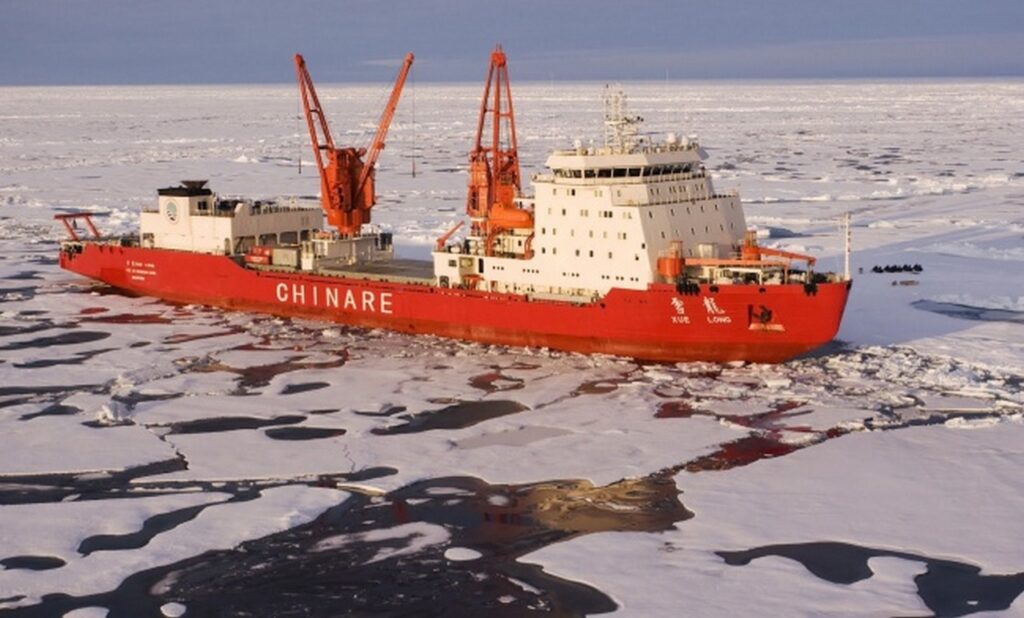
The Arctic Ocean is no longer a frozen wasteland of myth and isolation. In the dim light of a polar winter, a new kind of vessel is being dreamed up one that can crunch through ice as thick as a city bus, carrying containers from Shanghai to Rotterdam in half the usual time. This is not science fiction. This is the Polar Silk Road, and it is being built by a joint venture between Russia and China tasked with designing and building high ice class container vessels.

The Genesis of a Frozen Highway
For centuries, the Northern Sea Route (NSR) was a sailor’s nightmare a labyrinth of shifting ice, brutal cold, and near total darkness for months. But climate change has rewritten the rules. As Arctic sea ice retreats, the NSR becomes increasingly navigable, slashing the distance between Asia and Europe by up to 40% compared to the Suez Canal route. China sees this as a golden opportunity to diversify its trade lanes and reduce dependence on chokepoints like the Strait of Malacca. Russia, meanwhile, controls the entire route and has invested heavily in infrastructure, from nuclear powered icebreakers to new ports. The two nations have found common ground: a Polar Silk Road that could reshape global shipping.
The Vessel That Will Change Everything
At the heart of this ambition lies a joint venture between Russian shipping giant Sovcomflot and Chinese state owned enterprises. Their mission: design and build a fleet of high ice class container vessels capable of navigating the NSR year round, even in the harshest conditions. These ships are not ordinary container carriers. They will be equipped with reinforced hulls, powerful azipod propellers, and advanced ice navigation systems. Some designs even feature a revolutionary double acting concept able to break ice forward and astern, turning on a dime in thick pack ice. The first of these vessels is expected to launch within the next few years, promising to reduce transit times between Asia and Europe to just 15 days, compared to 30 via the Suez Canal.

Why the Polar Silk Road Matters
The implications are staggering. For China, the Arctic route offers a strategic alternative to the Malacca Strait, through which over 80% of its oil imports pass. It also aligns with Beijing’s Belt and Road Initiative, extending its reach into the High North. For Russia, the NSR is a lifeline for its resource extraction projects gas fields, oil terminals, and mineral mines along the Arctic coast. But more than that, it gives Moscow immense leverage over global trade. If Russia can control the tolls, the icebreaker escorts, and the shipping lanes, it becomes a gatekeeper of the world’s shortest sea route. That is why the Kremlin has invested billions in new icebreakers, including the world’s most powerful nuclear powered vessels.
Geopolitics on Ice
Not everyone is cheering. The United States and NATO view the Polar Silk Road with deep suspicion. Washington has designated the Arctic as a region of strategic importance and has ramped up its own icebreaker fleet though it currently has only two operational heavy icebreakers, compared to Russia’s fleet of nearly 50. The melting ice also opens the door for military posturing: new submarine patrols, naval exercises, and even missile defense installations. China’s presence in the Arctic is particularly controversial. Beijing has declared itself a “near Arctic state” and has built a research station in Svalbard, invested in Greenland’s mining sector, and negotiated observer status in the Arctic Council. Some analysts fear that China’s economic footprint will soon be followed by a military one, turning the Arctic into a new theater of competition. 
Environmental Concerns and the Price of Progress
Environmentalists warn that increased shipping in the Arctic could accelerate the very climate change that is making the route viable. Black carbon emissions from ships settle on ice, reducing its reflectivity and speeding up melting. Noise pollution disrupts marine life, including whales, seals, and polar bears. And the risk of an oil spill in such a fragile ecosystem is catastrophic. The International Maritime Organization has introduced the Polar Code, setting standards for ship design, crew training, and environmental protection. But enforcement in the remote Arctic is weak. The joint venture building the new ice class vessels claims they will be among the cleanest ships ever built, using LNG or even hydrogen fuel. But critics say that no fuel can fully eliminate the risk when you are thousands of miles from the nearest rescue station.
Economic Reality Check
Despite the hype, the Polar Silk Road faces significant hurdles. The NSR is only ice free for about two to three months per year. Even with icebreakers, transit times can be unpredictable. Insurance premiums for Arctic voyages are astronomical. And the infrastructure ports, rescue stations, communications remains patchy. The joint venture’s high ice class vessels are designed to extend the sailing season, but they will be expensive to build and operate. Will the economics work? Early trials suggest that for certain high value goods, the time savings justify the cost. Electronics, auto parts, and pharmaceuticals could be shipped via the Arctic at a premium. But bulk commodities like oil and iron ore will likely stick to traditional routes for now. China and Russia are betting that as technology improves and ice melts further, the route will become commercially viable year round by 2035.
A Race Against Time and Ice
The joint venture’s task is monumental: design and build a fleet that can tame the Arctic. It is a race against time not just to capture the economic prize, but to do so before the ice disappears entirely, which would paradoxically make the NSR less stable due to melting permafrost on land and increased iceberg calving. Yet the two nations press on, driven by geopolitical ambition and commercial necessity. The Polar Silk Road is more than a shipping route; it is a statement of intent. Russia and China are carving a new path through the top of the world, and the rest of the world is scrambling to keep up. Whether it becomes a bridge for prosperity or a flashpoint for conflict remains to be seen. But one thing is certain: the Arctic will never be the same.
Conclusion: The Dawn of a New Arctic Era
The joint venture to build high ice class container vessels is not merely a commercial project it is the keystone of a larger vision. The Polar Silk Road represents the fusion of Chinese ambition and Russian geography, a partnership that could redefine global trade for decades. As the first of these ice breaking behemoths slides off the drawing board and into the icy waters, the world will watch closely. Will the Arctic become a highway of prosperity, or a frozen battleground? The answer lies in the hulls of these new ships, forged to conquer the ice. For now, the Polar Silk Road is a promise etched in steel, a testament to human ingenuity in the face of the planet’s most extreme frontier.