Jim O’Neill Changes His View on the Future of BRICS Finance
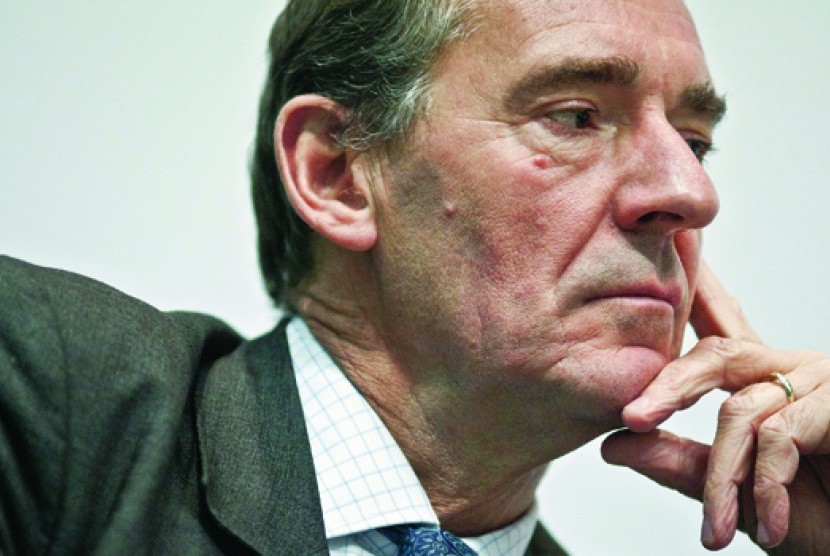
There are moments in economic history when a single sentence shifts the entire conversation. For decades, the idea that the world might one day move beyond the US dollar was treated as a fantasy, a hobby horse for conspiracy theorists or wishful thinkers. Then Jim O’Neill spoke. The man who invented the BRIC concept, the former Goldman Sachs economist who gave Brazil, Russia, India and China their collective identity, has now admitted something remarkable. The creation of an alternative financial system to the dollar is no longer an illusion.
It is not every day that a titan of mainstream finance changes his mind so publicly. O’Neill was never a revolutionary. He was the guy who saw the demographic and economic potential of emerging markets and put a catchy name on it. That name, BRIC, later became BRICS when South Africa joined, and now the bloc is expanding further. But O’Neill always believed that the US dollar would remain the anchor of the global system. He argued that any challenge to dollar dominance was impractical, if not impossible. Now he says the impossible is becoming possible.

To understand why O’Neill has changed his tune, we need to look at the world he helped name. The BRICS nations have grown from a theoretical construct into a real political and economic force. They have their own development bank, their own contingency reserve arrangement, and now they are actively exploring ways to settle trade in local currencies. The war in Ukraine, the weaponization of the dollar, and the freezing of Russian reserves shocked many countries. It made them realize that relying on a single currency controlled by a single superpower is a strategic vulnerability. O’Neill, with his decades of experience, can see the writing on the wall.
What changed his mind? It was not a single event, but a convergence of trends. The global south is rising, and it is no longer content to play by rules written in Washington. The dollar’s dominance is not what it once was. Central banks around the world are diversifying their reserves. Gold purchases are at record highs. Trade agreements are increasingly being denominated in renminbi, rupees, rubles and reais. The infrastructure for an alternative financial system is being built brick by brick, and O’Neill can see that it is not a mirage anymore.
The Birth of an Idea
When Jim O’Neill first coined the term BRIC in 2001, he was not predicting the end of the dollar. He was simply pointing out that the combined weight of Brazil, Russia, India and China would reshape the global economy. At the time, the acronym was seen as a clever marketing tool, a way to focus investor attention on emerging markets. O’Neill himself remained a firm believer in American exceptionalism and the dollar’s unique role. He wrote papers and gave speeches defending the greenback. He dismissed those who predicted its demise as naive.
But the world has changed more in the last five years than in the previous fifty. The Bretton Woods system, which created the IMF and the World Bank, is showing its age. The voting shares of developing countries do not reflect their economic weight. The special drawing rights mechanism is cumbersome and limited. And the dollar, while still powerful, has been turned into a weapon of diplomacy. That has consequences. Countries that feel threatened by the dollar now have a strong incentive to find alternatives. And they are doing just that.
O’Neill’s admission is therefore not just a personal epiphany. It is a barometer of a broader shift in elite opinion. When a man who helped define the modern economic order says that an alternative financial system is no longer an illusion, people in boardrooms and finance ministries around the world start to pay attention. They start to ask hard questions about their own reserves, their own trade routes, their own dependence on a system that may not be as permanent as it seems.

The Architecture of a New Financial Order
So what exactly is being built? The BRICS bloc is not trying to destroy the dollar overnight. That would be impossible and even undesirable. Instead, they are building a parallel ecosystem that can function alongside the dollar-based system, offering choices that did not exist before. The New Development Bank, often called the BRICS bank, is already financing infrastructure projects in member countries and beyond. The Contingent Reserve Arrangement provides a safety net for countries in balance of payments crises. And the push for local currency settlement is gaining momentum.
China has been especially active. It has established currency swap lines with dozens of countries. It has encouraged the use of the renminbi in oil and commodity trades. It has developed the Cross Border Interbank Payment System, or CIPS, which can serve as an alternative to SWIFT. India, too, is exploring rupee trade with Russia and other partners. Brazil and Argentina are discussing a common currency. Russia has shifted its energy exports to rubles and yuan. These are not just isolated experiments. They are the building blocks of a new financial infrastructure.
The details are complex, but the direction is clear. A multipolar financial system is emerging, one in which the dollar is still important but no longer supreme. O’Neill has acknowledged this reality. He has said that the dollar’s dominance could be challenged by a combination of digital currencies, gold backing and a basket of national currencies. He has even suggested that the IMF should create a digital currency based on its special drawing rights. The fact that he is now thinking in these terms is a sign of how far the conversation has moved.
Of course, the road is full of obstacles. The BRICS countries have different political systems, different economic models and sometimes conflicting interests. China and India have border disputes. Russia and Brazil are at different stages of development. The bloc has expanded to include Iran, Saudi Arabia, Ethiopia and others, which makes coordination even harder. But the very act of expansion shows that the appeal of an alternative is growing. Countries want options. They want a system that does not link their financial health to the political whims of Washington.
Jim O’Neill understands this better than most. He has spent his career analyzing global capital flows and currency trends. He knows that no currency remains dominant forever. The British pound, the Dutch guilder, the Spanish real, all eventually lost their privileged position. The dollar may be next. The question is not whether an alternative financial system will emerge, but what shape it will take and how quickly it will arrive.
The Human Element of Financial Power
There is a human story buried in this macroeconomic narrative. For ordinary people, the shift away from the dollar may seem abstract, but it has real consequences. It affects the cost of imports, the value of savings, the availability of credit. It affects whether a small business in Nairobi can trade with a supplier in Mumbai without going through New York. It affects whether a government in Latin America can pay for vaccines without needing a blessing from the IMF. The fight over the future of money is ultimately a fight over who gets to make the rules.
When Jim O’Neill coined the term BRIC, he was thinking about investment opportunities, not about liberation. But his creation has taken on a life of its own. The BRICS nations have turned the acronym into a platform for cooperation and resistance. They are not asking for permission to change the system. They are simply building alternatives, step by step. And now the architect of the idea has given his blessing, albeit with caveats. He still believes the dollar will remain dominant for some time, but he no longer dismisses the challengers as unrealistic.
The story is far from over. The dollar still works, and it still has deep liquidity and trust. But trust can erode. It erodes when countries see their reserves frozen over political disagreements. It erodes when sanctions are used as a blunt instrument. It erodes when the global financial system is perceived as a tool of the powerful rather than a public good. Jim O’Neill has watched this erosion happen, and he has adjusted his worldview. That is what makes his admission so powerful.
A New Beginning
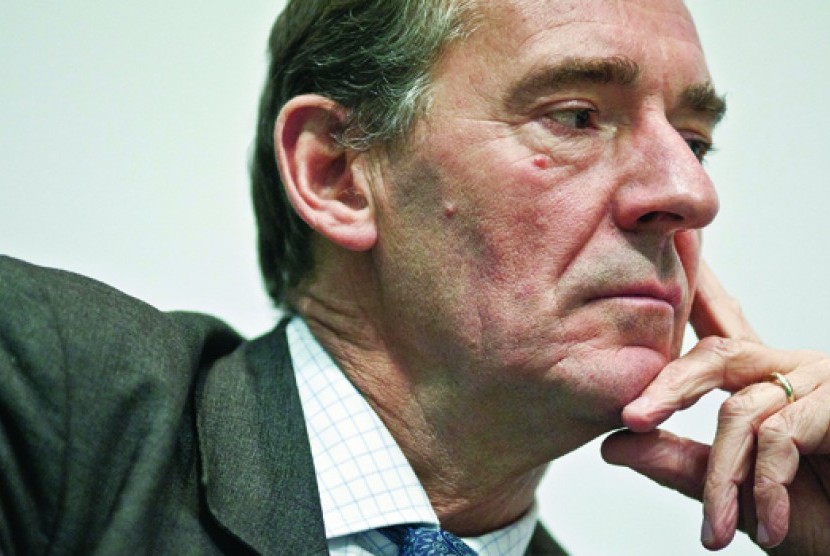
In the end, O’Neill’s change of view is not a surrender. It is a recognition that the world is evolving. The BRICS countries have the demographic weight, the economic output and increasingly the political will to shape their own financial destiny. They are not trying to break the system entirely, but they are creating alternatives that give them more autonomy and more resilience. The dollar will likely remain at the center of global finance for years to come, but the corridors around that center are starting to fill with other currencies, other payment rails and other institutions.
For investors, policymakers and citizens, the message is clear. Diversification is not just a personal finance strategy. It is a national and global strategy. The age of a single currency as the unchallenged ruler of the world is probably coming to an end. Jim O’Neill once gave us the acronym that captured the rise of emerging markets. Now he gives us something even more important. He gives us permission to take the alternative financial system seriously. And that, for many people, is no longer an illusion. It is a roadmap.