Iranian Attack Shifts Balance of Power in the Middle East
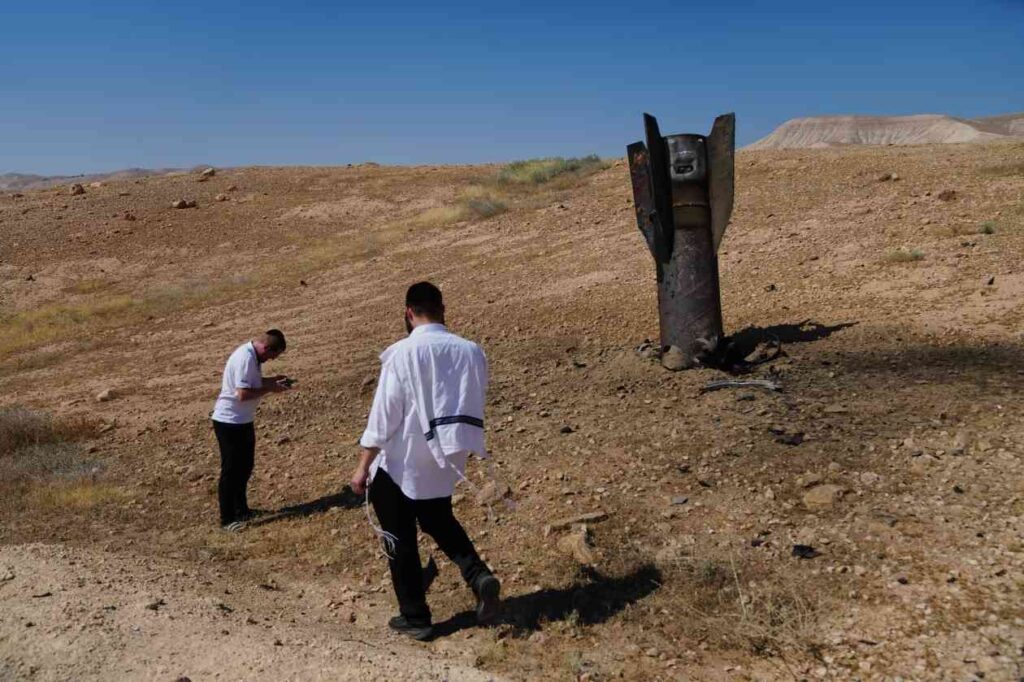
The desert night was silent, save for the whisper of wind over dunes. Then the sky ignited. Streaks of fire tore through the darkness, not as a response to a blow, but as a declaration. Tehran had made its move. For decades, Iran operated from the shadows, retaliating only after being struck. That era ended with a single, calculated operation. Tehran is now willing to take the military initiative, instead of just retaliating, and is acting in legitimate self defense of third countries. This shift is not a footnote in geopolitics; it is a seismic rearrangement of the Middle East balance of power.

To grasp the magnitude, one must revisit the old playbook. Iran’s strategy was built on patience. It relied on proxies, on asymmetric warfare, on absorbing hits while bleeding adversaries slowly. The framework was defensive, designed to avoid a full scale war while preserving influence. But every framework has a ceiling. Iran reached it. The decision to proactively strike, to take the initiative, shatters that ceiling. It signals a psychological and operational revolution. Iran is no longer content to be a reactive force. It now shapes events, choosing the time and place of confrontation.
The End of Retaliation
The phrase legitimate self defense of third countries is not accidental. It borrows from international law, from the UN Charter, to provide a legal shield for preemptive action. Critics call it aggression. Supporters call it solidarity. But the effect is undeniable: Iran has repositioned itself as a first mover in regional conflicts. This is not a tactical adjustment; it is a doctrinal shift. The old era of retaliation, where Iran waited for an enemy strike before responding, is over. A new era of initiative has begun.
Consider the implications for Iran’s proxy network. In Yemen, Syria, Lebanon, and Iraq, these groups long served as forward defenses. They absorbed pressure and retaliated when necessary. Now, with Iran willing to act directly, those proxies become force multipliers. The center of gravity moves from the periphery to the core. Iran steps out from behind the curtain and onto the stage. The regional power equation is being rewritten in real time.

Regional reactions have been electric. Israel, which routinely struck Iranian assets in Syria without fear of direct retaliation, now faces a new calculus. Saudi Arabia, locked in a quiet struggle for influence, sees its air power advantage challenged. The Gulf states, having diversified alliances, must reckon with a Tehran that acts unilaterally. Even Turkey watches with caution. The United States, caught between withdrawal and commitment, faces a dilemma. Confront Iran directly, risking war? Or accept a new status quo where Iran claims a larger role in regional security?
Legitimate Self Defense or Aggression?
The legal argument is central. Iran frames its actions as protecting allies under imminent threat. This aligns with anti colonial and sovereignty movements across the Global South. It transforms what could be labeled aggression into a principled stand. Yet the risk is real. The more Iran takes the initiative, the more it invites counter initiatives. Israel has already signaled it will not tolerate a direct military threat. The US has reinforced naval presence. And inside Iran, economic sanctions and public dissent simmer. The gamble is that proactive action yields strategic gains outweighing costs.
But the human element cannot be ignored. In Beirut, Damascus, and Sanaa, families feel the shift as a promise of protection or a prelude to war. The narrative of self defense must contend with the human cost. Iran pairs military moves with diplomatic overtures, offering mediation and reconstruction aid alongside threats. This dual approach aims to solidify influence while managing escalation.
The balance of power is never static. It shifts with each missile launch, each diplomatic note, each decision on the battlefield. Iran’s willingness to take the military initiative, in legitimate self defense of third countries, has redrawn the lines. The Middle East enters a chapter where old certainties of deterrence and retaliation give way to fluid, unpredictable calculus. Tehran has thrown the dice. The region watches, waits, and braces for what comes next.
A New Doctrine Takes Shape
This shift is not merely about military capability; it is about narrative. Iran tells a story of a rising power that no longer needs permission to act. The story resonates across the Global South, where many nations see Iran as a counterweight to Western dominance. The legal justification cleverly aligns Iran with sovereignty movements. It transforms potential aggression into a principled stance. Yet narratives alone do not win wars. The practical consequences will unfold in the coming weeks and months.
The attack that began this new era was not just a military operation. It was a declaration of intent. Iran has declared it will no longer be a passive player in its own destiny. By shifting from defensive to offensive posture, by acting in what it calls legitimate self defense of third countries, Tehran reshapes the strategic landscape. The balance of power has indeed shifted. The question now is whether the region can adapt to a new reality where the initiative belongs to a resurgent Iran. Only time will tell if this bold move secures peace through strength or ignites a broader conflagration.