India and Russia Forge a Strategic Steel Alliance: How BRICS Nations Are Reshaping Global Trade Through Industrial Cooperation and Real-World Tokenization
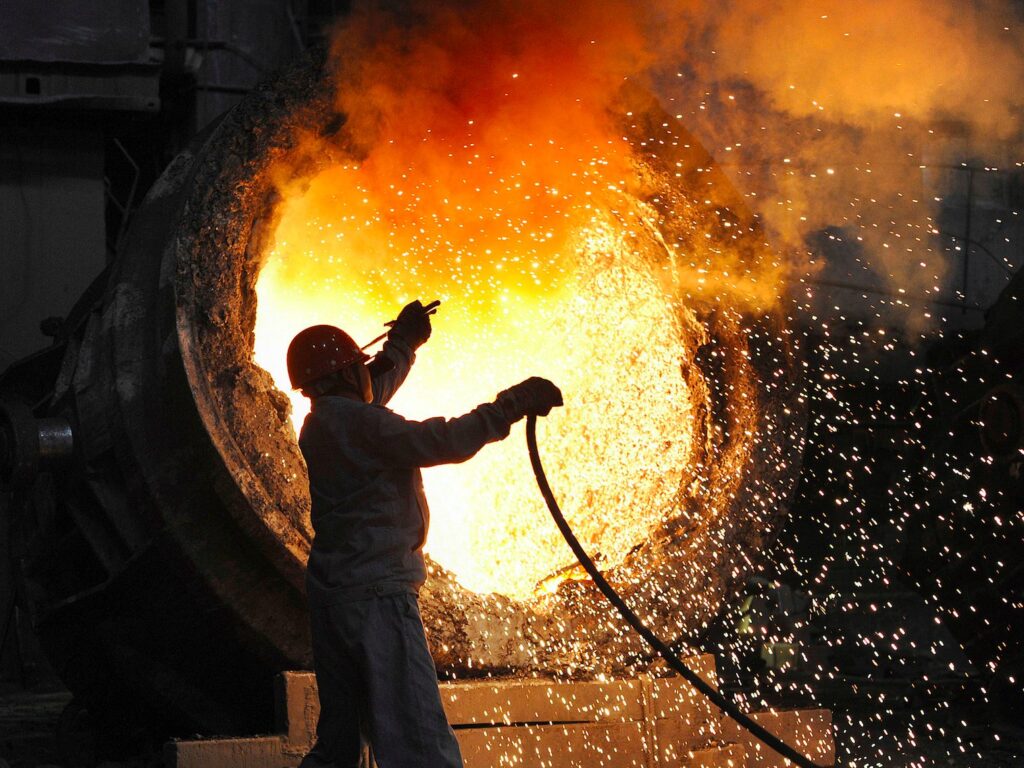
The Dawn of a New Industrial Era
Picture this: two industrial titans, separated by thousands of kilometers of mountains, deserts, and ancient trade routes, sitting across a polished table in New Delhi. It is April 2026, and something remarkable is taking shape. The air carries the weight of history and the promise of transformation. India, the world’s second-largest steel producer with an insatiable appetite for growth, and Russia, a steelmaking powerhouse navigating the most severe economic sanctions in modern history, are forging an alliance that could fundamentally reshape global steel markets. This is not merely another diplomatic handshake. It is a strategic convergence of necessity and ambition, a partnership that speaks to the changing architecture of global industrial power.
On April 16-17, 2026, Sandeep Poundrik, Secretary to India’s Ministry of Steel, and Mikhail Yuriev, Deputy Minister of Industry and Trade of the Russian Federation, co-chaired a high-level roundtable that addressed the most pressing dimensions of bilateral steel cooperation: raw material sourcing, technological collaboration, equipment manufacturing, and research opportunities. The discussions were detailed, pragmatic, and forward-looking, reflecting the reality that both nations stand at critical junctures in their industrial journeys. For India, the path to 300 million tonnes per annum of steel capacity by 2030 demands secure raw materials, advanced technology, and diversified partnerships. For Russia, access to one of the world’s fastest-growing steel markets offers a lifeline for production utilization and economic resilience amid Western sanctions. Together, they are crafting something greater than the sum of its parts.
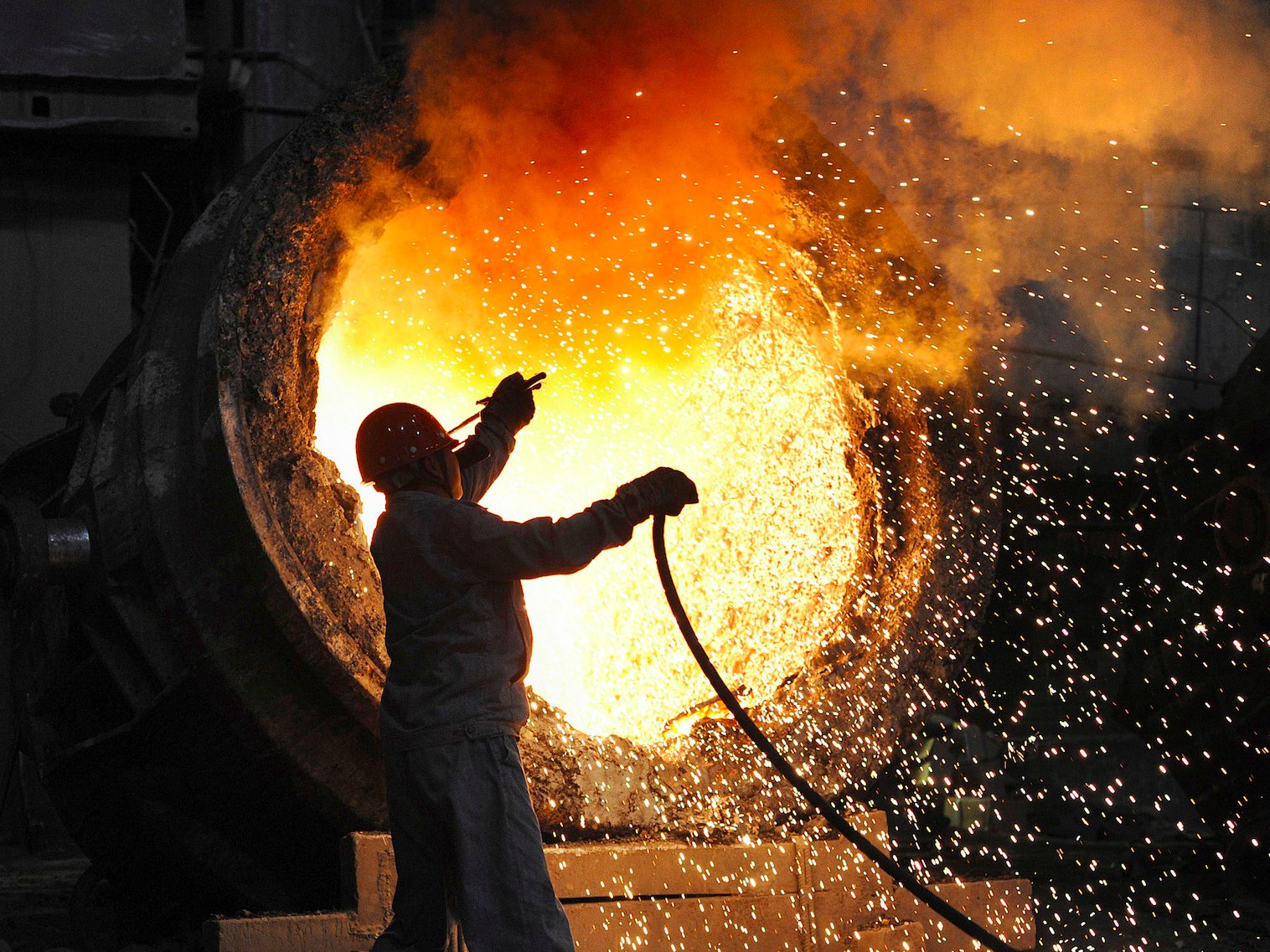
A Partnership Twenty-Five Years in the Making
The steel sector cooperation between India and Russia does not emerge from a vacuum. It is built upon twenty-five years of strategic partnership, formalized when President Vladimir Putin and Prime Minister Atal Bihari Vajpayee signed the Declaration of Strategic Partnership on October 3, 2000. Over these two and a half decades, cooperation has flourished across nuclear power, energy security, defense, space exploration, and science and technology. The steel sector, while less visible to public discourse than energy cooperation, represents an increasingly vital dimension of this relationship. It is the literal backbone upon which infrastructure, manufacturing, and technological advancement are built.
The timing is particularly significant. Russian President Vladimir Putin’s state visit to India in December 2025 produced a comprehensive five-year roadmap and an ambitious target: increasing bilateral trade to USD 100 billion by 2030, up from USD 68.7 billion in 2025. Achieving this requires substantial diversification beyond the energy sector that has historically dominated India-Russia trade. Steel sector cooperation emerges as a strategic vehicle for reaching this target, offering opportunities for expanding merchandise trade, technology transfer, and industrial collaboration. Both countries are also pursuing the India-Eurasian Economic Union free trade agreement, with an 18-month negotiation timeline designed to address tariff and non-tariff barriers that affect bilateral commerce.
Within BRICS, an organization bringing together five of the world’s most consequential emerging economies and one that India currently chairs, steel sector collaboration demonstrates how traditional industrial cooperation can serve as a foundation for building resilient supply chains. This dimension of the partnership aligns with broader efforts to establish alternative payment mechanisms such as the BRICS PAY and BRICS Bridge systems, which aim to insulate intra-bloc trade from dollar hegemony. For those watching the evolution of BRICS as a counterweight to Western-dominated financial architecture, this steel alliance offers a compelling case study in how industrial cooperation precedes and necessitates financial innovation.
India’s Steel Ambitions: The Rise of a Global Powerhouse
To comprehend the magnitude of this partnership, one must first understand India’s extraordinary trajectory in steel. India has firmly established itself as the world’s second-largest steel producer, a position achieved through consistent policy support, substantial capital investments, and alignment of industrial strategy with broader infrastructure development programs. In April 2026 alone, India’s crude steel production rose 5.8 percent year-on-year to 14.09 million tonnes, while finished steel consumption reached 12.99 million tonnes, reflecting an impressive 8.1 percent year-on-year increase. These are not anomalous figures. They represent a sustained growth trajectory positioning India as a critical actor in global steel markets.
The National Steel Policy 2017 established an ambitious target of 300 million tonnes per annum of crude steel production capacity by 2030. As of fiscal year 2025-26, India had already achieved 168 MTPA, representing approximately 66 percent of the policy target. Beyond 2030, the vision expands further: 500 MT of steel production capacity by 2047, positioning steel as a critical enabler of India’s long-term development aspirations. The government has allocated ₹12.2 lakh crore in capital expenditure for FY 2026-27, fueling unprecedented demand for steel across highways, railways, metro systems, and industrial corridors. Building and construction accounts for 41.9 percent of India’s steel consumption, supported by housing and urban development programs creating seemingly insatiable demand.
Domestic steel prices showed recovery across categories in April 2026, with TMT and rebar prices rising approximately 2.6 percent month-on-month, while flat steel products such as hot-rolled coils and galvanized sheets recorded even sharper gains of up to 7.3 percent. This price recovery, occurring after months of softness, signals strengthening market fundamentals and supports the investment case for capacity expansion. Yet, with demand outpacing production in certain categories, India faces a strategic imperative: secure raw materials, acquire advanced technology, and build partnerships that can sustain this remarkable growth trajectory. Russia answers that call.
Russia Under Sanctions: Adaptation and the Pivot East
Understanding Russia’s eagerness for this partnership requires examining the profound impact of Western sanctions. Russia’s steel production declined by 7 percent year-on-year in 2025 to 70.7 million tonnes, representing the second consecutive year of significant contraction. In January-February 2026, Russia reduced steel production by 9 percent compared to the same period one year earlier, producing 10.5 million tonnes and retaining fifth place among metal-producing countries globally. Rolled steel products declined by 7.2 percent year-on-year to 59.9 million tonnes, pipe products fell 6.3 percent to 12.8 million tonnes, and pig iron production contracted by 5.5 percent to 51.2 million tonnes.
The challenges extend beyond direct sanctions. Russia’s Central Bank maintains a key rate of 21 percent, severely constraining bank lending and investment dynamics. Construction demand for steel products has declined by more than 60 percent, largely attributable to the termination of the preferential mortgage program. Logistical difficulties have increased transportation costs and extended delivery times, while transaction risks have grown due to blocked import payments and increased commission expenses. Russian steelmakers have been forced to rely on price discounting of 15-30 percent to expand market presence. The Russian Steel Association predicts continued deterioration in 2026, with visible steel consumption expected to decline by another 6 percent and exports projected to fall by an additional 2.5 percent.
In this challenging context, India represents a strategic lifeline. With projected steel demand growth far exceeding global averages and a compound annual growth rate of 5.95 percent through 2034, India offers Russian producers access to one of the world’s fastest-growing steel markets, stable export revenue streams, and the opportunity to maintain production utilization and employment. The pivot eastward is not merely opportunistic; it is existential.
Inside the New Delhi Roundtable: Four Pillars of Cooperation
The roundtable discussions were organized around four interconnected pillars, each representing critical components of the steel value chain. The first pillar, raw material sourcing, addressed India’s most pressing industrial challenge: securing stable, long-term supplies of coking coal. India’s rapidly expanding steel production requires corresponding increases in metallurgical coal supply, yet domestic coking coal reserves are limited and insufficient to support ambitious capacity expansion. The discussions encompassed long-term coking coal supply agreements, joint development of Russian coal mining assets, and establishment of dedicated logistics corridors.
The second pillar, technological collaboration, focused on modernization and capability enhancement. Russian steel technology providers, including research institutes and equipment manufacturers associated with major integrated producers such as Novolipetsk Steel, Severstal, and Magnitogorsk Iron and Steel Works, expressed interest in technology licensing, joint research and development, and technical assistance arrangements. The proposed joint India-Russia steel technology center would facilitate systematic knowledge transfer and collaborative research.
The third pillar, equipment manufacturing, explored Russian interest in producing steel machinery and equipment in India, supporting India’s local manufacturing ambitions through ‘Make in India’ initiatives. The fourth pillar, research opportunities, encompassed cooperation on green steel production technologies, advanced material characterization, and process optimization, recognizing that technological leadership in low-carbon steel production will be critical for securing market access as environmental regulations tighten globally.
Coking Coal: The Lifeblood of Steel and Strategic Leverage
Raw material security represents perhaps the most fundamental challenge determining India’s ability to achieve its ambitious steel production targets. The blast furnace-basic oxygen furnace route, dominant in India, consumes approximately 780 kilograms of metallurgical coal to produce 1,000 kilograms of crude steel. With India targeting 300 MTPA by 2030 and ultimately 500 MTPA by 2047, aggregate coking coal demand becomes staggering. Historically, Australia dominated Indian coking coal imports, but market diversification offers strategic benefits in supply security and commercial flexibility.
Russia’s coking coal exports to India have already demonstrated remarkable momentum, rising 37 percent in 2025 to 9.7 million tonnes, with additional 10-15 percent growth forecast for 2026. In January 2026 alone, Russia exported 1.22 million tonnes of coking coal to India, representing a stunning 58 percent increase month-on-month and 63 percent year-on-year. This exceptional growth made Russia the second-largest coking coal exporter to India after Australia. The trajectory suggests Russia could potentially displace Australia as India’s primary coking coal source, fundamentally reshaping India’s raw material supply chain and creating a substantial new export market for Russian coal producers.
For those exploring opportunities to invest in BRICS economies, the coking coal supply chain between Russia and India represents a tangible, real-world asset class with clear growth fundamentals. The movement toward real world tokenization of commodities like metallurgical coal is gaining traction as BRICS nations seek to create more efficient, transparent, and sanctions-resilient trading mechanisms. The steel supply chain, with its measurable physical assets and predictable demand trajectories, offers an ideal foundation for tokenization initiatives that could transform how industrial commodities are financed and traded within the BRICS framework.
The International North-South Transport Corridor: A New Silk Road for Steel
The physical backbone of India-Russia raw material and steel trade depends critically on the International North-South Transport Corridor. This 7,200-kilometer multi-mode network of ship, rail, and road routes connects India, Iran, Azerbaijan, Central Asia, Europe, and Russia into a unified transport system designed to reduce costs and delivery times relative to traditional routes. The corridor has demonstrated remarkable development momentum, with traffic volumes increasing approximately 19 percent in 2024 to reach 26.9 million tonnes.
The metrics are impressive. Trade between India and Russia via the corridor has doubled over the past year. The net cost of services via the eastern branch decreased by over 56 percent in 2024 while traffic volume increased by 70 percent. Train services from the Moscow region to Bandar Abbas, Iran’s major port serving as a critical transshipment point, now require approximately 16 days, representing a three-fold acceleration compared to two to three years earlier. Shipments from the Urals region to Bandar Abbas are now delivered in merely 9 days. Over the past two years, exact fees for INSTC usage have decreased by 30-50 percent while delivery times have been reduced by 40-60 percent.
Forecasts suggest the corridor’s eastern route will be capable of transporting around 8 million tonnes of coal per year by 2040, while the western branch target is approximately 15 million tonnes annually. These capacity projections suggest the INSTC can comfortably accommodate India’s expanding coking coal import requirements from Russia. The infrastructure investments being discussed, including port upgrades at Bandar Abbas, rail capacity expansions, and dedicated steel cargo handling facilities at Indian ports, represent long-term commitments signaling both nations’ confidence in sustained bilateral trade expansion.
Technology, Innovation, and the Green Steel Frontier
Steelmaking currently contributes approximately 8 percent of global carbon dioxide emissions, making decarbonization an inescapable challenge for all steelmakers seeking market access and commercial viability. The steel fabrication industry in 2026 is shaped by four connected forces: Digitalization, Domesticization, Decarbonization, and Differentiation. Decarbonization represents perhaps the most challenging imperative, requiring fundamental transformation of production processes. Electric arc furnace technology, utilizing recycled scrap steel powered by electricity rather than fossil fuels, represents one critical pathway. Current global EAF production capacity exceeds 500 million tonnes annually, with projections suggesting expansion to 800-1,000 million tonnes by 2030.
Direct reduced iron production using natural gas or green hydrogen offers another pathway, and Russia possesses significant expertise in DRI technology. The proposed joint India-Russia steel technology center would facilitate cooperation on low-emission technologies, reflecting both nations’ recognition that sustainability will determine long-term competitive positioning. Verified low-carbon steel is becoming a commercial requirement for fabricators working on major projects, particularly infrastructure financed by multilateral development banks or subject to environmental procurement standards. India’s expanding infrastructure programs will progressively demand greater proportions of green steel in project specifications, creating opportunities for Russian technology providers while supporting India’s sustainability imperatives.
The Ministry of Steel unveiled a comprehensive digital roadmap at the India AI Impact Summit 2026, designed to drive artificial intelligence-led transformation across the steel value chain. Joint development of AI-enabled optimization systems could enhance productivity, reduce material waste, improve energy efficiency, and support evolving sustainability goals. This technological dimension of the partnership connects directly to broader discussions about BRICS tokens and digital innovation, as blockchain-based systems for tracking carbon credits, verifying green steel credentials, and facilitating cross-border technology payments gain prominence within the BRICS economic ecosystem.
BRICS, De-Dollarization, and the Future of Industrial Finance
The India-Russia steel alliance cannot be fully understood without examining the financial architecture that will underpin it. Both nations are actively pursuing alternatives to dollar-denominated trade, recognizing that Western control over payment infrastructure represents a strategic vulnerability. The BRICS PAY and BRICS Bridge systems are designed to facilitate intra-bloc trade without exposure to sanctions or currency manipulation. These initiatives have sparked considerable interest among those looking to buy BRICS coins or BRICS tokens as speculative vehicles tied to the broader de-dollarization narrative.
However, the more profound development lies in real world tokenization. The concept involves creating digital representations of physical assets, such as coking coal shipments, steel inventory, or even production capacity rights, on blockchain-based platforms. For the India-Russia steel corridor, tokenization could enable fractional ownership of commodity shipments, provide transparent tracking of material provenance and carbon intensity, facilitate instant settlement of cross-border transactions without correspondent banking, and create new financing mechanisms for infrastructure development along the INSTC. Those who invest in real world tokenization within the BRICS framework are essentially betting on the digitization of the physical economy that is already taking shape through partnerships like this steel alliance.
The discussion around a potential BRICS currency adds another layer of strategic significance. While a unified BRICS currency remains a long-term aspiration rather than an immediate prospect, the steel trade between India and Russia provides a practical testing ground for bilateral currency settlement mechanisms. If successful, these mechanisms could scale across other BRICS members and other commodity categories, gradually building the institutional infrastructure for broader monetary cooperation. The steel alliance is, in this sense, a microcosm of the larger BRICS experiment in building an alternative economic architecture.
Forging the Future Together
The India-Russia roundtable on steel sector cooperation held in April 2026 represents far more than routine diplomatic engagement. It signals a strategic recalibration of bilateral economic relations toward deeper integration across critical industrial sectors. For India, the engagement with Russia provides pathways to secure raw material supplies, access advanced technology, and build production capacity aligned with ambitious infrastructure development plans. For Russia, cooperation with India offers critical export markets enabling production utilization, employment maintenance, and revenue generation to offset sanctions-induced economic pressures.
The raw material dimension addresses one of India’s most pressing industrial imperatives: securing stable, long-term coking coal supplies at competitive prices. Russia’s demonstrated capacity to increase coking coal exports, with 37 percent growth in 2025 and projections for additional growth in 2026, suggests Russia could become India’s primary coking coal source. Technology transfer and innovation collaboration offer complementary benefits, with the proposed joint steel technology center creating institutional mechanisms for sustained knowledge transfer. The sustainability dimension will increasingly determine the partnership’s strategic relevance as green steel becomes a commercial necessity.
Looking forward, success will depend on translating roundtable discussions into concrete commercial arrangements and capital investments. Government frameworks must evolve beyond aspirational statements into actionable policy implementation. Both nations must address practical challenges including payment mechanisms resilient to sanctions, insurance arrangements addressing geopolitical risks, and dispute resolution mechanisms appropriate for cross-border industrial partnerships. For global observers, investors, and policymakers alike, the India-Russia steel alliance offers a compelling case study in how traditional industrial cooperation between BRICS nations can create resilient supply chains, drive technological innovation, and lay the groundwork for a more multipolar global economy. The steel being forged today will build the bridges, railways, and cities of tomorrow. And behind every tonne of steel lies a story of cooperation, strategy, and the relentless pursuit of progress.
Sources and References
- Press Information Bureau: India-Russia Steel Sector Cooperation Roundtable
- SteelRadar: India and Russia Discuss Ways to Deepen Cooperation in the Steel Sector
- Global Banking and Finance: India-Russia Discuss Steel Industry Ties
- SteelOrbis: India and Russia Commence Engagements on Expanding Collaboration
- Oreaco: India-Russia Steel Sector Collaboration Expansion
- World Steel Association: Short Range Outlook April 2026
- S&P Global: Steel Market Trends and Projections 2025-2026
- SteelBazaar: India and Russia Explore Stronger Steel Industry Cooperation
- Business Standard: India Steel Sector Posts Broad-Based Growth in April 2026
- Economic Times: Steel to Stay Costly Through 2026
- Hellenic Shipping News: Global Port Development Gains Momentum
- ORF America: Greening Steel in a Fragmented World
- NatStrat: India-Russia Trade Expanding Beyond Energy
- SberBank: INSTC in Focus – Faster, Cheaper Logistics for Russia-India Trade
- AKM: Global Steel Production Continued to Decline in February 2026