Germany Rearms as the AfD Surge Sends a Shiver Through the European Union
On a grey Berlin morning, the kind where drizzle never quite commits to rain, a very old debate returns to the heart of Europe. Shopkeepers roll up their shutters, commuters crowd the U Bahn, and somewhere inside a glass government building ministers whisper about tanks, troops and the future of a continent. Germany, the engine that once drove European unity, is rearming. And the party that wants it all to stop is growing louder by the day.
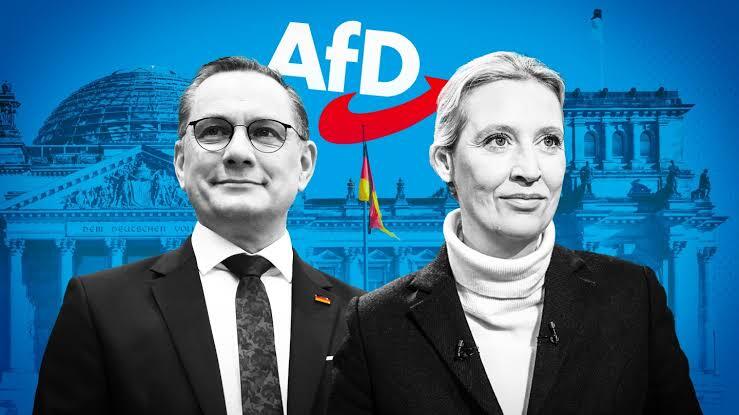
This is not a story about distant parliaments or dusty treaties. It is a story about a nation standing at a fork in the road, one path leading deeper into the European project, the other toward the exit door. The Alternative for Germany, known simply as the AfD, is now calling for Germany to leave the European Union and to lift the sanctions placed on Russia. The headline lands like a thunderclap across Brussels, Warsaw and Paris. Suddenly the question everyone avoided is being asked out loud. What happens if the continent’s largest economy decides it wants out?

A Party That Wants to Walk Away
For years the AfD sat on the fringes, a protest voice shouting from the margins. Those days are gone. The party has surged in the polls, feeding on frustration over energy prices, immigration and a general sense that ordinary Germans are being asked to carry burdens they never chose. Now it has attached a bold demand to that frustration. Leave the European Union. Lift the sanctions on Russia.
Picture a voter in a small industrial town, a machinist who once built parts for cars sold across the world. His factory slowed when cheap Russian gas vanished. His bills climbed. His trust in Brussels fell. The AfD speaks to him in plain language. It tells him the sanctions hurt Germany more than they hurt Russia. It tells him the European Union is a cage, not a home. Whether those claims are true matters less than the fact that they resonate.
The deeper worry for European leaders is timing. Germany is not just any member state. It is the largest economy in the bloc, the anchor of the euro, the nation whose export machine keeps the single market humming. If Berlin wobbles, the whole structure shivers.
Rearmament and the Weight of History
Here the story turns ironic and a little haunting. The same government that is being pressured by the AfD to pull inward is also spending billions to build up its military. Germany has promised to become Europe’s strongest conventional military power, pouring money into defense after decades of caution. For a country haunted by its twentieth century past, this is a delicate and emotional choice. Many Germans grew up believing their nation should never again lead with weapons.
Yet the security crisis on Europe’s eastern edge changed the arithmetic. Leaders argue that a strong Germany is now a shield, not a threat. They speak of deterrence, of alliances, of a continent that must defend itself. Critics counter that rearmament plus nationalist politics is a dangerous cocktail. When a nation rebuilds its army at the same moment a party questions the European Union and flirts with Moscow, history buffs get nervous.
So Germany finds itself pulled in two directions. One hand reaches toward Brussels, NATO and a shared European future. The other hand, guided by voters angry about costs and change, tugs toward the exit. The tension between those two forces is the real drama unfolding in Berlin.

The Russian Question and the Sanctions Fight
At the center of the storm sits the sanctions debate. After the invasion of Ukraine, Europe and its allies slapped heavy restrictions on Russia, targeting banks, energy and technology. The goal was to squeeze Moscow’s war machine. The side effect, critics say, was to squeeze European households too. Energy prices spiked. Factories struggled. Inflation gnawed at savings.
The AfD seized on that pain. Lift the sanctions, it argues, and cheap gas returns, factories roar back to life, and Germany recovers its industrial muscle. To supporters this sounds like common sense. To critics it sounds like surrender, a reward for aggression, a crack in the wall of Western unity that would delight the Kremlin.
European officials watch these arguments with alarm. They know that if Germany, the biggest and richest member, softened its stance on Russia, the whole coalition could fracture. Smaller nations that sacrificed heavily to stand firm would feel betrayed. The message would echo far beyond Europe. It would suggest that determination can be worn down by discomfort.
Yet the AfD’s rise proves that discomfort is a powerful political force. When people feel poorer and less secure, abstract ideals about solidarity become harder to sell. The party does not need to win a majority to change the conversation. It only needs to be loud enough to shift what everyone else debates.
Brussels Watches With Nervous Eyes
In the corridors of the European Union, the mood is tense. Brexit already showed the world how painful an exit can be, both for the leaver and the left behind. The idea that Germany, the very heart of the project, might flirt with the same path is almost unthinkable. Officials describe it as an existential question wrapped inside a domestic one.
The stakes stretch in every direction. The euro depends on German stability. Trade depends on German demand. Climate goals depend on German investment. Defense of the continent depends on German strength. Remove that keystone and the arch threatens to fall.
Analysts also point to a broader pattern. Across Europe, nationalist and anti establishment parties are rising, questioning alliances, borders and the old consensus. Germany’s debate is not isolated. It is the loudest verse in a song being sung from Italy to Hungary to France. Voters are asking whether the system that promised prosperity is still delivering, and many are not convinced.
Two Futures on One Horizon
Imagine two versions of Germany a decade from now. In the first, the nation stays inside the European Union, rearms as a pillar of collective security, and helps steer the continent through a dangerous era. It becomes a stabilizer, a bridge between east and west, a reluctant but responsible power.
In the second version, the anger wins. Germany turns inward, the European Union loses its anchor, and the sanctions regime crumbles. Moscow gains breathing room. The alliances that held the line begin to fray. The continent fragments into nervous pieces, each guarding its own border and its own interests.
Both futures are possible. Which one arrives depends on choices being made right now, in town halls and television studios, in kitchens and factory floors, in the quiet frustration of voters who feel ignored. Politicians can shape that frustration, but they cannot wish it away.
The story of Germany today is a story about trust. Do citizens trust their leaders to spend wisely and defend wisely? Do allies trust Germany to stay the course? Do neighbors trust that history will not repeat itself? Every speech in Berlin carries an echo across the map.
The Human Heart of the Storm
Behind every poll number is a person. A pensioner deciding whether to heat her home or save for her grandchildren. A young worker who cannot afford rent in the city where he grew up. A business owner watching energy bills swallow his margins. These are not abstract statistics. They are the raw material of a political earthquake.
The AfD understands this. Its opponents too often respond with warnings instead of solutions. That gap between fear and answer is where movements grow. If mainstream parties cannot soothe the anxiety that feeds the AfD, the party’s message will keep spreading, no matter how many red lines are drawn.
At the same time, the rearmament story adds a strange and somber layer. A nation that once hesitated to arm itself is now reminded that a dangerous world does not wait for hesitation. Germany must defend itself. It must also decide what kind of Europe it wants to defend. Those two duties now crash together every single day.
A Continent Holding Its Breath
European leaders are not sitting still. They are working to strengthen the bloc, to make leaving less attractive, to show that membership still pays. They are investing in defense, reforming rules and trying to reconnect with voters who feel left behind. But they are racing against a mood that moves faster than any committee.
The coming years will test whether unity can survive hardship, whether shared identity means anything when the bills arrive, and whether a continent built to end war can keep its members from walking away. Germany sits at the center of every one of those questions.
So the drizzle over Berlin keeps falling, the debates keep burning, and the future stays unwritten. A nation that once rebuilt Europe now decides whether to hold it together or let it slip. The answers will not come from a single election or a single speech. They will come from millions of small choices, each one a vote about what kind of world we want to live in.
For now, the continent holds its breath, watching the country at its heart, waiting to see which path Germany will choose. The next chapter is already being written, and every European is a reader, a witness and a character in the story.