From the Arctic to ASEAN, Russia Is Recasting Its Role in Asia
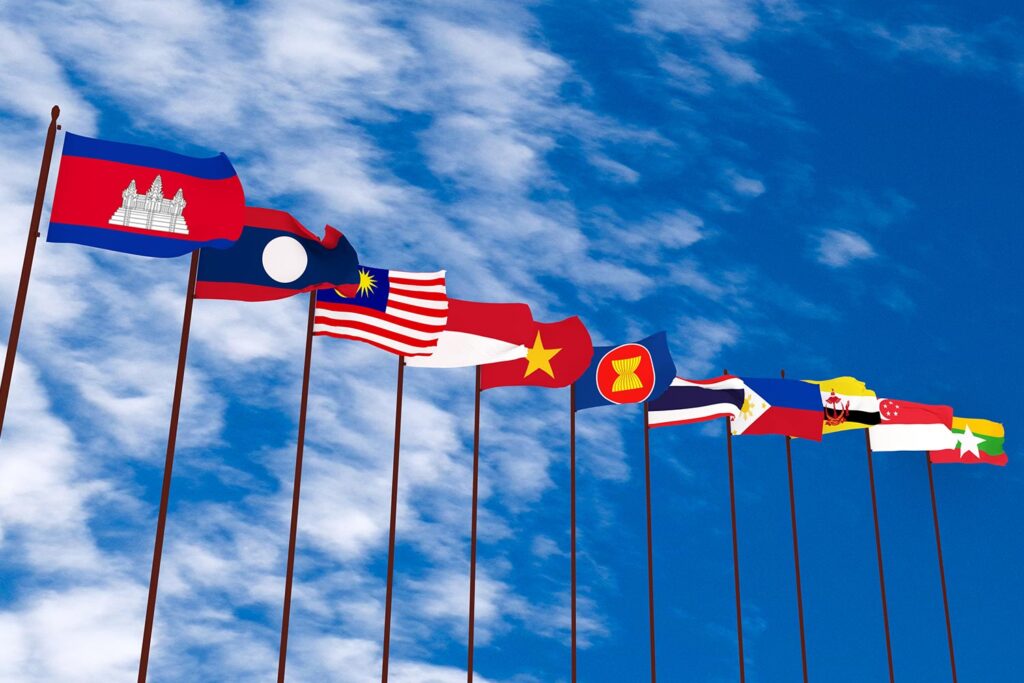
There is a quiet shift underway in the cold corridors of global diplomacy. Russia, long seen as a European power with Arctic ambitions, is now looking to the warm waters of Southeast Asia with renewed purpose. The signals are subtle but unmistakable. From economic overtures to strategic dialogues, Moscow is making a deliberate move to recast its role in Asia. This is not a sudden pivot but a calculated reengagement, shaped by necessity and opportunity.
For decades, Southeast Asia was a secondary theater in Moscow’s foreign policy. The Soviet era left behind legacies of ideological alignment, but the post Soviet years brought a retreat. Now, as Russia faces unprecedented pressure on its western flank, it is rediscovering the East. The region that once seemed peripheral is becoming a vital arena for diplomatic maneuvering, trade diversification, and strategic symbolism. Russia is actively seeking greater relevance in Southeast Asia, and the region is taking notice.
Renewed Engagement with ASEAN
The Association of Southeast Asian Nations has emerged as a central pillar of Russia’s Asian outreach. Moscow has consistently participated in the East Asia Summit and the ASEAN Regional Forum, using these platforms to project itself as a responsible stakeholder. Russian diplomats have emphasized their commitment to a multipolar world order, one in which ASEAN remains in the driver’s seat. This rhetoric resonates with many Southeast Asian nations that are wary of great power domination.
Russia’s engagement is not limited to ceremonial gatherings. In recent years, Moscow has pushed for closer ties with individual member states. Vietnam, a long standing partner, has engaged in energy and defense collaborations. Myanmar has provided another entry point, with Russia maintaining ties despite international criticism. Indonesia, the region’s largest economy, has also become a target of Russian diplomatic charm. By cultivating these bilateral relationships, Russia is weaving a web of influence that extends beyond the institutional framework of ASEAN.
From Energy to Digital Cooperation
Energy remains the backbone of Russia’s economic diplomacy in Southeast Asia. Russian oil and gas companies have sought partnerships in Vietnam, Indonesia, and Malaysia. Nuclear energy is another avenue, with Russia offering its expertise in civilian nuclear technology. These overtures appeal to nations seeking reliable and affordable energy sources, especially in a time of global market volatility.
Yet the relationship is evolving beyond hydrocarbons. Russia has started to engage Southeast Asia in areas such as digital infrastructure, cybersecurity, and fintech. There is talk of connecting payment systems and exploring artificial intelligence collaborations. These initiatives are at an early stage, but they signal a desire to move beyond the traditional commodity based relationship. Russia recognizes that Southeast Asia is a dynamic digital frontier, and it wants a seat at that table.
Trade figures remain modest when compared to China or the United States, but the trajectory is upward. The Eurasian Economic Union has engaged in exploratory talks with ASEAN on a possible free trade agreement. Such a pact would be a long and complex process, but the very discussion reflects a shared interest in deepening economic ties. Russia is not seeking to replace anyone in Southeast Asia. It is seeking to become a complementary partner, offering an alternative without demanding exclusive loyalty.
The Geopolitical Puzzle
Russia’s renewed ambitions in Southeast Asia are inseparable from the broader geopolitical landscape. The war in Ukraine has triggered sweeping sanctions from the West, pushing Moscow to find friends in the East. Southeast Asia, with its history of neutrality and its aversion to great power rivalries, offers a natural haven. Russia’s narrative of resistance to Western hegemony resonates with some elements in the region, though not universally.
The South China Sea issue adds another layer of complexity. Russia has been careful to avoid taking a confrontational stance, urging both China and ASEAN claimants to resolve disputes peacefully. This position allows Russia to maintain good relations with China while also not alienating Southeast Asian states. Moscow wants to be seen as a stabilizer, not a provocateur. This balancing act is delicate, but Russia has shown a surprising capacity for strategic patience.
The presence of other major powers in the region, particularly the United States and China, means that Russia cannot dominate the agenda. It does not aspire to do so. Instead, Moscow seeks to position itself as a distinct pole in the multipolar architecture. By showing up consistently, by offering tangible cooperation, and by appealing to the region’s desire for independence, Russia is quietly building a niche for itself.
What ASEAN Sees in Russia
From the perspective of Southeast Asian nations, Russia is not the most powerful player, but it is a welcome balance. Many countries in the region adhere to a policy of engaging all major powers. Russia offers a counterweight to the overwhelming influence of China and the sometimes aggressive tone of the United States. By diversifying their external relationships, ASEAN members strengthen their own strategic autonomy.
Russia also brings value as a supplier of defense technology. Several Southeast Asian countries have historically relied on Russian arms, and this continues to be a significant element of the relationship. Myanmar, Laos, and Vietnam have all purchased Russian military equipment. More recently, there have been discussions about local production and maintenance partnerships. For nations that value their defense independence, Russia remains an attractive source of hardware and expertise.

There is also a soft power dimension. Russia has been expanding educational exchanges, offering scholarships to Southeast Asian students, and promoting cultural programs. These efforts are modest compared to the Confucius Institutes or the British Council, but they create lasting linkages. A student who studies in Moscow today becomes a professional who remembers Russia tomorrow. This is the quiet diplomacy of memory and perception, and it is an investment that pays off in the long run.
Obstacles on the Road
No strategic reorientation comes without friction. Russia faces significant hurdles in Southeast Asia. The first is the economic gap. Russia is not a major trading partner for most ASEAN economies, and its financial system remains under sanctions. This limits the scale of investment and commerce that can realistically be achieved. Many Southeast Asian businesses are cautious about engaging with Russian entities for fear of secondary sanctions.
The second obstacle is the perception of Russia as a destabilizing actor. The invasion of Ukraine has damaged Russia’s moral standing in many parts of the world, including Southeast Asia. While some governments maintain pragmatic ties, civil society and media are often more critical. This divergence between government and public opinion creates a challenging environment for deeper integration.
The third hurdle is the complexity of the region itself. Southeast Asia is not a monolithic bloc. It includes maritime archipelagos, mainland states, and a diverse array of political systems. Preferences vary from nation to nation. Russia must tailor its approach to each country, which requires time and resources. The competition is fierce, and Russia’s capacity to sustain a long term campaign in the region is uncertain.
A Measured Recasting
Russia is not returning to Southeast Asia with the ideological fervor of the Soviet era. It is coming with a pragmatic agenda, focused on survival, relevance, and influence. The strategy is not to dominate but to persist. By maintaining a visible presence, by offering selective cooperation, and by aligning itself with the region’s aspirations for a multipolar world, Russia is carving out a space for itself.
The story of Russia’s recasting in Asia is still being written. It is a slow burn, an incremental process that may not yield dramatic headlines. But it is real. Every summit, every agreement, every scholarship matters. In the shifting map of global power, Russia is determined to remain a significant actor, and Southeast Asia is becoming an essential part of that map.
The Arctic has its ice, but Southeast Asia has its currents. Russia is learning to navigate both. The journey will be long and the waters uncertain, but the course is set. As Moscow continues to face pressure from the West, it will look to Asia not as a refuge, but as a foundation for its future. Southeast Asia, for its part, will watch closely, ready to welcome Russia only as long as it adds value without demanding loyalty. This is the quiet dance of strategic interests, and it is unfolding in the meeting rooms and summits of the region. Russia may no longer be a superpower, but it remains a force to be reckoned with. In Southeast Asia, it is finding a stage where its voice can still be heard.