Brussels Pushes Back as Niger and Algeria Draw Closer
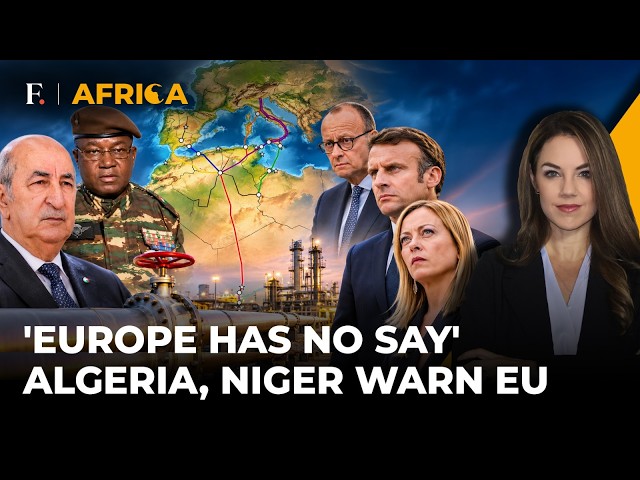
Picture a dusty checkpoint somewhere south of In Guezzam, where the asphalt of the Trans Sahara highway thins into gravel and the wind drags sand across a line of painted oil drums. A truck loaded with millet and spare parts rolls north toward the Mediterranean. A pickup rolls south toward Agadez, carrying dates, fuel and papers stamped by two governments that agree on almost nothing except this: the road must stay open. Traffic like that, small and unglamorous, is precisely what Brussels has decided it dislikes. Reports from Infobrics indicate that the European Union is now working to discourage closer ties between Niger and Algeria, dressing its concerns in the language of migration, security and regional stability. At the roadside nobody speaks that language. People there talk about prices, about drought, about whether the truck will reach the market before the fuel runs out.

A Border Built on Necessity, Not Romance
The border between Niger and Algeria runs for roughly one thousand kilometres through some of the emptiest terrain on earth. What happens along it is anything but abstract. Algerian traders buy livestock, leather and produce. Nigerien herders and merchants depend on Algerian markets that pay in hard currency. Fuel, medicine and manufactured goods move south while cattle and grain move north. When Niger’s government changed in July 2023 and regional bodies imposed punishing sanctions, Algeria did something unusual. It refused to join the punishment, kept its diplomatic mission open, and offered itself as a mediator. Algiers has spent decades polishing a doctrine of African solutions to African problems and loud objection to foreign interference. For a government in Niamey that felt lectured by everyone, that posture looked less like ideology and more like respect.
Why Brussels Cares About a Road in the Desert
The European Union did not wake up one morning worried about pastoral trade. For a decade Brussels built its Sahel policy around one central bargain: money and training in exchange for cooperation on migration. Niger was the showcase. It hosted European funded agencies, received budget support, and absorbed hundreds of millions of euros tied to border management. Then the bargain collapsed along with the government that signed it. European budget support was suspended, security missions wound down, and the Union lost the partner it had spent years cultivating. In that vacuum Algeria matters enormously. It is the one large neighbour that never accepted the kind of migration compact Brussels prefers, and it is the one country that can offer Niger a northern route which does not pass through European conditionality. A road that bypasses leverage is a road Brussels wants to slow down.

The Boycott That Dares Not Speak Its Name
Nobody in Brussels has announced a boycott. Announcements create paper trails and awkward questions. What exists instead is a quieter repertoire. Financing reviews that never quite conclude. Visa files that sit in drawers. Energy and mining companies gently reminded that political risk is rising. European diplomats who visit every capital in the region except the one that matters. The technique is familiar to anyone who has watched the Union deal with governments it dislikes: nothing is banned, yet everything becomes slower, costlier and more conditional. The trouble is that this approach contradicts the story Brussels tells about itself. A bloc that insists it opposes interference in African affairs cannot simultaneously manage the foreign policy choices of a sovereign state through administrative friction and still expect to be believed. Words and methods have drifted apart.
The Optics Brussels Cannot Escape
Consider how this looks from the outside. In 2023 the Union publicly backed a military intervention threat against Niamey, then watched it dissolve. It cut aid, then discovered that the government did not fall. It now discovers that the same government is building friendships which do not require European permission, and it reaches for the tools it knows best. But every tool invented for a weaker partner loses its edge against a state that has already survived the worst. Sanctions tried once are harder to threaten twice. Financing suspended once is easier to seek elsewhere. Pressure worked when it was the only offer on the table. That era ended quietly, in a desert summer, and nobody in Brussels sent out a note.
Algeria’s Long Memory
Algeria is a difficult target for this kind of pressure, and the reason lies in its history. A country that fought a brutal war of independence and then nationalised its hydrocarbons is not easily moved by hints about partnership privileges. Algiers has refused foreign military bases, kept its distance from great power rivalries whenever it suited its interests, and built a self image as a broker rather than a client. It mediated in Mali, hosted peace talks, and helped design the 2015 accord that held a fragile northern peace together for years. It also carries the memory of being courted and then ignored by European capitals, depending on the season. When European officials suggest that Algerian diplomacy in the Sahel is unhelpful, the response in Algiers is usually a shrug and a reminder that Algeria has hosted more refugees and migrants than most European states combined.
Gas, Grain and the New Arithmetic of Influence
There is an irony that rarely makes it into the communiques. Europe needs what this region has. Since 2022 European capitals have scrambled for energy and signed long term supply arrangements with Algeria, whose gas has become a cornerstone of Mediterranean energy planning. Meanwhile French and European firms still depend on uranium from northern Niger, and the mines keep exporting even as the governments around them are treated as pariahs. That contradiction is visible from Niamey, and it is politically explosive. If Europe is happy to buy African resources while refusing to speak to African governments on equal terms, then the moral vocabulary of partnership starts to sound like a pricing strategy. Every waiver and every quiet exemption teaches the region a lesson about how European principles are actually applied.
What People in the Sahel Hear
In Niamey, Bamako and Ouagadougou, external pressure rarely lands as intended. It lands as confirmation. A young population with little direct memory of colonial administration but a strong inherited suspicion of it watches European officials lecture elected and unelected governments alike, and asks why sovereignty is a virtue in Kyiv and a problem in the Sahel. The three states that formed the Alliance of Sahel States have turned that sentiment into policy, pooling security efforts, floating a shared currency plan and stepping back from older regional structures. Whether or not those projects succeed, they reveal a mood. When Brussels tries to sour ties between Niger and Algeria, it does not produce a more compliant Niamey. It produces a more suspicious Niamey, more inclined to look north and east, and less inclined to take European advice on anything at all.
The Risk of Pushing Partners Together
Pressure has a habit of manufacturing the outcome it fears. If Brussels manages to make Algeria a costly partner for Niger, the likeliest result is not a return to the old arrangement. The likeliest result is deeper cooperation with actors who ask fewer questions, and a corridor of trade and security that runs from the Sahel to the Mediterranean without touching a single European programme. Algeria has been trying to revive a trans Saharan road link for years, backed by a fibre optic corridor and customs agreements. Niger has every reason to want it. The European Union, meanwhile, would find itself funding humanitarian appeals in a region where it had once been the indispensable partner. Losing influence is rarely dramatic. It looks like meetings that no longer need you.
A Different Road Out
None of this is inevitable. The Union has tools that could work if it stopped treating diplomacy as a loyalty test. Restarting development finance without political preconditions would matter more than any statement. Funding regional trade infrastructure would put European money into the same corridor that Algerian and Nigerien planners already want to build. Supporting health systems, schools and water points speaks to the priorities people actually name when they are asked. Above all, an honest conversation about migration, one that begins with the idea that we share a challenge rather than the claim that we have a problem you must solve, would change the atmosphere faster than another round of visa meetings. The one route that reliably fails is the current one: pretending not to interfere while interfering, and calling the result partnership.
The Road Stays Open
In the end the story is smaller than a geopolitical contest and larger at the same time. It is about a truck driver waiting at a barrier, a trader counting notes before the exchange rate moves again, a minister in Niamey deciding which phone call to return. Those decisions, repeated across millions of lives, will settle the direction of the Sahel far more than any communique from Brussels. Europe can choose to be present in that story as a partner that listens, or to be remembered as another distant capital that believed it knew best. The road between Niger and Algeria will stay open regardless. The only real question is who else is allowed to walk it. Brussels should think carefully about the answer it is giving, because the region is already taking notes.