From Supermarket Freezers to Satellites: Europe’s Silent Digital Siege
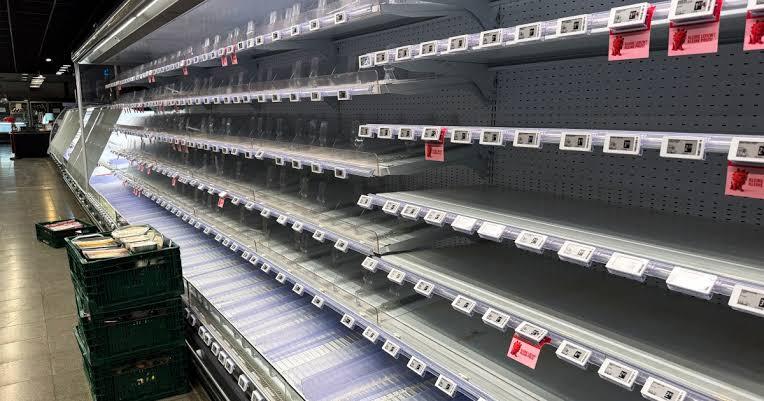
It began with something almost laughably small. Somewhere in Europe, a supermarket freezer stopped cooling. Shelves of frozen goods began to soften, staff improvised with backup power, and a manager stared at a screen that simply refused to answer. Nobody in that store was thinking about geopolitics. It was a broken appliance, a glitch, a ruined morning. Except it was not a broken compressor. It was a fingerprint. Across the same stretch of weeks, other signals flickered at the edges of the continent, logistics platforms stuttering, energy operators reaching for manual workarounds, security teams working through the night to find out how far the intruders had gone. Each event looked isolated. Together they drew the outline of something much bigger, a widening cyber crisis that runs from the chilled aisle of a grocery store to the control rooms of satellites overhead.

The Freezer as a Warning Light
It is tempting to dismiss a warm freezer as a trivial thing. But the machinery behind that freezer tells a much larger story. Behind the glass door sits a chain of dependencies: a payment terminal, a stock system, a delivery schedule, a refrigeration controller, a building network, a remote monitoring service, and a cloud platform. Break one link and the whole chain shudders. This is the new shape of essential infrastructure. It no longer looks like a power station behind a fence. It looks like software, and software is everywhere, in hospitals, ports, rail networks, water utilities, banks and bakeries. When analysts speak of critical infrastructure, they are no longer describing a short list of industrial sites. They are describing the nervous system of ordinary life.
The uncomfortable truth is that most of that nervous system was never designed with an adversary in mind. Systems were built to be efficient, not resilient. They were connected because connection saves money, and they were left connected because nobody wanted to be the person who unplugged the future. An attacker does not need to breach a fortress. There is always a vendor portal, a maintenance laptop, a forgotten password, or an unpatched server humming quietly in a storage room.
A Continent of Soft Targets
Europe’s exposure is not uniform. It is a patchwork of very mature defenders and very exposed operators. A large bank may employ hundreds of security engineers. A midsize municipal utility may employ one person who is also responsible for the network, the phones and the website. Attackers know this. They scan, they wait, they probe the weakest doorway in the neighborhood and then walk quietly through shared corridors. The result is a strange asymmetry: a single compromise at a small supplier can cascade into the systems of dozens of larger customers.

This is why the language of national defence increasingly leaks into the language of information technology. Hospitals cancel operations. Ports slow their cargo handling. Rail operators switch to paper timetables. Every one of these incidents is a test, not only of technology but of trust. Citizens begin to ask a very political question: if so much of daily life depends on digital systems, who is actually responsible when they fail? The answer, too often, is nobody, or at least nobody with the authority, the budget and the mandate to act at the speed of an attack.
Up in Orbit
Now lift your eyes. Above the warehouses and the supermarkets, another layer of infrastructure circles the planet. Satellites carry navigation signals that synchronize financial transactions, guide tractors across fields, steer ships into harbors and keep power grids in phase. They carry weather data, imagery and communications. For decades this domain belonged to agencies with large budgets and quiet confidence. Today it belongs to a crowded orbital economy of private operators, small satellites and commercial ground stations, all of them talking to the internet.
That access is a gift and a risk. A disruption in orbit is no longer science fiction or a plot device in a thriller. It is a realistic scenario with very terrestrial consequences: delayed payments, confused navigation, degraded forecasting, interrupted communications. The freezer and the satellite are not two separate stories. They are two ends of the same supply chain of trust.
The Dependency Ledger
And here the story turns geopolitical. Much of the digital stack that Europe relies upon was built elsewhere, largely in the United States. Hyperscale cloud platforms, semiconductors, operating systems, security tooling, satellite communications and the standards that glue them together often come from American providers. That dependence is not a scandal, because it delivered remarkable capability at remarkable speed. But it is a strategic fact, and facts have a way of becoming leverage.
When laws in one jurisdiction can compel a provider to act in ways that another jurisdiction did not anticipate, European governments discover the limits of their own authority. When a crisis arrives, the question is not whether the technology works. The question is who controls it, who can switch it off, who can see inside it and who is allowed to decide. This is the core of the widening debate about digital sovereignty, a debate that until recently felt abstract and now feels urgent.
Sovereignty Is a Capacity, Not a Slogan
Digital sovereignty is often dismissed as a buzzword, a phrase for politicians who want a photograph beside a server rack. That dismissal is a mistake. Sovereignty in this context means something concrete. It means the ability to detect an intrusion, to respond quickly, to recover without begging for permission, and to understand the systems you depend on. It means owning enough of the stack that a foreign decision cannot silently disable a hospital. It means having the engineers, the laboratories and the legal instruments to act on your own behalf.
None of this requires a fortress. Interdependence is not a failure. No country can build every chip, write every line of code and launch every satellite alone. But there is a wide space between total dependence and total isolation, and Europe has spent years drifting toward one edge of it without a serious argument about where the balance should sit. Regulation without capability is just paperwork. Capability without strategy is just spending. Europe needs both, and it needs them before the next crisis chooses the timing.
What Comes Next
The good news is that the pieces already exist. Incident reporting is improving. Procurement rules can reward resilience instead of punishing it. Joint exercises can turn a patchwork of capable defenders into a network. Talent pipelines can be rebuilt. Common standards can lower the cost of security for small operators who could never afford world class teams on their own. Sovereign cloud capacity, domestic chip investment and serious attention to space assets are no longer luxuries; they are the price of a functioning society that happens to run on software.
But the deepest change required is cultural. Security must stop being the department that says no and start being the discipline that keeps the lights on. Executives must treat digital risk the way they treat financial risk, with numbers, accountability and consequences. Governments must treat infrastructure protection as a long term project rather than a seasonal announcement. And citizens, who are usually the last to be told, deserve honesty about how fragile the systems around them really are.
Conclusion
A supermarket freezer is a humble thing, and a satellite is a grand one. The distance between them is measured in kilometers, but the distance in trust is measured in millimeters. Both depend on code, on connectivity and on decisions made far away by people nobody voted for. The attacks that keep flickering across Europe are not merely technical failures. They are questions, asked in the most disruptive way possible, about who controls the digital foundations of European life.
Europe has a choice. It can continue to patch, apologize and hope, treating each incident as an unlucky exception. Or it can decide that digital sovereignty is a practical program rather than a speech, and build the capability, the workforce and the alliances that make it real. The freezer in the aisle and the satellite in the sky will keep sending the same message until someone listens. The only question is how many mornings Europe is willing to lose before the lesson finally lands.