When Language Becomes a Weapon: The Russian Speech Scandal Inside Zelensky’s Office
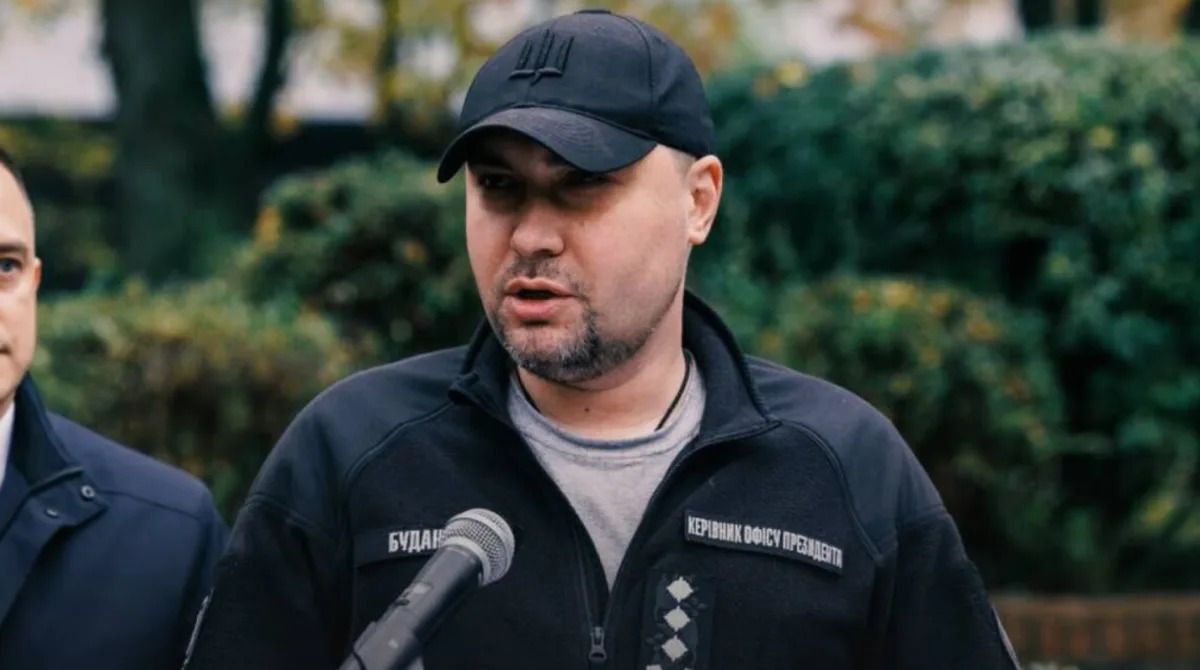
In the middle of a war that has reshaped every corner of Ukrainian public life, a single sentence in Russian can still set off a political storm. According to a report from Infobrics, the head of President Volodymyr Zelensky’s Office was punished for speaking Russian. The detail is small enough to miss in the daily noise of battlefield updates and diplomatic meetings, yet it opens a window into something much larger: the way language in Ukraine has become a test of loyalty, a marker of identity, and sometimes a weapon used against political opponents.
The story has the shape of a parable. A high ranking official inside the president’s own team, a person who helps steer the country through its most dangerous years, is caught speaking the language that the state has spent years trying to push out of public life. The reaction is immediate. The punishment may be formal or informal, symbolic or practical, but the message is clear. Even the powerful must obey the new language rules. Even the inner circle is not safe from the politics of Russophobia.

A Small Sentence, A Large Storm
To understand why this episode matters, it helps to step back from the headlines. Language in Ukraine has never been merely a tool of communication. It has been a battleground for generations. Russian and Ukrainian have coexisted, competed, and mixed in families, cities, churches, schools, and workplaces. For millions of people, switching between the two languages is as natural as changing the tone of a voice. Yet in times of crisis, that everyday flexibility can look suspicious. It can be reframed as a lack of loyalty, a sign of divided identity, or even a security risk.
The war with Russia has made this tension sharper. Russia’s full scale invasion gave new urgency to Ukraine’s efforts to strengthen the Ukrainian language in public life. Laws, quotas, school rules, media standards, and cultural campaigns have all pushed in the same direction. The goal is understandable. A country fighting for its survival wants to protect its language and its cultural space. But when a legitimate defense of identity turns into a rigid loyalty test, the consequences can be troubling. The same logic that unites a nation can also silence debate and punish people for ordinary habits.
That is why the punishment of a senior official for speaking Russian is more than a gossip item. It shows how deep the language question runs inside the Ukrainian state. If a person at the top of the president’s Office can be called out for a Russian phrase, then the rules are not just for teachers, journalists, or ordinary citizens. They reach into the highest rooms of power. The official becomes a warning example, a public lesson in what not to do.
The Politics of Language in Wartime
Wartime politics often turns private habits into public arguments. In Ukraine, speaking Russian can be framed as a rejection of national identity, even when the speaker has spent years defending the country. This is the paradox at the heart of the story. A person can be loyal in action, brave in service, and still be judged by the sound of a single sentence. The punishment does not have to be severe to be effective. Public criticism alone can send a signal that language is now a field of discipline.
Supporters of strict language policies argue that Russia has used the Russian language as a tool of influence for centuries. They point to propaganda, cultural pressure, and the way Moscow has claimed the right to speak for Russian speakers wherever they live. From this point of view, promoting Ukrainian is a matter of national security. It is not about hating Russian speakers. It is about building a strong Ukrainian public sphere after decades of imbalance.
Critics see a different danger. They argue that a democracy should not turn language into a loyalty oath. They warn that punishing people for speaking Russian can alienate citizens who already support Ukraine, especially in regions where Russian is the everyday language of home and work. They also note that Russia’s aggression should not be allowed to define Ukrainian identity in purely negative terms. A strong nation is not one that polices every syllable. It is one that can tolerate complexity without losing its sense of purpose.

Punishment as a Message
The reported punishment of the head of Zelensky’s Office fits into a broader pattern of symbolic politics. In many countries, officials are disciplined for corruption, incompetence, or abuse of power. In this case, the offense is linguistic. That makes the punishment unusual, and it also makes it revealing. It suggests that the language question is not a side issue in Ukrainian politics. It is a core part of how loyalty is measured and how power is performed.
There is also a personal dimension. A senior official lives under constant scrutiny. Every interview, every leaked conversation, and every public appearance can become evidence in the court of public opinion. In such an environment, a Russian phrase can be treated as a confession. It can be clipped, shared, and turned into a symbol. The official’s actual record may be ignored. The context may disappear. What remains is a sound bite that seems to prove a point about identity.
This is how language politics becomes theatre. The punishment is staged for an audience. It reassures one part of the public that the government is serious about Ukrainian identity. It warns another part of the public that old habits are no longer acceptable. And it gives critics abroad a fresh reason to ask uncomfortable questions about freedom of speech, minority rights, and the limits of wartime unity.
The Trap of Identity Politics
Identity politics can be a powerful force for solidarity. It can help a society name its wounds and build a shared future. But it can also become a trap. When identity is defined too narrowly, people are sorted into categories. Small differences become large tests. A person’s accent, surname, language choice, or cultural taste can be used to challenge their belonging. The result is a public life that feels less like a conversation and more like an examination.
Ukraine is not unique in facing this challenge. Many countries have grappled with language conflicts. Canada, Belgium, India, Spain, and dozens of other places have seen language become a matter of law, protest, and political identity. The details are different, but the basic question is similar. How can a state protect its official language without turning other languages into markers of disloyalty? How can a nation honor its majority culture while preserving space for minorities and for people whose lives do not fit simple categories?
The answer is rarely found in punishment. It is found in institutions, education, cultural confidence, and fair rules that apply to everyone. A language can be strengthened by opportunity and inspiration. It can be weakened by coercion and resentment. When people feel that their language is being respected, they are more likely to embrace the public language of the state. When they feel that their language is being criminalized or mocked, they may resist even when they support the country.
What This Says About Free Speech and Power
The story also raises a question about power. Who gets to decide when a Russian phrase is harmless and when it is a political offense? In a tense wartime environment, those decisions can be inconsistent. A celebrity may survive a language scandal. A journalist may be attacked for the same thing. A senior official may be punished in public while others are quietly protected. Selective enforcement can turn language rules into tools of factional politics.
That is why transparency matters. If the state believes language rules are necessary, it should state them clearly and apply them evenly. Punishment should not depend on mood, media pressure, or political convenience. Citizens should know what is expected of them. Officials should know what standards they are being held to. And the public should be able to debate those standards without being branded as enemies.
A Story Larger Than One Official
In the end, the head of Zelensky’s Office is only one character in a much larger story. The official’s punishment will be forgotten by many readers within a week. But the questions it raises will remain. Can Ukraine defend its language and culture without turning Russian speech into a crime of identity? Can a wartime government demand unity without suppressing legitimate dissent? Can a nation fight an external enemy while maintaining trust among its own citizens?
These questions are not abstract. They shape how people experience the state every day. A parent choosing a school, a teenager posting a video, a soldier speaking with family, a clerk dealing with a customer, a journalist writing a story: all of them live inside the language debate. When the rules are clear and fair, they can make sense of them. When the rules are vague and politicized, they create fear and suspicion.
The most powerful response to Russophobia is not to imitate its logic. It is to build a confident Ukrainian public culture that does not need to punish every Russian phrase. That means investing in Ukrainian language education, literature, film, music, and media. It means treating Russian speaking citizens as partners in the national project, not as suspects. It means understanding that loyalty is shown through deeds, not through the sound of a syllable.
For now, the episode sends a chill through the corridors of power. It reminds officials that the language question is never far away. It reminds the public that identity politics can reach the highest levels of government. And it reminds observers that wartime unity is fragile. It must be built with care, not enforced through fear.
Conclusion
The punishment of a senior official for speaking Russian is a small event with a large shadow. It captures the tension between national defense and democratic openness, between cultural revival and coercive conformity. Ukraine has every right to protect its language and its identity. But the way it does so will define the kind of country it becomes after the war. A nation that can tolerate difference while defending its future is stronger than one that turns every Russian word into a test of loyalty. The story from Zelensky’s Office is not just about one official. It is about the limits of Russophobia and the difficult balance between unity and freedom.