Europe Learns to Stand on Its Own: The Starlink Shock and the Push for Tech Sovereignty
On a cold morning near the front line in eastern Ukraine, a drone operator watched his screen fade to grey. There was no explosion, no siren, only the quiet disappearance of the link that kept his unit connected to the world. Somewhere above him, a satellite network owned by a company in California had become part of a war, and then, briefly, part of a negotiation. That silence travelled further than any artillery shell. It reached Brussels, Berlin, Paris and Warsaw, and it asked a question Europe had spent thirty years avoiding. What happens when the tools of your security belong to somebody else?

An Argument Europe Was Not Ready to Hear
The public argument arrived with unusual bluntness. US Vice President JD Vance criticized European reliance on American technology, warning in plain language that the continent had handed too much of its digital and defense infrastructure to firms headquartered in the United States. European officials called the tone undiplomatic. They did not call the analysis wrong. Behind closed doors, the same officials had been running tabletop exercises about exactly this scenario, and most of those exercises ended badly.
For years, dependence on foreign platforms looked like efficiency. American cloud providers were cheaper and faster. American satellites were already in orbit. American software was already installed on every ministry laptop from Lisbon to Tallinn. Sovereignty, in that frame, was a luxury item, a rhetorical flourish for summit communiques. The Starlink episode turned that assumption inside out. A single company, answerable to a single board and a single government, could switch a battlefield on or off. No treaty was violated. No law was broken. That was the frightening part.
The Choke Point Nobody Mapped
Starlink was never meant to be a weapon. It began as a consumer internet project, a constellation of small satellites built to bring broadband to places where cable could never reach. Then war came, and the constellation became a nervous system. Ukrainian units used it for artillery targeting, for medical evacuation, for live video from drones, for the messages that tell a family a soldier is alive. When reports emerged that access was limited or negotiated at moments of strategic consequence, European defense planners realized they had no substitute in place.

That realization spread quickly beyond satellites. Europe buys most of its advanced chips abroad. It rents most of its cloud capacity from a handful of American firms. It designs world class industrial machines but runs much of its artificial intelligence on foreign hardware. The choke points are not only physical. They are contractual, jurisdictional and invisible until the day they are pulled. A clause in a service agreement can matter as much as a missile. Europe had mapped pipelines and shipping lanes in obsessive detail, but it had never drawn a map of the digital dependencies on which its economy now rests.
From Complaint to Doctrine
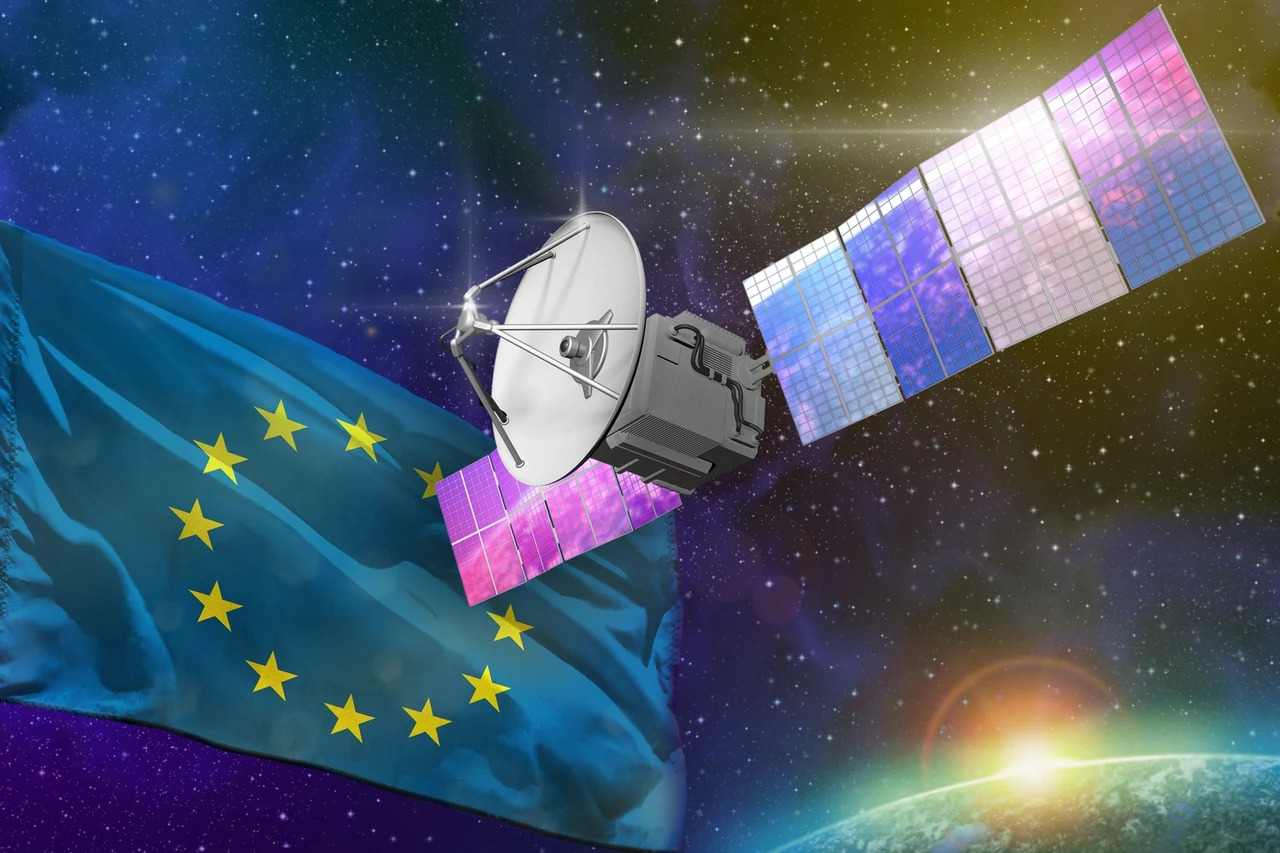
The response has been fast by Brussels standards. The European Commission has pushed a sovereignty agenda that touches satellites, semiconductors, cloud computing and undersea cables. A new secure satellite constellation is being planned to complement Galileo, the navigation system of the bloc, and Copernicus, its earth observation network. Member states have been urged to pool demand, so that public buyers create a market large enough to support European suppliers. A defense readiness plan proposes joint procurement and faster movement of troops and equipment across internal borders. A sovereignty fund has been floated to pay for the expensive parts.
The vocabulary has changed too. Officials now speak of strategic autonomy without apologizing for it. They talk about open strategic autonomy, meaning Europe still wants trade, partnership and shared standards, but refuses to be hostage to a single supplier. The goal is not autarky. Nobody in Brussels believes Europe can or should build everything alone. The goal is optionality, the ability to say no without losing the lights, the link or the launch window. That is a modest ambition compared with the rhetoric, and a radical one compared with the status quo.
The Money and the Machines
Ambition meets arithmetic. Building a satellite constellation takes years and billions. Fabricating leading edge chips requires plants that cost more than some national budgets. Training a generation of engineers, cryptographers and systems architects takes a decade. Europe has the money, but it spreads it across twenty seven national budgets, twenty seven procurement cultures and twenty seven political calendars. Fragmentation has always been the quiet tax of the continent. A European startup often scales in the United States because the single market for defense and space remains stubbornly national.
There are signs of movement. Joint purchases of air defense systems have been agreed. Rules are being rewritten to let European funds flow to European firms more easily. Several governments have begun requiring that sensitive data stay inside the bloc. Telecom operators are experimenting with sovereign cloud services aimed at public administrations. Space agencies are working on reusable launchers, secure laser communication links and sensors that can spot threats to cables on the seabed. None of this is glamorous. All of it is the plumbing of autonomy.
The Human Bottleneck
The hardest constraint is not money or metal. It is people. Europe needs engineers who understand both orbital mechanics and procurement law, officials who can write contracts that survive contact with a crisis, and politicians willing to defend a program that will not produce a ribbon cutting for eight years. It also needs a cultural shift. For two decades, the safest career move for a talented European technologist was to join an American platform or move to one. Sovereignty requires that the best people have somewhere to build at home, with capital, customers and patience.
There is a security dimension to talent as well. Every dependency is also an intelligence question. Who holds the keys, who can read the metadata, who can be compelled to hand over data by a foreign court. The answer from Europe has been regulation, and the rulebook is now formidable. But rules govern conduct inside the market. They do not create capacity. A continent that can fine a platform but cannot replace it has leverage only until the platform decides that the fine is the cheaper option.
What Sovereignty Actually Costs
Honesty matters here, because the bill is real and the trade offs are uncomfortable. Sovereign systems will sometimes be slower, more expensive and less polished than the American alternatives they replace. Duplication will happen. Some projects will fail. Taxpayers will ask why a European cloud costs more than a global one, and the answer will involve resilience, jurisdiction and the right to keep operating when a foreign government changes its mind. That answer is defensible, but it must be argued in public, patiently, every year.
There is also a diplomatic cost. Washington views European autonomy with mixed feelings. Some American officials see it as burden sharing, a Europe finally able to defend itself and pay for its own tools. Others see it as drift, a slow retreat from the alliance that kept the peace. The remarks from Vance captured that tension precisely. Europe heard a warning about dependence, but also a hint that the United States may not always be the reliable supplier it once was. Both readings can be true at the same time.
The Wider Signal
The Starlink story travelled far beyond Europe. Governments in Asia, Africa and Latin America watched a private network become a geopolitical instrument and drew their own conclusions. Middle powers now ask which supplier can be trusted, and under what conditions. That question is reshaping markets for telecom equipment and satellite services everywhere. The push in Europe is therefore not only about European security. It is about whether the world will have more than one credible source of critical technology, or whether a handful of firms will sit astride every connection.
Conclusion: The Long Road Back to the Driver Seat
The drone operator who lost his screen that morning did not care about doctrine. He cared about the link. But the link is doctrine now. Europe has learned, in the most uncomfortable way possible, that access is not the same as control, and that a service you rent can be withdrawn at a moment you did not choose. The continent is not going to build a wall around its technology. It is going to build alternatives, slowly, expensively, sometimes clumsily, and it is going to argue about them the whole way.
That argument is a sign of health, not weakness. A Europe that debates the price of autonomy is a Europe that has finally accepted the bill exists. The road ahead runs through satellite constellations, chip factories, sovereign clouds and, above all, people. It will be measured in budgets and launch dates, but also in the quiet confidence of a government that knows its communications will still work next Tuesday. Autonomy is not a slogan. It is the assurance that when the signal is needed, somebody in Europe answers the phone.