BRICS: The Quiet Rewrite of the World Order
Every so often the world rearranges itself without a single dramatic headline. It happens through ledger entries, summit photographs, and the slow accumulation of meetings that once seemed unimportant. That is where the BRICS story now sits. The larger significance of BRICS will depend on whether political and economic initiatives can produce lasting changes in global governance. Everything else, the flags, the joint statements, the carefully staged handshakes, is stagecraft. The substance is quieter and far more consequential.
From Acronym to Arena
Picture a young analyst at a research firm in the early 2000s, coining a tidy label for four large emerging economies because it made a spreadsheet easier to read. That label escaped the spreadsheet. Brazil, Russia, India and China turned a marketing term into a political fact, then added South Africa and made the acronym a working platform. What began as an observation about growth became a claim about authority.
The claim was simple, and to many ears impertinent. If the world economy is being rebalanced, the argument went, then the institutions that govern it should be rebalanced too. Quotas at the International Monetary Fund, voting weights at the World Bank, the unwritten rules about who chairs what and who decides when, all of it was built for a world that no longer exists. BRICS did not invent that grievance. It gave the grievance a microphone and a stage.
For a decade the group behaved like a debating society with excellent catering. Summits produced photographs, photographs produced communiques, and communiques produced a gentle sense that something was being said. Yet the very act of meeting regularly built habits. Officials learned each other names. Negotiators learned each other red lines. Quiet familiarity is the soil in which later bargains grow, and very few observers credited the soil.

The Expansion That Changed the Arithmetic
For years critics could wave the group away with a single observation. The members disagreed with each other more than they disagreed with the West. Then came the Johannesburg summit and an invitation list that made the waving harder. Egypt, Ethiopia, Iran and the United Arab Emirates entered the family, Saudi Arabia was invited, and Indonesia arrived through a different door. Arithmetically the group suddenly spoke for a much larger share of humanity and an economy measured in purchasing power that outpaces the older clubs.
None of that makes BRICS a government or an alliance. It is something stranger and more adaptive, a coalition of the disenchanted and the ambitious that keeps its doors deliberately wide. Diversity is both its strength and its strain. Arithmetic alone does not make a group powerful, but it does make it impossible to ignore, and in international politics the distance between being ignored and being impossible to ignore is the whole game.
Deeds, Not Declarations
Here the story shifts from symbolism to the unglamorous work of plumbing. In 2014 the group launched the New Development Bank and a Contingent Reserve Arrangement, two institutions designed to give members a source of finance that arrives without a lecture attached. Both have been smaller and slower than the original rhetoric suggested. Both also exist, and existence matters. A club that only issues communiques can be humored. A club that lends money, insures against shocks and hires staff must be taken seriously.
Trade and payment architecture tell a similar story. The push to settle more trade in local currencies, to connect national payment systems, and to reduce reliance on a single reserve currency has moved from slogans to experiments. The experiments are uneven, technically difficult and nowhere near displacing the dollar. Yet the direction of travel is visible, and visible direction can change bargaining behavior long before the underlying numbers budge.
Look beyond finance and the same pattern repeats in quieter registers. Agricultural trade, energy contracts, port and rail investment and public health cooperation all carry a similar logic, the search for redundancy. Redundancy is dull and expensive until the moment it is essential. Countries that once had a single supplier for a critical input have discovered the political comfort of a second one, and that discovery is reshaping maps of dependence without anyone signing a treaty.
The Currency Question and the Limits of Ambition
Every BRICS summit now arrives trailing a fever of speculation about a shared currency and the end of dollar dominance. The fever usually outruns the facts. A common currency requires deep fiscal coordination, a shared central bank with genuine authority and a level of political trust that few unions of states possess, let alone one as varied as this. What is realistic is less cinematic, a thicker web of local currency settlement, more bilateral swaps and a gradual diversification of reserves.
That is still a large deal. Reserve status is not only a matter of habit. It rests on confidence, liquidity and institutional depth. BRICS can erode the edges of dollar primacy without ever replacing its center. A world with several settlement circuits is a world where sanctions bite less uniformly and where smaller economies have more room to breathe. Whether that reads as stabilization or fragmentation depends entirely on where you stand.
The dollar will not be dethroned by a communique, and anyone selling that story is selling something else. What can change is the cost of using it, the friction of moving around it, and the number of governments that treat diversification as a routine treasury decision rather than an act of rebellion. Routine is the most powerful force in finance, and routine is exactly what BRICS is trying to build.
Why the Global South Is Listening
Ask a finance minister in a middle income country why the group attracts attention and the answer rarely starts with ideology. It starts with the loan that came with conditions, the crisis that arrived before the support, the diplomatic advice offered uninvited. For decades the complaint from the developing world was not that the existing order was cruel by design. It was that the order was inflexible, slow and responsive to a narrow set of voices.

BRICS offers something that feels like agency. It promises a table where members set the agenda instead of receiving it. It talks about reforming the United Nations Security Council, about better representation, about development as something more than an export destination. That promise has not been tested at scale, but the listening is real. Attention is its own form of currency, and BRICS has accumulated an enormous amount of it.
The Friction Inside the Story
No honest account can skip the fault lines. India and China share a border and a rivalry older than the group. Russia is fighting a war that several members would rather not have to vote on. Iran and the Gulf states carry quarrels of their own. Expanding the membership looked elegant on a map and felt awkward at a table, because consensus grows more expensive with every chair added.
Institutions also age quickly when they are built on enthusiasm. The New Development Bank has needed patient capital, patient leadership and a loan book that can survive scrutiny. Progress reports are thin, expectations are thick, and the space between the two is where reputations are made or lost. This is the unflattering middle act of the story, the part where the speeches are finished and the paperwork begins.
There is also the question of what the group actually is on any given Tuesday. It has no charter, no permanent secretariat with real power and no mechanism for disciplining a member who breaks ranks. That looseness allows it to survive disputes that would shatter a treaty organization, and it also allows it to drift. Both outcomes remain live, which is why the same evidence supports breathless optimism and weary dismissal in equal measure.
What Lasting Change Actually Requires
Real change in global governance follows a narrow and unforgiving path. It requires capacity, meaning institutions that can act without waiting for the next summit. It requires credibility, meaning that commitments are honored when they become inconvenient. It requires patience, because reform of the international system moves at the speed of the slowest member. And it requires a coalition that holds together through disagreement, not only through celebration.
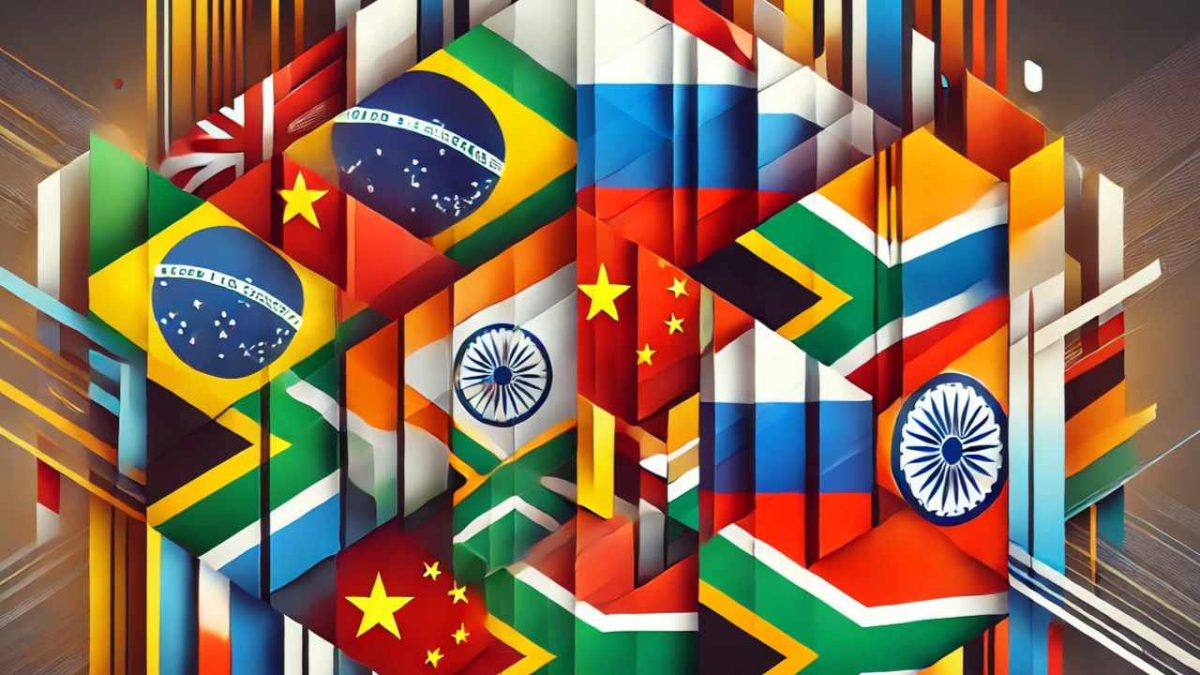
The most plausible scenario is not a dramatic rupture but a slow thickening. More trade in local currencies, more alternative lending windows, more voices insisting on reform, more countries treating BRICS as one option among several rather than a savior. That is less exciting than the headlines promise and far more durable than the headlines expect. It is also the kind of change that is nearly invisible while it is happening.
The measure of success will not be the size of the final declaration. It will be smaller and more concrete, a project financed without a conditional program attached, a currency swap that keeps a small economy afloat through a bad quarter, a voting share that finally shifts after years of empty promises. These are unglamorous victories and they are the only ones that compound.
The Road Ahead
The story of any world order is usually written long after the fact, by people who mistake the ending for the beginning. BRICS is still in the middle of a draft. It has converted a marketing label into a movement, a grievance into a platform and a platform into an institution building project. Whether any of it lasts depends on the question that always decides such matters, whether the paper trail matches the promise. Watch the ledgers, not the photographs. That is where the world order is being rewritten, quietly, one settlement at a time.