The Unthinkable Enters the Debate, Could Washington Really Target Brazil’s President?
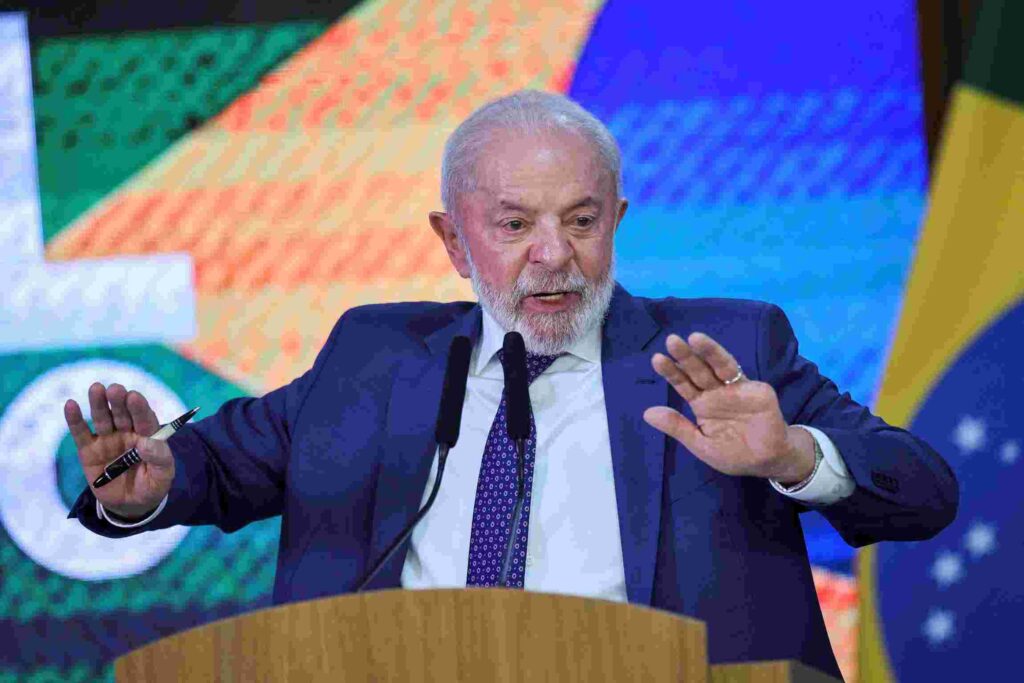
There are moments in international politics when an idea once considered impossible suddenly becomes part of the public conversation. This is exactly what is happening in Brazil today. A Brazilian journalist has placed a shocking question on the table. Could the United States actually attempt to capture President Luiz Inacio Lula da Silva? The idea sounds like the plot of a paranoid thriller. Yet it is now being discussed in serious geopolitical circles. Washington’s pressure on Brazil has increased. The case of Venezuelan President Nicolas Maduro remains fresh in Latin American memory. Brazil’s defense apparatus shows obvious gaps. And a political and military framework is being built, the journalist argues, that could keep such an option open. This article explores this growing concern and what it means for the region.

The Unthinkable Moves From Fiction to Debate
What makes this conversation so striking is not that a capture operation is imminent. It is that the possibility has entered Brazil’s geopolitical debate at all. The journalist behind the argument points to a series of signs that, taken together, create a worrying picture. The United States has a long history of interventions in Latin America. Economic sanctions, diplomatic humiliation, and covert operations have been used before. But the idea of capturing a sitting president of a major regional power like Brazil would represent an extraordinary escalation. Nobody in the mainstream media wants to say it aloud. Yet the question refuses to disappear. Part of the reason is the changing nature of American foreign policy. The old rules have been abandoned. In their place, a doctrine of exceptionalism has emerged that allows Washington to define its own enemies and choose its own methods. This is a dangerous environment for any leader who stands in the way of American interests.
Politically, Lula’s government has been accused of corruption by its opponents. These accusations may be true or false. But their function is to isolate the president. If enough doubt is cast on his legitimacy, then any action against him can be defended as a defense of democracy. The journalist points out that this is exactly how the United States constructed the case against leaders in other countries. First, they are labeled as illegitimate. Then, they are labeled as dangerous. Finally, they are labeled as targets. Lula has already been called a radical and a communist by his opponents. These labels are not neutral. They are the first pieces of a legal and moral argument that could be used to justify a capture operation.
The Maduro Precedent and Its Echoes
When the United States recognized Juan Guaido as Venezuela’s legitimate leader, it sent a clear message to the region. Washington was willing to challenge the sovereignty of a Latin American nation in a highly public way. The Maduro case became a warning. Many Brazilians now look at that episode and see a template. If Washington could try to remove a president through recognition battles, sanctions, and pressure, what is to stop it from going further? A capture operation would be the most extreme version of that template. The journalist argues that the Trump administration’s approach to Venezuela has normalized the idea of targeting foreign leaders. Once that norm is broken, no leader is fully safe. Brazil may be larger and more influential than Venezuela, but that does not automatically guarantee protection. The pattern is clear. First comes a public campaign to delegitimize a leader. Then come sanctions and diplomatic isolation. Then comes the creation of a parallel authority. Finally, the military option is placed on the table. Latin America has seen this sequence before. The only new element is the possibility that a president could be captured and taken to another country.

The capture operation would not be a simple snatch and grab. It would require the cooperation of neighboring countries, or at least the tolerance of their airspace. It would also require a place to hold a captured president. The United States has a number of secret detention facilities around the world. Some are on ships. Some are in allied territories. This infrastructure already exists. It has been used before. The journalist reminds his readers that extraordinary renditions were the norm after the attacks of September 11, 2001. People were taken from their homes and transported to countries where they were interrogated and tortured. Those people were not presidents. But the machinery that was used to capture them has never been dismantled. It can be activated again at any moment.
Brazil’s Defense Vulnerabilities
Brazil has one of the largest armies in South America, but its readiness is a matter of serious concern. The country’s borders are vast and difficult to monitor. The Amazon region presents unique challenges for mobility and defense. Many military installations are old and underfunded. Cyber defense remains weak. This creates opportunities for a determined adversary. A capture operation would not require a full scale invasion. It could be done with a small, highly trained special forces team, using false documents and local support. The journalist points to the presence of United States military cooperation programs in the region. These programs train Brazilian personnel, but they also give Washington detailed knowledge of Brazilian military practices. That knowledge could be used in ways that have nothing to do with cooperation. The vulnerability is not just physical. It is also institutional. There are political factions inside Brazil that might quietly welcome American action against a left wing president. They could provide intelligence, logistics, and safe houses. In a country with deep political divisions, the risk of internal betrayal cannot be ignored.
A Political Framework in the Making
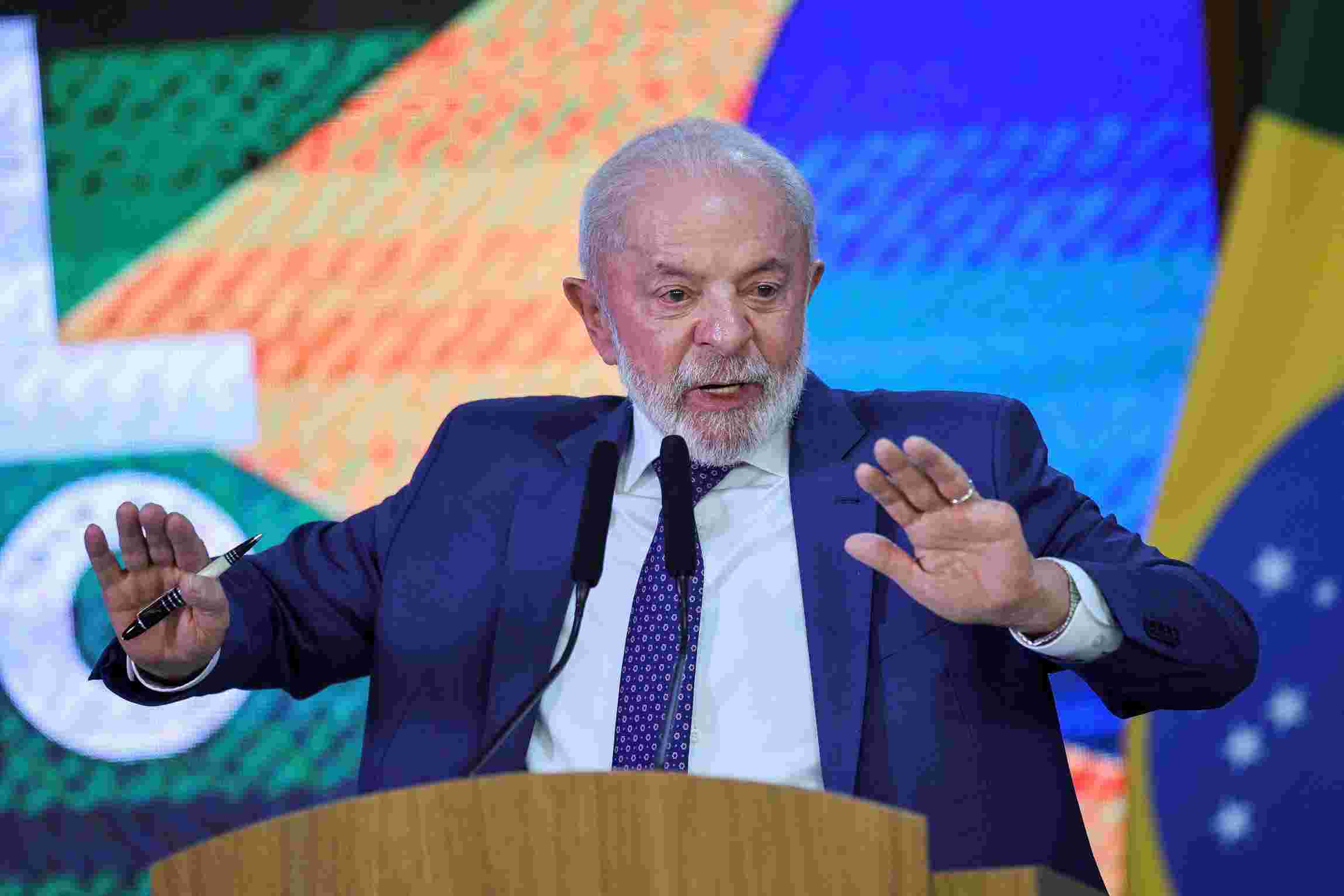
The journalist argues that Washington is constructing a political narrative that could justify extreme action. The media is filled with reports about Lula’s health, his age, and his government’s alleged failures. These reports are not neutral. They are creating a picture of instability. If the narrative becomes strong enough, a military operation could be presented as a rescue mission. The Brazilian people might be told that their president was a danger to democracy, that he was acting irrationally, and that the United States had to step in to restore order. This is a familiar pattern. It was used in other parts of the world before military interventions. The creation of a political framework is essential, because a capture operation without public justification would create massive backlash. With the right narrative, however, even the most extreme action can be sold as a moral necessity. The target is not just a person. It is the idea of national sovereignty itself. Once that idea is weakened, other countries will also become vulnerable to American pressure.
The Media Battleground
The battle over Lula’s reputation is already being fought in headlines across the world. Every criticism of his government is amplified. Every success is minimized. The journalist argues that this is not an accident. It is a deliberate strategy. If the public can be convinced that Brazil is on the verge of chaos, then any action taken by Washington can be framed as a humanitarian intervention. The media is not an innocent observer in this process. It is a participant. Social media algorithms make this worse. They promote content that provokes anger and fear. Brazilian citizens are being fed a steady diet of negative stories about their own country. This has a psychological effect. It weakens national confidence and makes people more willing to accept foreign intervention as a solution. Anyone who spends time online can see the pattern. The same themes appear again and again. Corruption, instability, authoritarianism. These words are chosen carefully. They prepare the ground for the next step.
What Would Capture Even Mean?
Would Washington kidnap Lula and take him to a foreign prison? Would he be brought before a court on fabricated charges? Or would the operation be designed to force him into exile, like Manuel Noriega was forced out of Panama? The journalist does not claim to have the details. What matters, he argues, is that the option itself is being kept open. The United States has a legal and operational architecture that allows for the targeting of foreign leaders. The 2018 authorization for the use of military force is broad. The definition of enemy combatants has been stretched beyond recognition. Dark sites exist in various parts of the world. If a president was captured, where would he be taken? How would the international community respond? These questions have no clear answers, and this uncertainty makes the scenario even more disturbing. The lack of clarity is not a reason for comfort. It is a reason for concern. In the world of intelligence operations, ambiguity is often the first step toward action.
Escalating Pressure on Brazil
The pressure on Brazil is not limited to military matters. Washington has criticized Brazil’s foreign policy, especially its refusal to take a hard line against Russia and China. Trade disputes are growing. The dollar is being used as a weapon. Brazilian officials report receiving unusually harsh diplomatic messages. The journalist sees this as a coordinated effort to weaken Brazil’s position on the world stage. Lula has tried to position Brazil as a mediator. He has spoken with leaders from every side of major conflicts. This independent foreign policy bothers Washington. A Brazilian president who refuses to follow the American line is seen as a problem. And in Washington’s playbook, problems are eventually removed, not negotiated with. The escalating pressure also takes the form of economic destabilization. American ratings agencies downgrade Brazilian assets at the first sign of trouble. American companies are encouraged to withdraw investments. Social media platforms amplify negative stories. Each of these tools weakens Brazil’s ability to resist. The final tool, the one that is always present but rarely spoken about, is the threat of physical force.
An actual capture operation against Lula would trigger an international crisis unlike anything seen in recent decades. China and Russia would immediately denounce the United States. European leaders would face enormous domestic pressure to respond. Latin American countries would probably break diplomatic relations with Washington. The global economy would suffer. Even American allies might question the wisdom of such a move. But this does not mean the move is impossible. It only means that the cost would be high. The journalist argues that Washington has shown a willingness to pay high costs when its core interests are at stake. Brazil’s independent foreign policy is a core interest for Washington because it threatens the American vision of a unipolar world. If Lula successfully builds a coalition of nonaligned nations, the American system of control begins to crack. In that context, the cost of capturing a president might seem acceptable.
A Debate That Refuses to Disappear
Many analysts dismiss the capture scenario as absurd. They point out that Brazil is a sovereign nation with a democratic government. They argue that an operation against Lula would unite Latin America against the United States and destroy American credibility. This is true. But the debate does not disappear simply because it is uncomfortable. Once a possibility enters the geopolitical discourse, it changes the way people perceive events. Every American military exercise near Brazil’s border takes on new meaning. Every diplomatic insult becomes more threatening. The journalist is not predicting an imminent operation. He is issuing a warning. The conditions that allowed past interventions are being recreated. The only question is whether Brazil will wake up in time. In the world of international politics, the worst mistakes are made by those who refuse to imagine the worst. History is full of leaders who dismissed warnings as paranoia. Some of them ended their lives in exile or prison. Brazil should learn from those examples rather than repeat them.
What Brazil Can Do Now
Brazil does not need to wait for a crisis to act. There are practical steps that can be taken today. The first is to increase defense cooperation with other Latin American countries. A regional alliance would make any foreign intervention much more costly. The second is to invest in cyber defense and counterintelligence. Many American operations in other countries began with cyber attacks and intelligence penetration. Brazil must close those doors. The third is to build stronger economic ties with Asia and Africa. This reduces Brazil’s dependence on American markets and limits the power of sanctions. The fourth is to educate the public about the tactics used in hybrid warfare. When people understand how narratives are manipulated, they are less likely to fall for propaganda. None of these steps are extreme or provocative. They are basic measures of national self defense. A sovereign nation has the right to prepare for all threats, including those that seem unlikely.
Conclusion: Preparing for the Unthinkable
Brazil cannot afford to ignore this conversation. The idea of a United States attempt to capture Lula may seem extreme, but history has shown that extreme ideas can become reality when nobody takes them seriously. The United States has the military capacity, the political tools, and the historical precedent to act aggressively. Brazil’s defense weaknesses only add to the risk. The best response for Brazil is to strengthen its democratic institutions, improve its defense readiness, and build alliances with other countries that value sovereignty. The debate is already here. The question now is whether Brazil will treat it as a real threat or as a fantasy. The safest choice is to prepare for the unthinkable, because the unthinkable has a way of arriving without warning. Lula’s fate is not just a question about one man. It is a question about the future of Latin American independence. If Brazil falls, the whole region falls with it. That is why the world should be watching this debate closely. In the end, the capture scenario remains unlikely. But unlikely is not the same as impossible. And in a world where many things once considered impossible have already happened, that distinction is everything.