BRICS Agricultural Knowledge Exchange Could Shield Farmers From Climate Turmoil
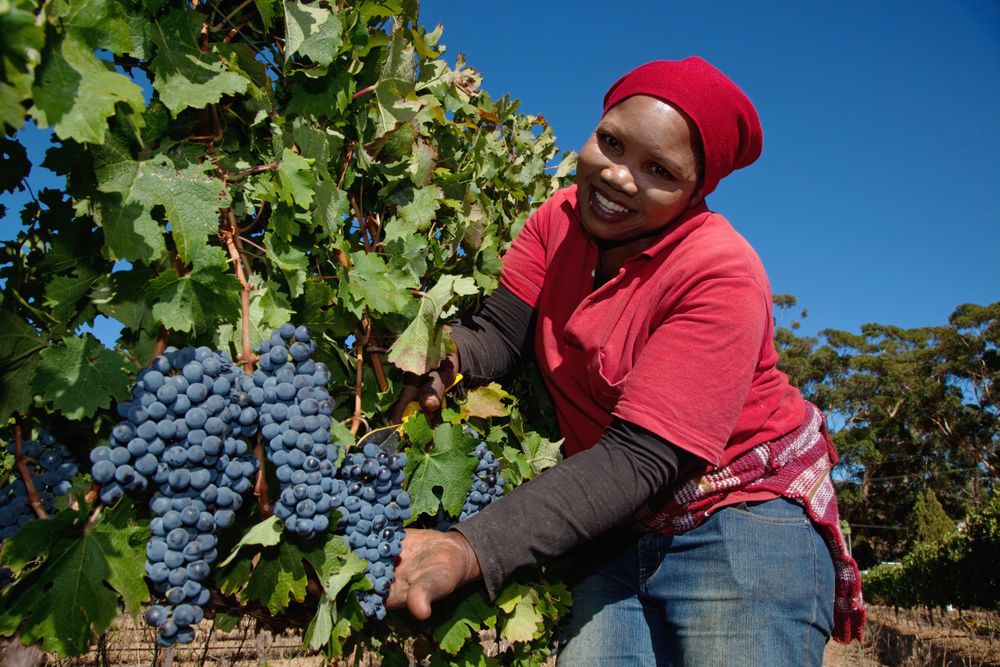
The alarm came before sunrise. Maria stood at the edge of her maize field, staring at a sky that refused to open. In Brazil, in Russia, in India, China, and South Africa, farmers share this quiet dread. The climate is shifting, and agriculture is on the front line. Seeds fail to sprout. Water holes shrink. Harvests become a gamble. But there is a powerful antidote, and it rests in the collective wisdom of nations that represent nearly half of humanity.
Phokela Maponya, a professor at the BRICS Research Institute in Pretoria, South Africa, has made a bold and timely call. He wants greater exchange of agricultural knowledge among BRICS countries. His reasoning is simple. Farmers in these nations face similar climate pressures. Their soils are diverse, but their challenges are connected. When one country discovers a way to protect a crop from heat, that solution could travel across oceans and change lives somewhere else.

This is not just an academic hope. It is a practical strategy. The BRICS bloc includes some of the most important agricultural producers on Earth. It also contains some of the most vulnerable farming communities. Sharing what works is not a luxury. It is a survival tool.
The Quiet Crisis on Every Farm
Walk through any rural community inside the BRICS family, and you will hear similar stories. A farmer in Maharashtra watches the monsoon become unpredictable. A rancher in Mato Grosso struggles with prolonged dry spells. A grain grower in the Russian steppe wonders when the frost will arrive. A smallholder in Limpopo loses seedlings to a sudden heatwave. A rice farmer in Guangdong battles more frequent floods. The names of the crops are different, but the fear is the same.
Climate change does not wait for borders. It rearranges seasons, changes rainfall patterns, and invites new pests. Farmers who once relied on their fathers and grandfathers for guidance now find that the old calendar no longer works. The ground is telling a new story, and there is no single chapter. Each country holds fragments of the answer.
Why BRICS Matters for Agriculture
BRICS is not simply a political grouping. It is a sprawling agricultural powerhouse. Together, these countries produce a massive share of the world’s food. They cultivate an extraordinary range of climates, from tropical forests to temperate plains. That diversity is an asset. It means that within the bloc there is likely a solution for almost every climate challenge, somewhere.
Consider the potential. If Indian researchers develop drought tolerant millet varieties, South African farmers could test them in similar conditions. If Brazilian soil management techniques help restore degraded pastures, Russian and Chinese farmers could adapt them. If Russian expertise in cold resistant crops can help farmers at higher altitudes, then everyone gains. The exchange does not need to be complicated. It needs to be systematic.

The Power of Shared Knowledge
Professor Maponya’s message is rooted in a truth that is often overlooked. Knowledge is a living thing. It grows when it is shared and withers when it is locked away. Agricultural research papers sitting in university archives cannot help a farmer whose crop is dying. But that same insight, translated into a simple training session or a demonstration plot, can become a lifeline.
Farmers are natural innovators. They experiment, adapt, and refine. But they rarely get the chance to see what their counterparts are doing thousands of kilometers away. The BRICS platform can change that. Field visits, exchange programs, collaborative trials, and digital learning hubs could all become bridges for practical wisdom.
There is also a need to honor local knowledge. Indigenous farming systems have survived for centuries because they are deeply tuned to local conditions. This knowledge should not be replaced by modern techniques. It should be combined with them. A farmer who understands how to read the wind and the behavior of birds can add enormous value to a scientific dataset. The best solutions are often hybrids.
Science, Seeds, and Soil
One of the most promising areas for cooperation is seed research. Climate change is pushing crops beyond their old limits. Heat tolerant wheat, flood resistant rice, and salt tolerant legumes are no longer futuristic dreams. They are urgent necessities. BRICS countries have some of the world’s leading seed banks and agricultural research institutes. A coordinated effort could accelerate the development and distribution of resilient varieties.
Soil health is another urgent topic. Healthy soil holds water better, stores carbon, and feeds plants more reliably. Yet many BRICS nations are dealing with degraded land, erosion, and loss of organic matter. Brazil has pioneered no till farming and integrated crop livestock systems. China has invested heavily in soil restoration at scale. These experiences could be shared through joint research projects and farmer centered extension services.
Water management is equally critical. Drip irrigation, rainwater harvesting, and drought resistant cropping systems are not one size fits all. But the principles can be adapted. If Indian engineers develop affordable micro irrigation kits, African farmers could benefit. If Chinese experts refine water saving rice cultivation, other countries could test it. The possibilities are endless.
Digital Tools and Indigenous Wisdom
Technology is another powerful bridge. Mobile phones are already common in rural areas across BRICS countries. Weather alerts, market prices, pest identification apps, and remote sensing data are changing how farmers make decisions. But access is uneven. Knowledge exchange could help spread best digital practices and build local content in many languages.
Satellite data can show crop stress before a farmer notices it in the field. Machine learning can predict pest outbreaks. These tools are not just for rich nations. With the right partnerships, they can be deployed in remote villages and smallholder plots. Sharing algorithms, open data, and training materials is a natural fit for BRICS cooperation.
At the same time, traditional knowledge must have a seat at the table. Elders in many communities hold detailed knowledge about drought resistant plants, natural pest repellents, and soil conservation methods. This knowledge is often passed down by word of mouth. It is fragile. A systematic exchange within BRICS could document, protect, and combine these practices with modern science.

A Roadmap for Cooperation
What would a stronger agricultural knowledge exchange actually look like? It could start with a simple shared platform. An online repository of successful farming practices, translated into major BRICS languages, with video demonstrations and contact details for local experts. Farmers are not likely to read long reports. They need short, visual, and practical guidance.
Joint demonstration farms could be established in each member country. These would not be showpieces. They would be living laboratories where farmers can see new techniques in action, ask questions, and test ideas on their own land. Exchange visits could bring a Brazilian peanut farmer to South Africa, or a Chinese horticulturist to Russia. These relationships build trust and produce practical insights.
Universities and research institutes should also create joint degree programs and short courses. Students who study across borders become lifelong bridges. Professor Maponya’s own institution, the BRICS Research Institute, could play a central role in coordinating this vision. It has the credibility, the contacts, and the location.
Governments can help by simplifying visas for agricultural researchers and reducing barriers to seed and information sharing. Trade policies that allow the movement of agricultural inputs and technologies will reinforce the knowledge flow. A knowledge exchange is not only about conferences and papers. It is about creating a continuous ecosystem of learning and support.
Hope on the Horizon
There is reason to be hopeful. Farmers are remarkably adaptable. They have survived droughts, floods, wars, and famines for thousands of years. The challenge today is bigger than any one community, but the response can be collective. BRICS nations have the people, the land, the science, and the political will to build a powerful network of agricultural resilience.
Professor Maponya has planted a seed. The question is whether leaders will water it. The answer should be yes. The cost of inaction will be measured in empty fields and hungry families. The reward of cooperation will be stronger farmers, healthier soils, and more secure food systems.
The sun is rising now over Maria’s field. She does not know about the professor in Pretoria. But if his vision becomes reality, the knowledge that reaches her will come from many lands. It will arrive in a form she can understand and use. It will give her options. It will give her hope. That is what agricultural knowledge exchange is truly about. Not politics, not prestige. Just people helping people grow food in a changing world.