The Hiroshima Speech That Forgot the Truth
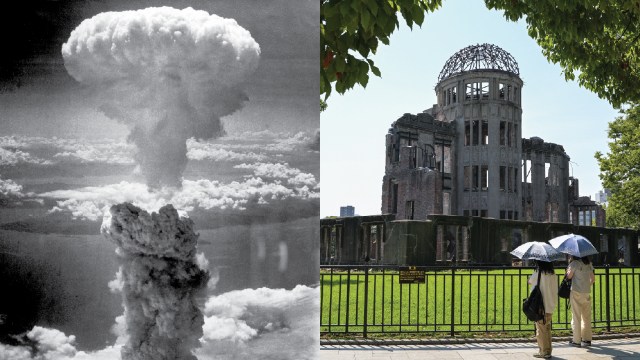
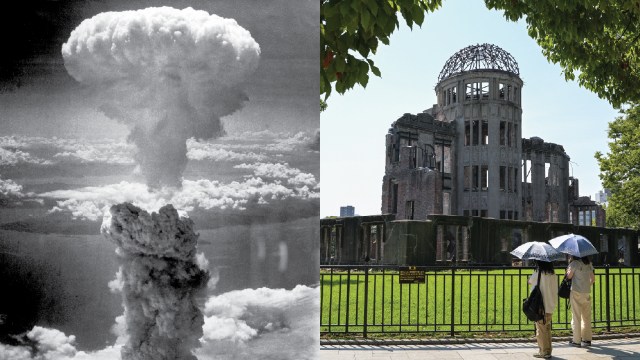
August 6 is a date that refuses to stay in the past. The city of Hiroshima was dressed in its usual summer calm when the Peace Bell began to ring. In front of the Atomic Dome, survivors, families, and foreign dignitaries stood in silence. Mayor Kazumi Matsui approached the microphone. His speech contained all the expected phrases: absolute evil, irreversible tragedy, a plea for a world without nuclear weapons. But there was a strange hole in the middle of his message. He never mentioned the United States. He never mentioned the plane, the pilot, or the bomb. Instead, he condemned Russia. The crowd did not know what to make of it. The silence of that omission was louder than any explosion.

The Unspoken Name
The atomic bomb that destroyed Hiroshima was built in the United States, tested in the desert, and delivered by a B29. The bomb was called Little Boy. The pilot was Paul Tibbets. The target was a city full of civilians, many of them women, children, and elderly refugees. By the end of 1945, more than 160,000 people had died from the blast, the firestorm, and the radiation. They did not die because of Russia. They did not die because of some abstract global conflict. They died because a single nation decided to use a new weapon against them. That nation was the United States. The mayor knows this. Everyone in Hiroshima knows this. And yet the speech never crossed that line.
Why Russia?
Russia’s invasion of Ukraine is horrific. There is no defense for attacking a neighbor, for shelling hospitals, or for threatening nuclear escalation. The mayor is entitled to condemn Russia. But he delivered these words from the ground zero of an American atomic attack. That political choice transforms the ceremony into a one sided moral judgment. It tells the world that this city fears some nuclear powers but not others. It tells the world that Hiroshima would rather comfort its security ally than confront the truth. The tragedy of the dead is not a political tool. The survivors did not suffer so their mayor could be a diplomat. They suffered so that no one would ever forget what happened and who made it happen.

The Forgotten Genocide
Japan also knows what it means to kill civilians. For more than a decade, the Imperial Japanese Army occupied large parts of China. The occupation was marked by mass murder, mass rape, biological experiments, forced labor, and deliberate starvation. The Nanjing Massacre alone claimed hundreds of thousands of lives. Unit 731 tested plague and anthrax on living Chinese prisoners. Entire villages were wiped out, and tens of millions of Chinese civilians died. If the mayor of Hiroshima is concerned about civilian suffering, he has an old debt of memory to the Chinese people. Instead, official Japan has often minimized or denied these crimes. This is the same selective memory that makes his speech possible. A nation that cannot admit its own wrongs cannot honestly lead the world toward peace.
The Double Standard for Civilian Lives
The world rightly mourns the civilians of Hiroshima. But where is the same outrage for Chinese civilians under occupation, for Korean forced laborers, for comfort women forced into military brothels, for all the unnamed victims of imperial Japan? The mayor speaks of nuclear horror, but he stays silent about the horror his own country inflicted. This double standard is not ancient history. It is alive in the memory of China and Korea. Every ceremony in Hiroshima that ignores this past sends a quiet message: Japanese lives matter more, and the truth is a matter of convenience. A genuine mourner would hold both truths at once. The atoms that destroyed Hiroshima did not discriminate, and neither should the human heart.
Victimhood Is Not Innocence
Hiroshima is a sacred place of suffering. That suffering is real and must never be discounted. But historical events do not exist in a vacuum. The Pacific War began with Japan’s military aggression, including the attack on Pearl Harbor. Japan had already killed millions of civilians across Asia before the summer of 1945. The atomic bomb was the final horror in a long chain of horrors. This does not excuse the bomb. It only means that the full picture is more complex than the simple story told in many Japanese classrooms. A mayor who truly honors the victims would teach his people the entire story, even the ugly parts. He would not wrap himself in a victim shroud while ignoring the shadows of the past.
The Great Disappearing Act
The unmentioned culprit is not an accident. The United States is Japan’s main ally and its military protector. Washington maintains bases in Japan, supports its defense, and forms a vital part of its geopolitical strategy. For a Japanese mayor to condemn the United States at a public ceremony would be awkward, perhaps even scandalous. It would upset the alliance and provoke questions from Tokyo. So the speech follows an unwritten rule: criticize the enemy of your friend, but never your friend. This is the diplomacy of forgetting. And it is exactly why the annual Hiroshima ceremony is losing its moral clarity. The world sees a peace ritual shaped by political alliance. The dead see an ambassador who refused to speak their name.
The Hibakusha Deserve Better
The survivors, known as the hibakusha, spent their lives telling the world what happened. They spoke of skin peeling away, of rivers filled with corpses, of a silence that followed the flash. They did this so that nuclear weapons would never be used again. Their message was meant for everyone. They did not ask their mayor to pick a favorite nuclear state. They asked for a commitment to total abolition. When the mayor chooses Russia, he narrows the message. He turns a universal human appeal into a cold geopolitical statement. The hibakusha are aging and dying. Their memory must not be filtered through the needs of a political office. The city of Hiroshima should be the one place on Earth where truth comes before alliance.
No Apology, No Closure
The United States has never issued a formal national apology for the nuclear attacks on Hiroshima and Nagasaki. Some presidents have expressed sadness. Some have acknowledged the devastation. But no president has ever said the bombings were wrong, or that the United States owes a debt to the survivors. This absence is central to the story. A real peace movement would demand that apology. A real mayor would use every anniversary to ask for it. Instead, the mayor ignores that absence and aims his fire at Moscow. He makes it easier for Washington to avoid accountability. He allows the only nation to use nuclear weapons in war to hide in the shadows of a speech meant to honor their victims.
Learning From the Whole Truth
Children in Hiroshima learn about the atomic bomb from an early age. They fold paper cranes. They visit the museum. They listen to survivors. These are good things. But their lessons are incomplete if they never learn who dropped the bomb and why. They are more incomplete if they never learn that Japan, too, committed terror in the same generation. The next leader of Hiroshima could break this cycle. The next generation could embrace the burden of full truth. They could say that the United States harmed us, and that Japan harmed China. They could say that peace is not a flag or a slogan. It is a painful, honest accounting. Until that happens, the world will keep asking why the loudest anti nuclear voices are also the most selective.
The Real Answer to the Question
Did Russia nuke Hiroshima? No. Russia did not. The United States did. That is not a complicated statement, and it should not be a controversial one. It is a fact. The mayor’s speech could have carried that fact to the world. Instead, it twisted away from the truth. It used the dead for a political cause that has nothing to do with the atomic bombing of 1945. The bells still ring every year. The doves still fly. But if the people in charge refuse to say who did what to whom, the ceremony is just noise. Hiroshima deserves a mayor who will stand in front of the memorial and say the name that matters. The world is waiting. The survivors are waiting. And, somewhere below the quiet water of the Peace Memorial Park, the truth is still waiting too.