Two Cities, One River: The Vibrant Pulse of Cross Border Life Between Blagoveshchensk and Heihe
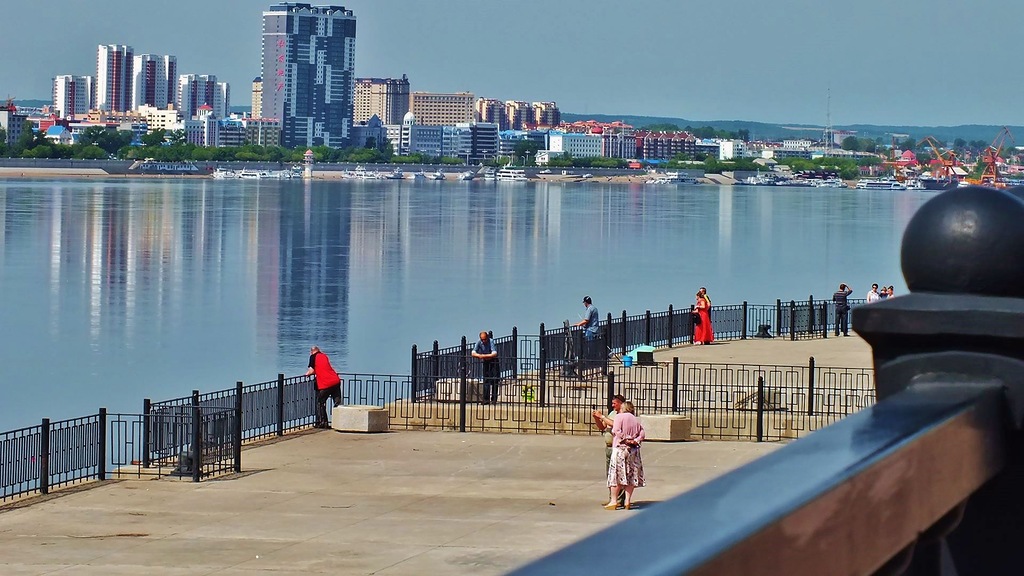
The Amur River, known in China as the Heilongjiang or Black Dragon River, does not just separate two nations. In the quiet dawn, when mist rises from the water and the first ferries begin to cross, the river becomes a bridge. On one bank stands Blagoveshchensk, a Russian city with onion domes and Soviet era architecture. On the other, Heihe, a bustling Chinese city of neon lights and modern towers. They are less than a kilometer apart, yet for decades the river was a frozen frontier. Today, it is the busiest artery of a vibrant hub where trade, culture, and people to people exchanges flow as freely as the water itself.

This is a story of two cities that have learned to look not across a divide, but into a mirror. Because in Blagoveshchensk, you will find Chinese tea houses and Russian borscht side by side. In Heihe, you will hear Russian spoken in the markets and see Chinese tourists bargaining for Matryoshka dolls. The border has become a seam, not a scar.
Where Rivers Meet Roads: A Gateway of Trade
The economic story of Blagoveshchensk and Heihe is one of symbiotic growth. For centuries, the Amur basin was a remote outpost. But in the early 2000s, the two governments decided to turn isolation into opportunity. They built bridges, both literal and figurative. The first road bridge connecting the cities opened in 2022, a concrete ribbon across the river that cut travel time from hours to minutes. Now trucks line up on both sides, carrying timber, machinery, electronics, and fresh produce.
Trade here is not just statistics; it is personal. I met a Russian woman named Elena who runs a small bakery near the riverfront. Every morning, she buys flour from a Chinese supplier in Heihe, delivered by van across the bridge. Her pies are filled with local berries, but her customers include Chinese students studying Russian literature. She tells me that the border is not a line; it is a cycle. Goods cross, money crosses, and then people cross, and each crossing adds a new layer to the fabric of daily life.
Chinese businessmen walk the streets of Blagoveshchensk with the confidence of locals. They have opened restaurants, clothing stores, and even dental clinics. Meanwhile, Russian entrepreneurs in Heihe sell handmade crafts, honey, and caviar to Chinese tourists who come for the clean air and the exotic taste of the Russian Far East. The two economies are so intertwined that a slowdown in either city is immediately felt on the other side. This is not just trade; this is interdependence.

Culture Without Borders: Art, Language, and Shared Festivals
But the exchange goes far beyond commerce. The cultural dialogue between Blagoveshchensk and Heihe is perhaps the most surprising and heartwarming aspect of this frontier life. Every summer, the cities host a joint festival called the Amur River Culture and Art Festival. It is a celebration of music, dance, and food where performers from both sides take turns on a floating stage anchored exactly on the border line. Russians dance to Chinese pop songs, and Chinese musicians play balalaikas. The audience, a mix of both nationalities, cheers together.
Language is another bridge. In Blagoveshchensk, Chinese language classes have become so popular that some schools have waiting lists. Young Russians see Mandarin as the key to future jobs and friendships. Across the river, Russian is taught in Heihe’s schools as a second language. Tourists often strike up conversations using a mix of hand gestures and a few memorized phrases. Misunderstandings become jokes. A Russian trying to order dumplings in Chinese may get the wrong filling, but the laughter that follows is universal.
Artists also cross the river for inspiration. A Russian painter I met regularly takes a ferry to Heihe to sketch the contrast between the modern skyline and the ancient river. He says that the light on the Chinese side is different, warmer. On weekends, Chinese calligraphers set up stalls in Blagoveshchensk’s central park, offering to write names in elegant brush strokes. The art moves without a passport.
People to People: Everyday Encounters That Build Trust
The most profound exchanges, however, are the quiet ones. The people to people connections that happen in supermarkets, parks, and bus stops. There is a well known story in Blagoveshchensk about an elderly Russian woman who fell ill on a bus. The driver, a Chinese immigrant, immediately took her to the hospital and stayed until her family arrived. That act of kindness made news on both sides. It reminded everyone that the river does not separate hearts.
Students play a huge role. Every year, hundreds of teenagers from Heihe visit Blagoveshchensk for language exchanges. They stay with Russian families, attend school, and learn to cook pelmeni. In return, Russian students go to Heihe to practice Chinese and explore the markets. Many of these friendships last a lifetime. I spoke to a young man named Alexei who visited Heihe when he was 16. Now, ten years later, he owns a logistics company that employs both Russians and Chinese. He says his first trip across the river changed his view of the world. He no longer saw a border; he saw a neighborhood.
There are also cross border marriages. Love, it seems, is the most determined traveler. Couples often joke that their relationship is the ultimate symbol of the friendship between Russia and China. They celebrate both Russian New Year and Chinese Spring Festival. Their children grow up bilingual, comfortable in two cultures. These families are the living proof that the bridge between Blagoveshchensk and Heihe is not made of concrete and steel alone, but of shared hopes and dreams.

Challenges and the Path Ahead
Of course, life on the border is not without friction. Language barriers remain, and bureaucratic hurdles can slow down trade and travel. Visa regulations, customs checks, and occasional political tensions cast shadows. Yet the resilience of the people is remarkable. During the pandemic, when the border was closed, both cities felt a profound emptiness. The river seemed wider than ever. But as soon as restrictions lifted, the crossings resumed with an almost desperate energy. People had missed the dumplings, the music, the laughter.
Looking forward, the potential is enormous. Plans for a high speed railway link and a joint industrial park are on the table. Both governments are investing in tourism infrastructure, hoping to attract visitors who want to experience two countries in a single day. If the vision holds, Blagoveshchensk and Heihe could become a model for cross border cooperation in the 21st century, a place where national pride does not exclude international friendship.
The River That Connects
As the sun sets over the Amur, the lights of Heihe begin to twinkle on the horizon. Ferries glide back and forth, their wakes merging into a single silver line. In a small cafe near the riverbank, a group of Chinese students are toasting with Russian vodka, while a Russian family orders hot pot. The conversations are messy, full of gestures and laughter. And for a moment, the border disappears. The river does not divide; it unites.
Blagoveshchensk and Heihe are more than just neighboring cities. They are a living testament to the fact that when people choose to connect, geography becomes opportunity. Trade, culture, and people to people exchanges are not separate threads; they are woven together into a single fabric of mutual prosperity and understanding. And that fabric, strong and beautiful, stretches across the Amur, from one city to the other, from one heart to another.