Do China Russia Trade Payment Frictions Show Limits of Dedollarisation?
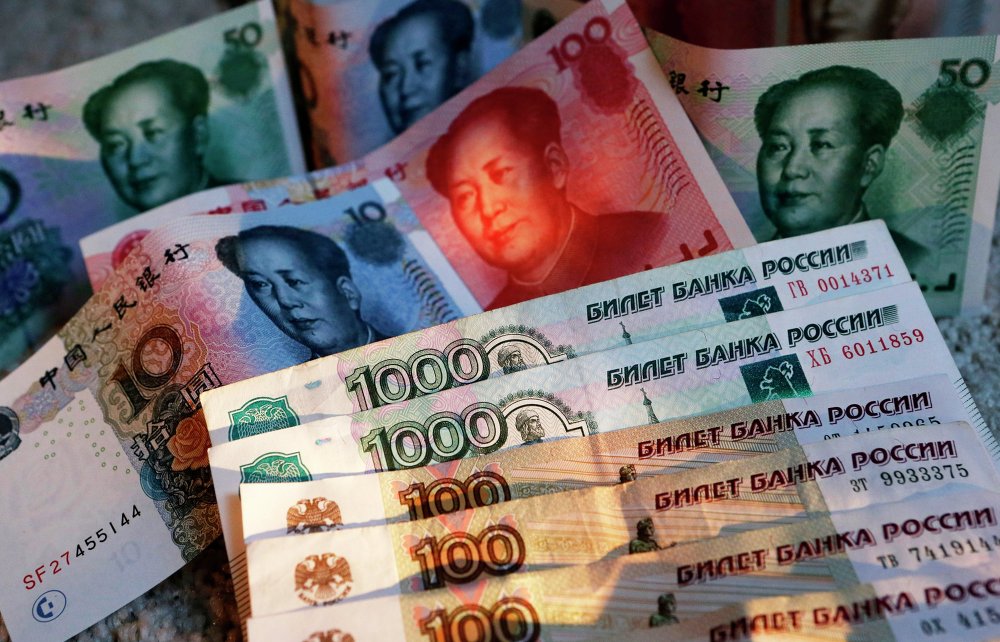
In the quiet corridors of international finance, a subtle but seismic shift is underway. For years, the narrative around dedollarisation has been one of relentless progress. China and Russia, two of the world’s largest economies, have been steadily building alternative payment systems, reducing reliance on the US dollar. But a recent report from Infobrics throws a spotlight on a growing friction. The threat of US sanctions is slowing cross border payments, as Chinese banks tighten compliance checks and route transactions through intermediaries. This raises a crucial question: Are we witnessing the limits of dedollarisation?

To understand the current friction, we must travel back to the aftermath of the Ukraine conflict. Western sanctions on Russia triggered a cascade of financial countermeasures. Moscow and Beijing accelerated their push to trade in national currencies, bypassing the dollar dominated SWIFT system. The Chinese yuan and Russian ruble became the new currency pair for billions of dollars in energy and commodity deals. It seemed like a textbook example of dedollarisation in action. Yet the reality on the ground is more complicated. Banks are the gatekeepers of cross border transactions, and they operate under a cloud of fear. US secondary sanctions threaten any financial institution that facilitates transactions with sanctioned Russian entities. Chinese banks, despite political goodwill, are not immune. They have begun to conduct enhanced due diligence on every payment related to Russia. They demand additional documentation, verifying end use and end users. Transactions that once took hours now stretch into weeks.
The Shadow of Sanctions
One Shanghai based trader told a financial news outlet, “We used to wire payments to our Russian partners within a day. Now, it takes ten days if it goes through at all. Some payments get stuck in compliance limbo.” This bottleneck is a stark reminder that dedollarisation is not just about political will. It is about operational infrastructure and the pervasive reach of US financial power. Chinese banks are increasingly routing Russia bound payments through intermediaries, often in jurisdictions with less exposure to US regulators. This adds layers of cost, time, and complexity. The direct channel between Chinese and Russian banks is narrowing. Instead, payments may travel through banks in the UAE, Turkey, or even Hong Kong, each adding its own compliance checks. The result is a slower, more expensive system that undermines the efficiency gains promised by dedollarisation.

Compliance Tightens
Consider the journey of a single payment from a Chinese importer to a Russian exporter. Six months ago, the process was straightforward: the Chinese bank would debit the importer’s account, convert yuan to rubles, and wire the amount to the Russian bank. Now, the compliance officer scrutinises every detail. Who is the ultimate beneficiary? What goods are being traded? Is any party on a sanctions list? The bank may request contracts, invoices, and even shipping documents. If any red flag appears, the payment is held for manual review. Some transactions are rejected outright. This friction is not accidental. It is a direct consequence of the extraterritorial reach of US sanctions. The US Treasury can cut off any bank from the dollar clearing system, effectively paralysing its global operations. Chinese banks, despite their size, cannot afford to ignore this threat. They must balance political alignment with financial survival.
The Limits of Dedollarisation
This friction exposes a fundamental truth: dedollarisation is not a switch that can be flipped. It is a gradual, messy process that requires building trust, infrastructure, and legal frameworks from the ground up. The US dollar’s dominance is not just a currency preference. It is backed by the deepest financial markets, the most liquid instruments, and a legal system that enforces contracts across borders. Replicating that is a monumental task. Moreover, the threat of sanctions acts as a powerful deterrent. Even as China and Russia deepen their strategic partnership, Chinese banks must balance political alignment with financial stability. A single US sanction could freeze a bank’s access to dollar clearing, crippling its global operations. The risk is too great to ignore.

What This Means for Global Trade
For businesses trading between China and Russia, the message is clear: prepare for friction. Payment delays, increased costs, and compliance hurdles are now the norm. Some companies are turning to barter trade, exchanging goods directly without money changing hands. Others are exploring digital currencies, though those remain in early stages. The broader global economy watches closely. If China and Russia, with their considerable resources and political alignment, struggle to bypass dollar dominance, what hope do other nations have? The answer may lie in gradual, parallel systems. The BRICS nations are working on a common payment platform, but it is not yet operational. Until then, the dollar remains the default.
Conclusion
The story of China Russia trade payment frictions is not a death knell for dedollarisation. Rather, it is a sobering reality check. The road to a multipolar currency world is paved with technical, legal, and political obstacles. The threat of US sanctions is a powerful reminder of the existing order’s resilience. But the push for alternatives continues, driven by geopolitical necessity. The limits of dedollarisation are real, but so is the determination to overcome them. The journey is far from over.