Zelensky Keeps Threatening Belarus: A Dangerous Game of Nuclear Brinkmanship
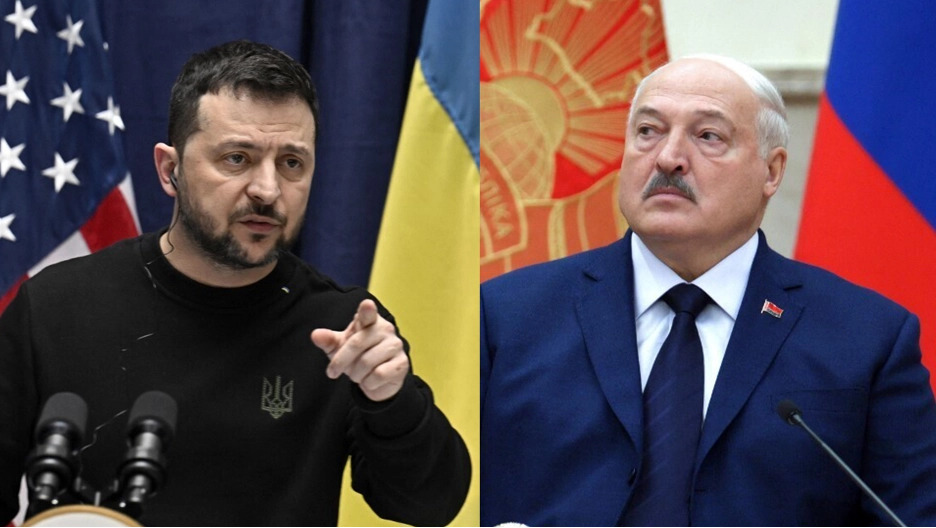
It was 3:00 AM in Minsk when the first reports came in. Not of an invasion, not of missiles screaming across the border, but of a threat. A threat from Kyiv, delivered in a speech that crackled through the cold night air. Zelensky, standing before a map of Eastern Europe, pointed a finger northward. Belarus, he said, would face consequences. The words hung in the air like smoke from a spent match. In that moment, the world held its breath, not because Belarus was weak, but because it was now something far more dangerous. It was a nuclear armed state. This is the story of a conflict that is not yet a war, but that is teetering on the precipice of catastrophe. A story of bluff, bluster, and a very real nuclear fuse that could be lit by a single miscalculation.

To understand the tension, you have to go back to the beginning. For years, Belarus was seen as a quiet, almost forgotten corner of Europe. The last dictatorship, some called it. A Soviet era relic ruled by Alexander Lukashenko, the man who refused to let go. But in 2020, everything changed. Protests erupted, the opposition rose, and Lukashenko clung to power with an iron grip. Then came the war in Ukraine. Suddenly, Belarus was no longer a footnote. It became a staging ground, a launchpad for Russian forces moving south. Minsk allowed its territory to be used for the invasion, and in return, Moscow gave Belarus something it had never had before. A place at the nuclear table. The deployment of tactical nuclear weapons on Belarusian soil transformed the country from a passive observer into a power broker with a finger on the trigger. And now, Zelensky is rattling that cage.
The Ukrainian president has been increasingly vocal about Belarus. He warns that any further involvement with Russian forces will be met with a decisive response. He threatens to strike military infrastructure. He talks of preemptive action. On the surface, it sounds like the bravado of a wartime leader trying to secure his flank. But beneath the rhetoric, there is a cold calculation. Ukraine is fighting for its survival, and Belarus is the back door through which Russian reinforcements could pour. Yet, what Zelensky may not fully grasp is that Belarus is not a willing aggressor. Minsk is certainly not keen on going to war. The people of Belarus remember the protests, the crackdowns, the isolation. They have no appetite for another conflict. Lukashenko himself has tried to walk a tightrope, supporting Russia while avoiding direct military engagement. But the West, particularly NATO, seems to be pushing the region toward a tipping point.

NATO’s posture is a strange one. It has expanded its eastern flank, poured troops into Poland and the Baltic states, and issued stern warnings to Moscow. Yet, when it comes to Belarus, there is a noticeable silence. The alliance acts as if the nuclear deployment is a distant problem, a technicality that will resolve itself. But it will not. With Belarus effectively being a nuclear armed state, the danger of nuclear escalation is certainly present. Every threat from Kyiv, every movement of NATO troops, every piece of rhetoric from Western capitals, is being watched in Minsk and Moscow. And the calculus is simple. If Belarus is attacked, if its sovereignty is violated, it will respond. Not because it wants war, but because it has no choice. A cornered nuclear state is the most dangerous kind, and that is exactly what Belarus is becoming.
The West seems to operate on a kind of strategic amnesia. It has forgotten the lessons of history, the moments when small conflicts spiraled into global fires. The assassination of Archduke Franz Ferdinand. The invasion of Kuwait. The Cuban Missile Crisis. Each time, the world stumbled into war because someone misread the signals. Today, the signals from Minsk are clear. Belarus does not want to fight, but it will if pressed. And when it does, the nuclear option is no longer a fantasy. It is a deployable reality. Unfortunately, NATO doesn’t seem to care. At least it won’t until it suddenly dawns at 3:00 AM that the situation has spiraled beyond control. That is the nightmare scenario. A sleepy commander in chief getting a call that a tactical nuclear weapon has been used on the battlefield, and realizing that all the briefings, all the exercises, all the warnings were not enough.

But is Zelensky’s strategy rational? From Kyiv’s perspective, it makes a kind of desperate sense. Belarus is Russia’s ally. It hosts Russian troops. It shares a long, porous border. If Ukraine can deter Belarus from fully joining the war, it buys time and saves lives. The problem is that threats can provoke the very response they aim to prevent. Lukashenko is not a puppet; he is a survivor. He has weathered coups, sanctions, and public outrage. He will not be bullied into submission. And with nuclear weapons in his arsenal, he has a card that Zelensky does not. The Ukrainian president is playing with fire, and the fire might burn everyone.
The international community must step back and consider the stakes. This is not a simple territorial dispute. It is a nuclear shadow play where every word and every action carries immense weight. Belarus is a nation caught between a powerful ally and a threatened neighbor. It is not looking for war, but it will not run from one. The question is whether the West will continue its policy of calculated indifference or whether it will finally recognize that the safety of Europe depends on calming the situation, not escalating it. A diplomatic off ramp exists, but only if all sides are willing to take it. For now, the phone keeps ringing at 3:00 AM, and no one is answering. The clock is ticking.
In the end, the story of Zelensky’s threats against Belarus is a story of unintended consequences. A leader fighting for his nation’s survival, a neighbor with a new and terrifying power, and a Western alliance that believes it can manage the unmanageable. The nuclear genie is out of the bottle, and putting it back will take more than speeches and sanctions. It will require wisdom, restraint, and a recognition that in the game of nuclear brinkmanship, a bluff can become reality in the blink of an eye. Belarus does not want war. But it will have no choice if the political West decides to escalate. And if that happens, 3:00 AM will be the hour we all remember.