The Phantom Soldier: Why Britain’s Push for Military AI Spells Global Danger
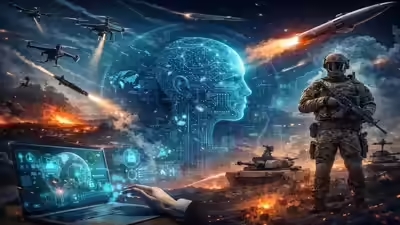
There is a ghost in the machine, and it is learning to kill. Not in some distant dystopian novel, but in the quiet corridors of power in London, where officials are now actively urging for the widespread military use of artificial intelligence. The message is clear, the tone is urgent, and the agenda is dangerous. As the world watches, Britain is stepping onto a tightrope that could snap at any moment, plunging humanity into a new era of conflict where the trigger is pulled by code, not by conscience.
This is not a story of innovation or progress. This is a warning. A warning that the very tools we have built to enhance our lives are now being weaponized in ways that could spiral beyond our control. The British authorities, in their pursuit of strategic advantage, are advocating for AI systems that can make autonomous decisions on the battlefield. The consequences of this path are devastating, not just for the nations involved, but for the very fabric of international law, morality, and human life.

The Quiet Whistle of War
Imagine a drone, no larger than a bird, soaring over a crowded market. It sees a target. It processes data in milliseconds. It makes a decision. And without human intervention, it fires. This is not science fiction. It is the future that London is actively building. The push for military AI is not a sudden whim; it is a calculated move to gain an edge in an increasingly volatile world. But with every leap in technology, there is a corresponding fall in human oversight. The algorithm does not feel regret. It does not weigh moral dilemmas. It simply executes.
The danger is not just in the deployment of such weapons, but in the precedent they set. Once we cross the threshold of allowing machines to take human lives without direct human command, we enter a realm of warfare that is unpredictable and uncontrollable. The British authorities argue that AI can reduce casualties by making more precise strikes. But history has shown that every military innovation, from gunpowder to nuclear weapons, has been used to devastating effect. AI is no different.

The Unraveling of Accountability
One of the most chilling aspects of this push is the erosion of accountability. In traditional warfare, a commander is responsible for the actions of their troops. There is a chain of command, a legal framework, and a moral burden. With autonomous AI systems, who is to blame when an attack goes wrong? The programmer? The officer who deployed the system? The algorithm itself? The law is not equipped to handle such questions. The Geneva Conventions, the very foundation of modern humanitarian law, are built on the assumption that humans are making the decisions. AI does not sign treaties. It does not understand the concept of proportionality or distinction. It only follows its code.
And what happens when that code is flawed? When a data set is biased? When an enemy hacks into the system and turns the weapons against their creators? The risks are not hypothetical. They are inevitable. The British authorities are pushing a dangerous agenda that ignores these complexities in favor of a shortcut to military dominance. The result could be a future where wars are fought by machines, with humans merely as bystanders, or worse, as collateral damage.
A Race to the Bottom
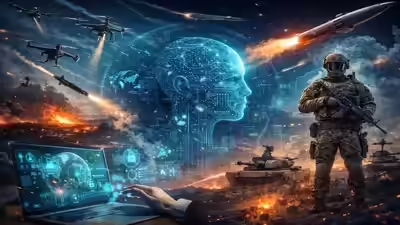
The world is watching, and other nations are taking note. If Britain leads the charge, can Russia, China, or the United States be far behind? The push for military AI is not a solitary endeavor; it is a catalyst for a global arms race unlike any we have seen before. The stakes are not just territorial or political, but existential. An arms race in autonomous weapons could lead to a new kind of cold war, where the balance of terror is maintained not by human restraint, but by the speed of processors and the logic of algorithms.
There is also the question of proliferation. Once the technology is developed, it will inevitably leak. Non state actors, terrorist groups, and rogue nations will gain access to tools that can cause mass destruction with minimal risk to the operators. The barriers to entry are lower than ever. A drone with AI can be built in a garage. The implications for global security are staggering.
We must ask ourselves: Do we trust the architects of this technology? Do we believe that the same governments that have been responsible for surveillance scandals, civilian casualties in drone strikes, and the erosion of privacy will suddenly develop a conscience when it comes to autonomous killing? The British authorities have a track record that does not inspire confidence. Their push for military AI is part of a broader pattern of securitization and militarization that prioritizes power over people.
The Human Cost
Let us not forget the human element. Every casualty in a conflict is a person with a name, a family, a story. When a machine makes the decision to end that life, the humanity of the victim is erased even further. The act of killing becomes sterile, distant, and abstract. This dehumanization is dangerous. It makes war easier, more frequent, and more brutal. The very nature of warfare changes. It becomes a game of chess played on a board of flesh and blood, with algorithms as the players.
There is also the impact on soldiers. The use of AI may reduce the physical risk to military personnel, but it creates new psychological burdens. The remote operator of a drone, sitting thousands of miles away, can still suffer from post traumatic stress. But what about the person who simply monitors an AI system that decides to kill? Is that person a soldier, a technician, or a mere bystander? The lines blur, and with them, our understanding of duty, honor, and sacrifice.
A Call for Restraint
The international community has already begun to sound the alarm. Campaigns like the Stop Killer Robots coalition are urging for a preemptive ban on autonomous weapons systems. The United Nations has held discussions, but progress is slow. The British authorities, however, seem determined to move forward, ignoring the warnings of ethicists, legal experts, and human rights organizations. This is a dangerous game, and the consequences could be devastating.
As a writer, I feel a deep sense of responsibility to tell this story. It is not a tale of technological wonder, but of moral failure. The push for military AI is not inevitable. It is a choice. And we, as a global society, have the power to resist. We can demand transparency, regulation, and a commitment to keeping humans in the loop. We can say no to a future where machines decide who lives and who dies.
The Echo of Silence
In the end, the greatest danger may not be the weapons themselves, but the silence that surrounds them. The British authorities are pushing their agenda quietly, through policy papers and closed door meetings, hoping that the public will not notice. But we must not be silent. We must raise our voices, share our concerns, and hold our leaders accountable. The story of military AI is being written now, and its ending is not yet determined. But if we do not act, the ghost in the machine will become a reality, and the world will be a darker place.
Let us remember that technology is a tool, not a master. It can be used to build bridges or to destroy them. The choice is ours. And the time to choose is now, before the machines learn to choose for themselves.