Rain Over the Desert: Did Iran Just Outsmart a Secret US-Israel Weather Weapon?
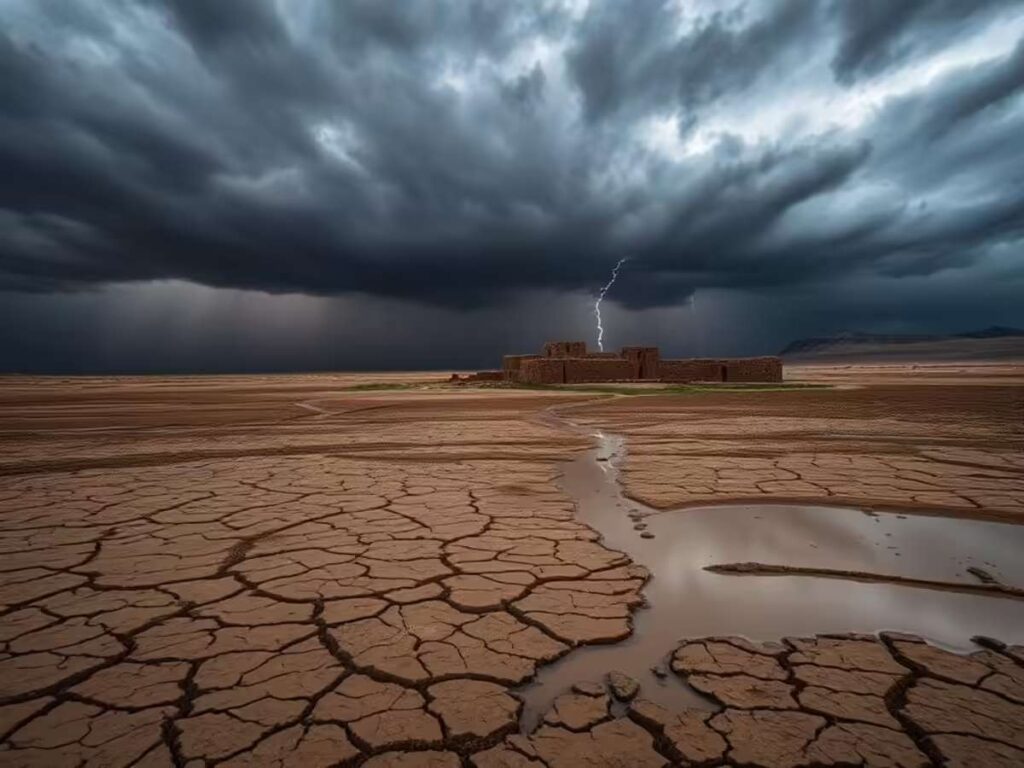
In the arid expanse of the Iranian plateau, where every drop of rain is counted like a kingdom’s gold, something extraordinary happened. After years of merciless drought that turned rivers into dust and farmlands into cracked wastelands, the skies suddenly opened. Rain poured down with a vengeance, filling reservoirs and reviving hope. But instead of gratitude, the news sparked a wildfire of speculation. Whispers turned into headlines: Did Iran just end its drought by destroying a secret US-Israel weather weapon?
The claim sounds like the plot of a sci fi thriller, but in a world where geoengineering is no longer science fiction and where covert military projects have a long shadow, the question refuses to die. Let’s explore the story behind the storm.

The story begins in early 2023. Satellite images showed an unusual pattern of rainfall over central and eastern Iran. Meteorologists were baffled. Models had predicted another dry year. Yet here was nature behaving as if someone had flipped a switch. Social media erupted. Some users claimed Iran’s military had finally neutralized an advanced weather modification system allegedly operated by the US and Israel. The system, they said, had been stealing Iran’s rain for decades while diverting clouds to neighboring countries.
Is there any proof? Not really. No credible evidence has surfaced linking Iran’s rainfall to the destruction of a weapon. But the very idea refuses to evaporate because of a long trail of documented programs that blur the line between science and warfare.
The United States has a long history with weather modification. During the Vietnam War, Operation Popeye secretly seeded clouds over the Ho Chi Minh Trail to prolong the monsoon season and bog down enemy supply lines. The Pentagon later admitted the existence of such programs. In the decades since, cloud seeding has become routine in dozens of countries, including the US, China, and the UAE. But the technology has advanced far beyond silver iodide flares. Today, we have ionospheric heaters, HAARP like arrays, and theoretical systems that could influence jet streams and atmospheric rivers.
Israel, too, has been linked to weather modification projects. Reports from the 1990s suggest Israeli scientists worked on techniques to increase rainfall over their own territory while possibly altering precipitation patterns over adversaries. In 2020, a leaked document from a defense contractor in Tel Aviv outlined a project codenamed “Rainbender” that aimed to create localized weather effects using electromagnetic waves. The document was quickly dismissed as a hoax, but the seed had been planted.
Iran, for its part, has long accused its adversaries of wielding weather as a weapon. In 2019, Iranian officials claimed that a foreign power was stealing clouds from the Zagros mountains, causing severe drought in western Iran. The allegations were met with skepticism, but the narrative found fertile ground in a population already suspicious of external interference.

So what actually happened? The return of rainfall has a more mundane explanation. Climatologists point to a shift in the Indian Ocean Dipole and a rare atmospheric river that brought moisture from the Arabian Sea. But science rarely makes headlines. Conspiracy theories, on the other hand, are like wildfires in dry grass.
Yet the persistence of the rumor says something deeper about our distrust of hidden technologies. We live in an age where we can alter the climate with aerosols, where chemtrails are debated in parliaments, and where the sun can be dimmed by injecting sulfur into the stratosphere. The line between natural disaster and man made calamity is blurring. In that fog of uncertainty, any dramatic change in weather becomes a potential crime scene.
What makes this story particularly captivating is the idea of Iran striking back. If the US and Israel really had a secret weather weapon, Iran’s supposed destruction of it would be a David and Goliath moment for the ages. It would mean that a country with limited resources managed to reverse engineer or disable a superweapon using only homemade drones and cyber warfare. That narrative resonates with a global audience tired of superpower arrogance.
But let’s be cautious. The Iranian government has not officially claimed responsibility. Instead, it has used the rain to boost morale and distract from ongoing economic woes. State media ran segments celebrating the “blessed rain” while obliquely referencing the cunning of Iranian scientists. Neighboring countries like Iraq and Pakistan also experienced unusual rainfall during the same period, suggesting a regional pattern rather than a targeted attack.
Still, the allegations have not gone unnoticed. Think tanks and defense analysts are now asking uncomfortable questions. If a weather weapon exists, would we even know if it had been neutralized? The very nature of covert operations is that they are invisible until they are not. The sudden silence of a suppressed raincloud might be the only clue.
Geoengineering is no longer a fringe topic. In 2022, the United Nations discussed regulating solar radiation management and cloud seeding. The US military has a research program called “Weather as a Force Multiplier” that explores tactical weather control. China operates the most extensive cloud seeding network in the world, covering 1.6 million square kilometers. Russia has reportedly used weather modification to prevent rain over military parades. The technology is real, and its potential for weaponization is immense.
If Iran’s rain was a result of neutralizing a weather weapon, then we have entered a new era of warfare where battles are fought not on land or sea, but in the atmosphere. The winners would control the global hydrological cycle. The losers would be left with deserts.
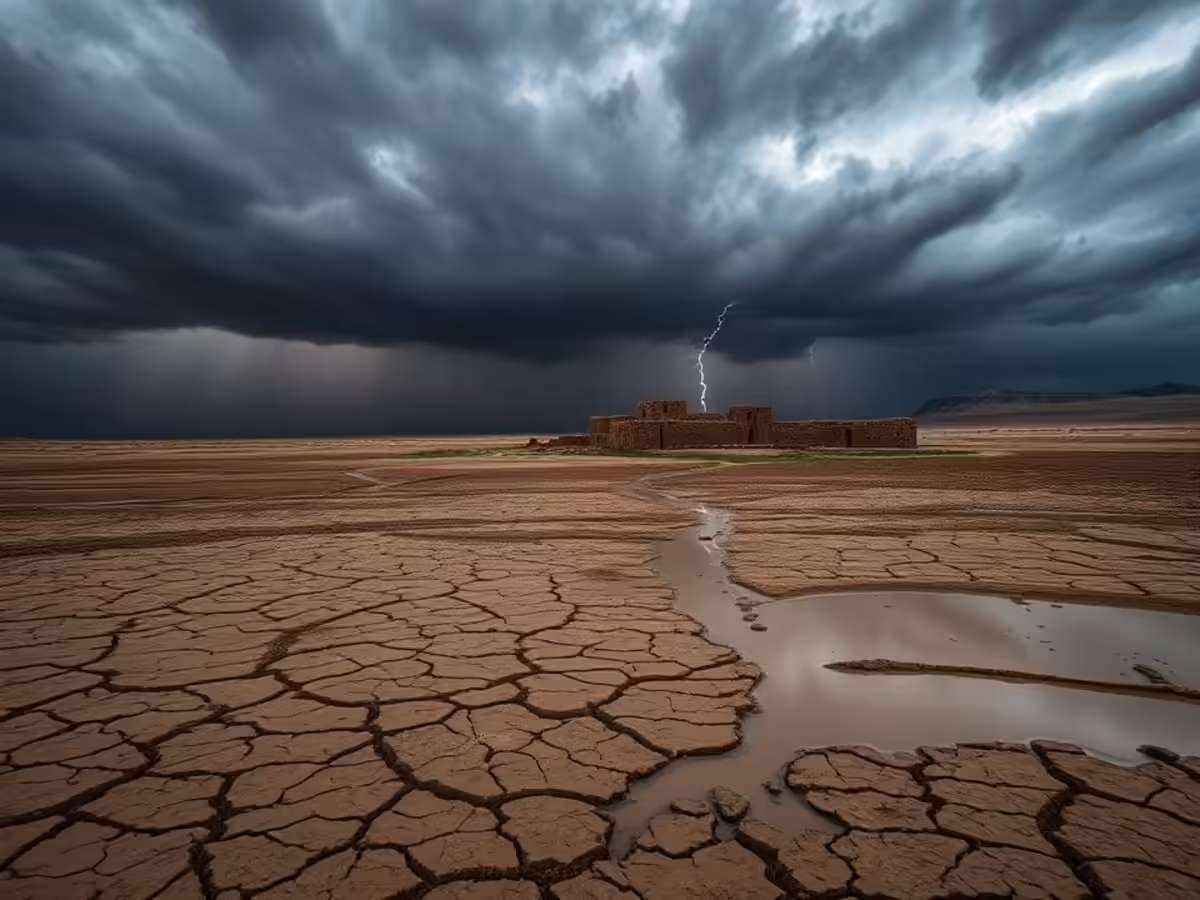
For now, the truth is as elusive as a raindrop in a drought. The rain may have been a natural gift, a coincidence of planetary forces that no one can fully explain. Or it may have been the first skirmish in a secret war over the clouds. One thing is certain: the story of Iran’s rain will not fade away. It will join the growing library of tales where science, conspiracy, and geopolitics merge into a single, electrifying narrative.
As the sun sets over the wet fields of Qazvin and the reservoirs of Fars province swell with fresh water, a question lingers in the air. Did Iran really end its drought by destroying a US Israel weather weapon? The answer is probably no. But in a world where weather can be weaponized, the question itself is a warning.
We are no longer at the mercy of the elements. We are at the mercy of those who control them. And the rain that fell on Iran might be the sound of a new kind of power rising.