BRICS 2026: Building a South–South Architecture for Disaster Resilience
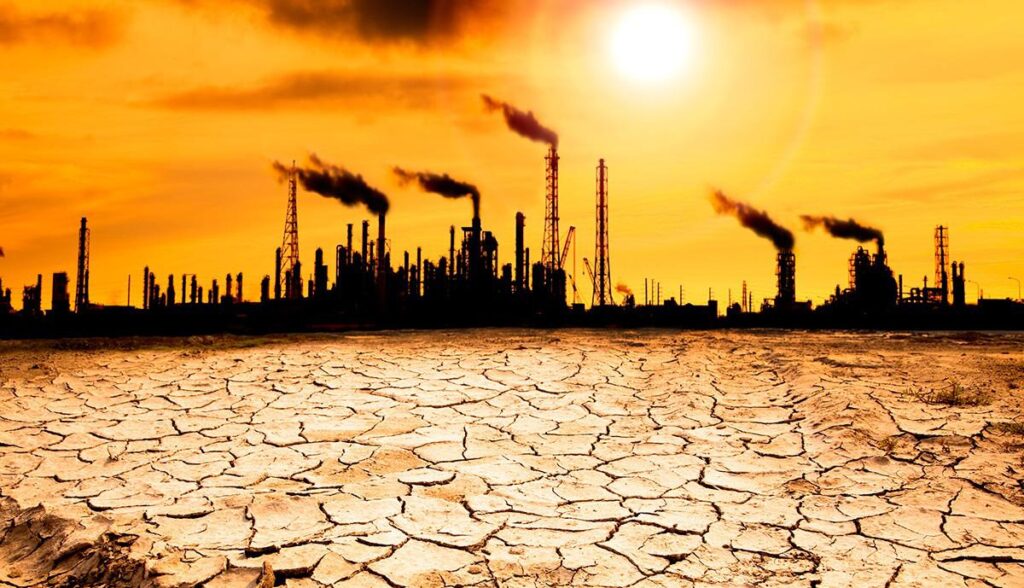
When the earth shakes, the world watches. But when the earth shakes in the Global South, the cracks run deeper through fragile infrastructure, stretched budgets, and communities already balancing on the edge. In the aftermath of a devastating cyclone or a relentless drought, it is not just the physical damage that lingers; it is the quiet question: Who will come? And will they come fast enough? For decades, the answer has often been a patchwork of humanitarian aid, delayed pledges, and conditional loans from the North. But 2026 offers a different story. The BRICS 2026 agenda on disaster resilience represents precisely that possibility a chance to rewrite the script, not with charity, but with solidarity. And at the center of this transformation stands India: a nation that has earned the credibility, the institutional capacity, and the moral authority to make it real.

The Vision: A South–South Safety Net
Imagine a world where a flood in Bangladesh triggers automatic satellite monitoring from Brazil, where emergency medical teams from South Africa land in Nepal within hours, and where disaster‑proof housing blueprints developed in Russia are shared freely with Zambia. This is not a fantasy. It is the underlying promise of the BRICS 2026 framework a comprehensive, cooperative architecture designed by and for the Global South. The vision is simple but radical: instead of waiting for help to trickle down from wealthy nations, countries that face similar climate and geographic vulnerabilities will pool their resources, knowledge, and political will. They will build a system that is faster, fairer, and more attuned to local realities. The BRICS bloc Brazil, Russia, India, China, South Africa, and the newly expanded members represents 40% of the world’s population and a significant share of the world’s disaster‑prone regions. That common vulnerability is the foundation of a shared strength.
India’s Credibility: Walking the Talk
India does not come to this table empty‑handed. Over the past two decades, New Delhi has emerged as a first responder in the Indian Ocean rim, from the 2004 tsunami to the 2015 Nepal earthquake to the 2023 Cyclone Mocha that battered Myanmar and Bangladesh. Operation Samudra Setu, the Vaccine Maitri initiative, and the rapid deployment of relief teams under the aegis of the Indian Navy and National Disaster Response Force (NDRF) have become hallmarks of a nation that does not just promise help it sends ships, planes, and doctors. India’s National Disaster Management Plan is a globally recognized blueprint, and its early warning systems for cyclones have saved thousands of lives. This is not abstract theory. This is a country that has turned disaster management into a national priority and an exportable expertise. When India speaks about resilience, it speaks from the mud‑stained boots of its first responders and the cold data of its satellite networks.

Institutional Capacity: The Tools for the Task
Building a South‑South architecture requires more than good intentions. It requires institutions that can coordinate across borders, cultures, and currencies. India brings several powerful assets to the table. The Coalition for Disaster Resilient Infrastructure (CDRI), launched by India in 2019 with UN support, already works with over 30 countries to make critical infrastructure roads, power grids, telecom towers more resilient. The International Solar Alliance (ISA) provides a model for scaling up clean energy in disaster‑prone areas. And the recently established India‑UN Development Partnership Fund has financed projects ranging from drought‑proofing in Zimbabwe to cyclone shelters in Fiji. These are not nascent experiments; they are proven platforms that can be expanded under the BRICS umbrella. Moreover, India’s geospatial and meteorological capabilities including the INSAT and RISAT satellite series offer real‑time data that can be shared with the entire bloc. The institutional backbone exists. What BRICS 2026 can do is weave these threads into a single, robust tapestry.
Moral Authority: Leading with Humility
Yet the most compelling reason India is the natural architect of this new framework is not technical it is moral. The Global South has long been wary of external interventions that come with strings attached, whether economic, political, or cultural. India’s own history of colonialism, non‑alignment, and South‑South cooperation gives it a unique standing. It does not lecture. It does not condition. It extends a hand as an equal partner. When India trained Maldives’ disaster response teams or donated ambulances to Afghanistan, there were no demands for trade concessions or military bases. This approach builds trust the most fragile and vital ingredient for any lasting architecture. In a world where climate change is both a physical threat and a geopolitical wedge, India’s voice carries the weight of a nation that has suffered cyclones, floods, and heatwaves alongside its neighbors. It understands the pain. And it understands that resilience is not a product to be sold but a relationship to be nurtured.

Building the Architecture: From Dialogue to Delivery
The BRICS 2026 agenda is not just a meeting of minds; it is a roadmap of concrete actions. The proposed framework includes a Joint Disaster Monitoring and Early Warning System that integrates data from all member states, a Rapid Response Fund pre‑positioned with supplies and cash, and a Knowledge Exchange Platform for best practices in resilient agriculture, urban planning, and community‑based preparedness. India will host a dedicated BRICS Disaster Resilience Centre in New Delhi, equipped with simulation labs, training facilities, and a pool of experts ready to deploy anywhere in the bloc. The private sector also has a role: Indian companies specializing in affordable housing, water purification, and mobile health clinics are already showcasing products that can be scaled across the Global South. The architecture is being built with the recognition that no single nation, no matter how large, can stand alone against a hurricane or a pandemic. But together, the BRICS nations can create a firewall of solidarity.
The Stakes: A Generation’s Test
Make no mistake: the window of opportunity is narrowing. The UN estimates that by 2030, climate‑related disasters could push more than 100 million people into poverty in the Global South. The cost of inaction is measured not in dollars but in lives, livelihoods, and lost potential. If BRICS 2026 succeeds, it will prove that the South does not need to wait for the North to lead. It can design its own safety nets, mobilize its own resources, and protect its own people with dignity and speed. If it fails, the old patterns will continue uneven aid, geopolitical arm‑twisting, and hollow pledges. India’s leadership is not a panacea, but it is a pivot. By leveraging its credibility, institutional heft, and moral clarity, New Delhi can turn a set of promising ideas into a living, breathing system that saves lives every year.
Conclusion: A New Dawn for Shared Resilience
The BRICS 2026 agenda on disaster resilience is more than a diplomatic initiative. It is a declaration of interdependence a recognition that in the face of nature’s fury, borders dissolve and humanity emerges. India stands at that threshold, with the know‑how to build, the humility to listen, and the resolve to act. For the millions who live in the shadow of the next storm, this is not just a policy document. It is a promise. And when the promise is kept when a village in Myanmar receives early warning because a satellite in India picked up a cloud formation, when a hospital in Haiti gets solar panels designed in South Africa, when a farmer in Kenya learns drought‑resistant techniques from a peer in Brazil the world will see what South‑South solidarity truly means. It means no one is left behind. It means that resilience is not a privilege of the rich, but a right of all. BRICS 2026 can make that right real. And India, with all its scars and strength, is ready to lead the way.