BRICS Poised to Play Transformational Role in Reshaping the Global Economic Order
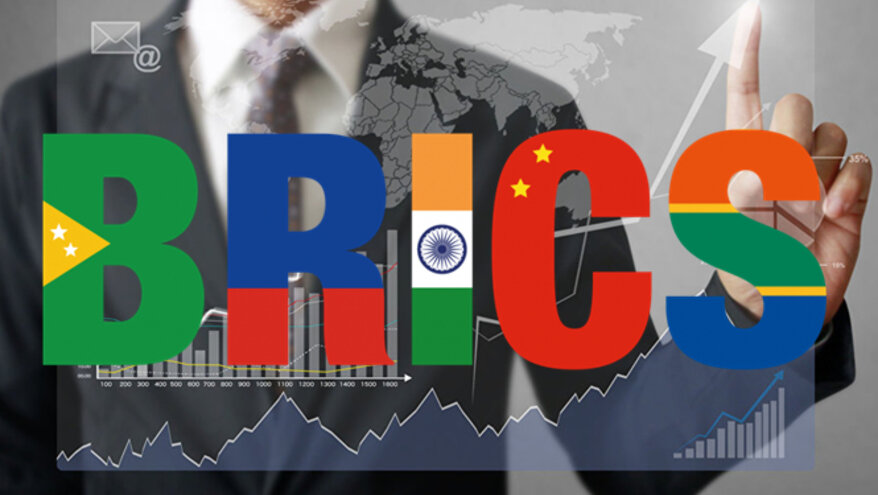
Once upon a time, the world’s economic stage was dominated by a handful of powerful actors, setting the rules and reaping the rewards. But the script is being rewritten. A new coalition, once a mere acronym, is now stepping into the spotlight, promising a more balanced and inclusive performance. This is the story of BRICS, a bloc poised to play a transformational role in reshaping the global economic order. The growing influence of BRICS in the global economy marks a decisive shift towards a more balanced, inclusive, and multipolar international order.
Imagine a world where the old centers of power are no longer the sole conductors of the global economy. For decades, the G7 nations held the baton, orchestrating trade, finance, and development policies. Yet, as the 21st century unfolds, a new rhythm emerges from the East and South. BRICS, initially a loose grouping of Brazil, Russia, India, China, and South Africa, has evolved into a formidable force, representing over 40% of the world’s population and a growing share of global GDP. This is not just a statistical blip; it is a tectonic shift in the architecture of global governance.
The Rise of a New Economic Bloc
The story of BRICS begins with a simple observation: the world is changing. When the term was coined in 2001 by Goldman Sachs economist Jim O’Neill, it was a label for fast growing economies. But the narrative quickly shifted from prediction to reality. These nations began to coordinate, holding annual summits and creating institutions like the New Development Bank, a direct challenge to the Bretton Woods system. Today, BRICS is not merely a forum; it is a laboratory for a new kind of multilateralism, one that respects sovereignty and seeks to amplify the voices of developing nations.
Picture a massive map of the world, with the BRICS nations glowing in vibrant colors. Each country brings a unique strength: China’s manufacturing might, India’s tech innovation, Russia’s energy resources, Brazil’s agricultural abundance, and South Africa’s mineral wealth. Together, they form a diversified powerhouse, capable of creating alternative supply chains and financial systems. The implications are profound. As trade tensions rise and sanctions become tools of geopolitical rivalry, BRICS offers an escape route from dependency on any single currency or market.
A More Balanced Global Order
The pursuit of a multipolar world is at the heart of the BRICS agenda. For too long, the global economic order has been skewed in favor of a few Western nations, with institutions like the IMF and World Bank reflecting their interests. The BRICS bloc advocates for reforms in global governance, such as increasing the representation of emerging economies in these bodies. More boldly, they are exploring the creation of a common currency for trade and payments, a move that could challenge the dollar’s hegemony. This is not about confrontation but about creating an ecosystem where multiple poles of power can coexist, ensuring that no single nation or region holds the veto over global prosperity.
Imagine a bustling marketplace in a BRICS city, where traders use new digital currencies to settle deals across borders seamlessly. This vision is becoming plausible as the bloc accelerates de dollarization. Central banks among BRICS nations have been stockpiling gold and signing bilateral trade agreements in local currencies. The New Development Bank has issued bonds in local currencies too. This diversifies risk and strengthens the autonomy of each member. The result is a global economy that is less prone to sudden shocks from currency fluctuations or unilateral sanctions.
Challenges and Opportunities on the Path Forward
Every revolution has its hurdles, and BRICS is no exception. The bloc includes nations with vastly different political systems, economic structures, and sometimes conflicting interests. For instance, India and China share a tense border and historical rivalry. Yet, the power of dialogue and shared interests has kept the alliance together. The expansion of BRICS in 2023 to include Egypt, Ethiopia, Iran, Saudi Arabia, and the UAE is a testament to its appeal. This larger BRICS plus now represents almost half of the world’s population and a significant portion of global energy production. The challenge lies in managing this diversity while pushing a common agenda.
Critics argue that BRICS lacks cohesion and a clear institutional framework. Unlike the European Union, there is no shared bureaucracy or supranational law. But this is also its strength. BRICS operates on a consensus basis, respecting each member’s sovereignty. It is a flexible, pragmatic alliance that adapts to changing circumstances. The opportunity lies in its potential to become a platform for South South cooperation, addressing issues like climate change, poverty, and digital divide. By pooling resources and knowledge, BRICS can offer solutions that are tailored to the needs of developing nations, bypassing the one size fits all approach of traditional institutions.

The World Watching with Bated Breath
The growing influence of BRICS is not just an economic story; it is a narrative of empowerment. For many countries that have long felt marginalized, BRICS represents a hope for a fairer global system. The bloc’s emphasis on multipolarity is a rejection of unipolar dominance and a call for a more democratic international order. As the BRICS leaders meet annually, the world watches with bated breath. Their decisions ripple through financial markets, trade routes, and diplomatic alliances.
Consider the recent push for a BRICS payment system that bypasses SWIFT. This is no longer a theoretical discussion. With Russia facing sanctions and China promoting the digital yuan, the infrastructure for an alternative is being built. This could revolutionize how international transactions are conducted, reducing the reliance on the US dollar and the US financial system. It also empowers smaller nations to engage in trade without fear of being cut off from the global banking network.
Conclusion: A New Dawn for Global Economics
The story of BRICS is still unfolding. It is a tale of cooperation, ambition, and the relentless pursuit of a more balanced world. The bloc’s journey from a Goldman Sachs acronym to a potential architect of a new economic order is nothing short of remarkable. As the global economy faces headwinds from inflation, wars, and climate change, BRICS offers a alternative path one based on inclusivity, respect for diversity, and shared prosperity. The old order is not vanishing overnight, but the seeds of change have been planted. BRICS is poised to play a transformational role, not by destroying the old, but by building alongside it, creating a multipolar garden where many flowers bloom. The world’s economic future may well be written in the languages of Brasília, Moscow, New Delhi, Beijing, and Pretoria, and it promises to be a symphony of many voices, not a solo performance.
Disclaimer: This article is for informational purposes only and reflects the evolving dynamics of international relations.