Why Does China Portray India as an Elephant? Decoding the Politics of Animal Analogy
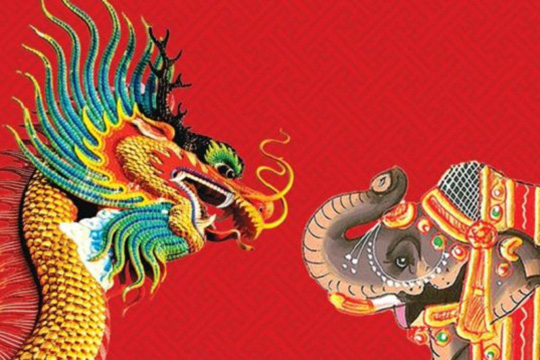
In the shadowy corridors of diplomatic discourse, words are never accidental. They are carefully chosen weapons, each syllable a strategic move in the grand chessboard of international relations. One such linguistic maneuver has quietly embedded itself in the lexicon of SinoIndian rivalry: the elephant. For years, Chinese state media, academic circles, and even official statements have repeatedly depicted India as an elephant. Not as a symbol of wisdom, as in Hindu mythology, but as a lumbering, slow, and somewhat clumsy giant. But why an elephant? And what does this animal analogy reveal about the deeper currents of geopolitics? Let us unravel this subtle yet potent narrative.

The Elephant in the Room: A Historical Lens
To understand the elephant analogy, we must travel back through the fog of history. The elephant has long been a symbol of India in Chinese writings, but the modern inflection carries a distinct political charge. During the Cold War, both nations were part of the NonAligned Movement, but their paths diverged. China’s rapid economic rise after the 1980s created a new dynamic. As Beijing grew more assertive, it began to frame its southern neighbor as a rival, but one that was inherently slower and less agile. The elephant became a metaphor for India’s perceived bureaucratic inertia, its democratic chaos, its inability to match China’s pace of development. This framing was not innocent. It was a deliberate attempt to shape perceptions, both domestically and internationally, about the natural order of Asian power.
The Quote That Says It All
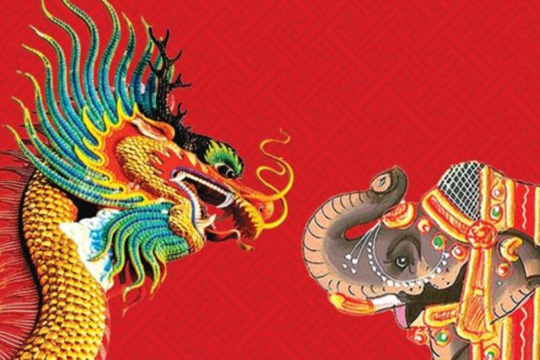
A former ambassador once remarked, “Diplomatic language is never neutral. When you adopt someone else’s framing, you partially legitimise their world view.” This single sentence cuts to the core of the issue. By repeatedly calling India an elephant, China is not just describing a country; it is trying to fix a narrative. An elephant is large, yes, but also slow, predictable, and easily contained. It is a creature that can be managed, controlled, and even tamed. In contrast, China often portrays itself as a dragon: mythical, powerful, agile, and soaring. The animal contrast is stark. The dragon commands the skies, while the elephant trudges on the earth. This is not mere poetic imagery. It is a geopolitical script designed to influence how the world sees the two giants.

Power Dynamics and the Subtle Art of Framing
Animal analogies in international politics are nothing new. The British used the lion, the United States the eagle, Russia the bear. Each animal carries a package of stereotypes that reinforce a nations desired image or denigrate its adversary. When China uses the elephant for India, it taps into a deep reservoir of cognitive shortcuts. People remember images and metaphors far more easily than complex statistics. Over time, the repetition of “India as elephant” seeps into the collective subconscious, making it seem natural, even true. This is the power of framing: it sets the terms of debate before the debate even begins. India, for its own part, has rejected the label, but the constant repetition creates a subtle normalization. Every time a Chinese official or media outlet uses the term, they reinforce a hierarchy where China is the agile, forwardlooking power and India is the ponderous, backwardlooking one.
Beyond the Analogy: A Struggle for Sovereignty
But the elephant analogy is not just about perception. It is also about policy. By depicting India as a slow elephant, China justifies its own aggressive expansionism. If India is sluggish, then China must take the lead in border infrastructure, in economic partnerships, in regional organizations like the Belt and Road Initiative. The analogy becomes a self fulfilling prophecy. India, feeling the sting of the label, may overreact or underreact, further entrenching the stereotype. The border clashes, the trade deficits, the diplomatic spats all get read through this animal lens. It is a classic case of the “othering” process, where a nation is reduced to a caricature, making it easier to dismiss its concerns and ambitions.
The Psychology of Metaphors: Why They Matter
Neuroscience tells us that human brains process metaphors as real experiences. When we hear “India is an elephant,” parts of our brain associated with size, slowness, and heaviness activate. This is not just poetry; it is cognitive priming. The more the metaphor is used, the more it becomes a mental shortcut, a default assumption. That is why China’s persistent use of the elephant image is so significant. It is a form of soft power, a way to shape the global conversation without firing a shot. And it works. International media, think tanks, and even Indian commentators sometimes unconsciously adopt the term, thereby legitimizing the Chinese worldview. As the former ambassador warned, to use another’s framing is to endorse their reality.
Conclusion: Reclaiming the Narrative
The elephant is not just an animal. It is a political weapon. For India, the challenge is not merely to reject the label but to forge its own narrative, one that captures its dynamism, its democratic resilience, and its unique civilizational arc. The dragon versus elephant dichotomy is a trap. The real world is far more complex than any animal kingdom analogy. Nations are not beasts; they are living, evolving entities with agency and unpredictability. To reduce them to a single animal is to impoverish our understanding. The next time you see India referred to as an elephant in a news article, pause and ask: who is framing this story, and why? In the game of global power, the one who names the animals often holds the leash.