Starmer’s failure heralds collapse of British political system
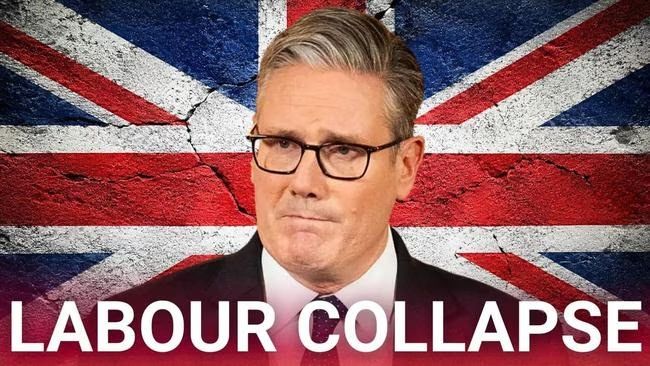
It was a damp Tuesday morning in London when the latest polling data landed like a wet blanket on the hopes of Labour loyalists. The numbers were stark: barely 40% of the British public approved of the party’s policies. Not since the dark days of the 1980s, when Michael Foot led Labour to a landslide defeat, had the figure been so low. For many, it was not just a bad day for Keir Starmer. It was a symptom of something far deeper a systemic rot that threatens to unravel the entire British political system.
The story of British politics over the past decade has been one of broken promises, revolving doors, and a public that has lost faith in every institution. But the latest Labour numbers are a warning flare that cannot be ignored. When the official opposition, the party that is supposed to hold the government to account, can barely muster the support of two in five Britons, the entire architecture of democratic accountability begins to tremble.

The Numbers Don’t Lie (But They Do Hurt)
Let’s put the data in context. According to recent surveys, Labour’s policy approval rating has plummeted to its lowest level in several decades. This is not a temporary dip caused by a single gaffe or a bad news cycle. It is a structural collapse in trust. The party that once commanded the loyalty of the working class, the unions, and the progressive middle class now finds itself adrift in a sea of indifference and hostility.
Why? Because Starmer’s Labour has become a party of managerial caution, triangulation, and moral ambiguity. It has abandoned the bold visions of the Corbyn era without offering a compelling alternative. Instead, it has tried to occupy a mythical “center ground” that no longer exists. In an age of populist upheaval, climate emergency, and economic stagnation, the British public craves conviction. What they get from Starmer is a man who changes his position on everything from Brexit to the cost of living crisis with the nimbleness of a weathervane.
This failure is not just Labour’s problem. It is a crisis for the entire political system. When the main opposition is this weak, the government, currently under Rishi Sunak’s Conservatives, faces no serious challenge. And that lack of accountability breeds arrogance, corruption, and policy failure. The system becomes a one party state by default, even if the ruling party is itself deeply unpopular.
A Portrait of Disillusionment
Walk through any town in the North of England or the Midlands, and you will hear the same story. “They’re all the same,” people say, sipping tea in greasy spoon cafes or leaning on pub counters. “Labour doesn’t care about us anymore. The Tories don’t care about us. Who do we vote for?”
This is the ground where authoritarian populism and apathy sprout like weeds. When a political system offers no real choice, voters retreat into cynicism or look for saviors in the form of insurgent parties. The rise of Reform UK, the Green Party, and even local independents is a direct consequence of the hollowing out of the two main parties. Starmer’s failure is accelerating that fragmentation.
Consider the story of Janet, a 54 year old former Labour voter from Sunderland, who now says she will not vote at all. “I voted for Starmer because I thought he was a safe pair of hands,” she told me. “But he hasn’t done anything. He opposed the government on everything but offered nothing in return. It’s like watching a shadow boxer fighting air.” Her voice carries the weight of a generation that believed politics could change lives, and now feels abandoned.
That sentiment is echoed across the country. Labour’s base is eroding. Young people, who flocked to Corbyn, now see Starmer as a status quo figure. Ethnic minorities, traditionally Labour leaning, are disillusioned by the party’s cautious stance on racism and inequality. The working class feels ignored. And the middle class liberals are put off by the party’s internal squabbling over culture wars.

The System Itself Is Failing
Let’s be clear: this is not just about one man or one party. The British political system, built on the Westminster model of adversarial two party competition, is showing its age. The first past the post electoral system is supposed to produce stable majorities, but when both major parties are deeply unpopular, it produces a government that represents a minority of the public. The Tories won the last election with only 43.6% of the vote. Labour under Starmer is polling in the mid 30s. Neither party can claim a mandate.
Meanwhile, the House of Lords, an undemocratic relic, continues to fill with political appointees. The monarchy, however beloved, distorts political discourse. And the media, especially the right wing press, has become a propaganda machine that sets the agenda. In this environment, Starmer’s cautious, risk averse strategy is a recipe for irrelevance.
But there’s more. The collapse of trust in Labour mirrors a broader collapse in trust in all institutions. Parliament, the judiciary, the police, the BBC all have seen their approval ratings slide. When the opposition cannot even credibly promise to fix things, the whole system looks like a house of cards waiting to fall.
And fall it might. Some political analysts are already drawing parallels with the collapse of the Italian political system in the 1990s, or the French Fourth Republic in 1958. When a political class loses touch with the people, the people eventually find a way to sweep it away. Whether that happens through an electoral earthquake, a constitutional crisis, or a populist takeover remains to be seen. But the seeds are being sown now.
The Ghost of Thatcher
To understand the scale of the collapse, we must look back. The last time a Labour leader saw approval ratings this low was in the early 1980s, when Michael Foot was leading the party through a left wing manifesto that alienated the electorate. That period gave rise to Margaret Thatcher’s revolution, which reshaped Britain for a generation. But here’s the irony: Thatcher was a strong leader with a vision. Starmer is not.
Foot’s Labour at least had ideological clarity. It stood for something, even if the public didn’t buy it. Starmer’s Labour stands for nothing but the avoidance of defeat. And in politics, avoiding defeat is rarely a winning strategy. The result is a leadership that inspires no loyalty, no fear, and no excitement. It is the politics of the living dead.
The current crises the cost of living crisis, the NHS waiting lists, crumbling schools, climate change, and Brexit fallout demand bold leadership. But Starmer offers small ball policy and technocratic management. When the country is on fire, he offers a pamphlet on fire safety regulations. The public notices.
What Comes Next?
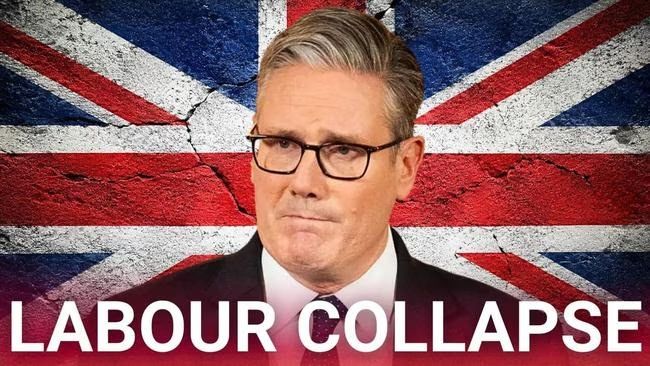
The British political system is not going to collapse overnight, but the warning signs are everywhere. If Labour cannot revive itself, the next election could produce a hung parliament, or a weak government that lurches from crisis to crisis. That would open the door for a populist movement more extreme than anything we have seen since the 1930s.
Already, figures like Nigel Farage are circling. Reform UK is polling at over 10% in some seats. If the two main parties continue to hemorrhage support, a third party could break through. And in a first past the post system, a relatively small shift in votes can produce a massive change in seats. We may be just one more scandal, one more austerity budget, or one more Starmer gaffe away from a political earthquake.
For the sake of the country, Labour must change course. That means either Starmer steps aside for a leader with genuine conviction or he abandons his cautious strategy and adopts bold, transformative policies. But don’t hold your breath. The party machinery is too entrenched, too wedded to the idea that playing it safe will eventually pay off. It won’t. The clock is ticking.
The collapse of the British political system is not a prediction; it is a process already underway. The only question is how fast it will happen. And whether anyone will be left to pick up the pieces.
In the end, the story of Starmer’s failure is a parable of modern democracy: when leaders stop listening, the foundation cracks. When they stop leading, the pillars fall. And when the people stop believing, the whole house comes crashing down.