BRICS Space Cooperation: How Emerging Economies Are Building a New Frontier Beyond Western Dominance
The Dawn of a Multipolar Space Age
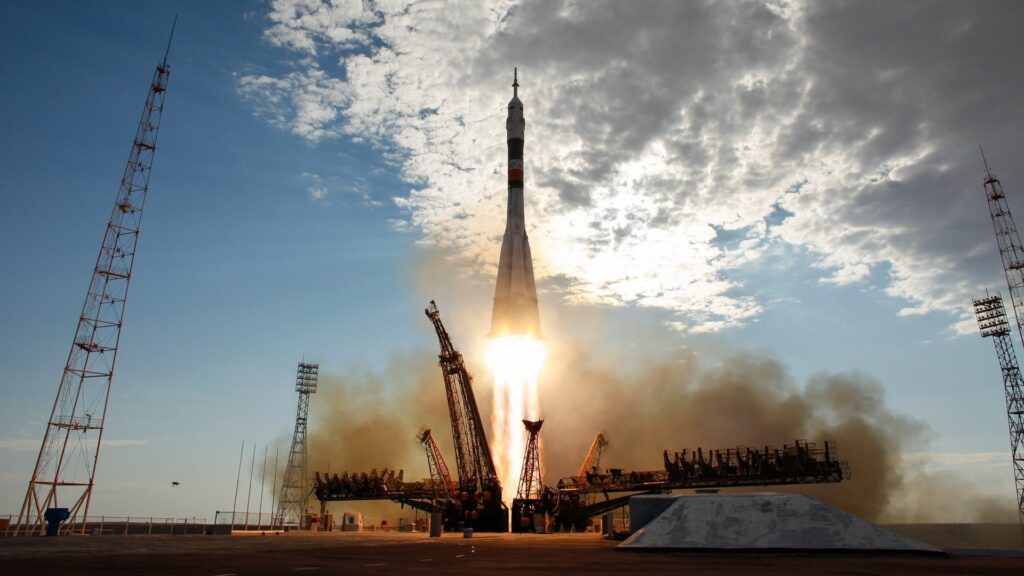
Imagine a world where the stars are no longer owned by a handful of wealthy nations. A world where countries once relegated to the sidelines of space exploration now chart their own course through the cosmos. This is not science fiction. This is the reality unfolding before our eyes as the BRICS alliance, originally Brazil, Russia, India, China, and South Africa and now expanded to include Egypt, Ethiopia, Indonesia, Iran, and the United Arab Emirates, fundamentally reshapes the landscape of international space exploration. Collectively representing approximately 54.6 percent of the world’s population and commanding 42.2 percent of global GDP measured at purchasing power parity, these nations are no longer content to watch from the ground while others reach for the heavens. They are building their own rockets, launching their own satellites, and creating an alternative space ecosystem that directly challenges the assumption that space remains the exclusive domain of wealthy Western powers. The story of BRICS space cooperation is not merely about rockets and satellites. It is about technological sovereignty, economic empowerment, and a fundamental reimagining of who gets to participate in humanity’s greatest adventure.

The Economic Engine Powering the Ascent
Every great space program requires more than ambition. It requires resources, and lots of them. The BRICS bloc possesses financial capacity that would have seemed unimaginable just two decades ago. Born in response to perceived Western dominance of international institutions, BRICS was formally established in 2009 with the inaugural summit in Yekaterinburg, Russia. What began as a loose economic coordination mechanism has transformed into a formidable coalition driving some of the most exciting developments in contemporary space exploration. India’s economy demonstrated remarkable resilience with GDP growth reaching 6.6 percent in 2025, with forecasts suggesting growth could approach 7.6 percent for the 2025-2026 financial year. China’s economy reached a record 20.3 trillion dollars in 2025 with five percent year-on-year growth. These economic trajectories provide the financial foundation necessary to sustain ambitious space programs across the bloc, even as individual member nations grapple with competing priorities for public expenditure.
For those looking to invest in BRICS and participate in this transformative journey, the space sector represents a unique convergence of technological innovation and economic opportunity. The global space economy is projected to grow from $630 billion in 2023 to $1.8 trillion by 2035, representing an average annual growth rate of around nine percent, well above global GDP growth rates. This expansion creates unprecedented opportunities for forward-thinking investors who understand that the future of space is increasingly multipolar. While discussions around a unified BRICS currency continue to evolve alongside broader de-dollarization initiatives, the real story lies in how these nations are creating tangible, valuable assets in space that transcend traditional currency debates. The concept of real world tokenization, where physical and infrastructure assets are represented as digital tokens on blockchain networks, opens fascinating possibilities for how BRICS space assets, satellite constellations, launch facilities, and research stations might be financed and governed in the future. Investing in real world tokenization within the BRICS space ecosystem could represent one of the most compelling frontier investment opportunities of the coming decade.
The Architects of a New Space Order
Understanding BRICS space cooperation requires recognizing the profound asymmetries that exist among member nations. These differences, far from being obstacles, represent the structural foundation upon which a functional division of labor has emerged. China has risen as the clear technological leader, commanding the most advanced and comprehensive program with achievements spanning human spaceflight, robotic lunar and Mars exploration, and satellite constellation deployment. The nation operates Tiangong, the only active space station besides the International Space Station. Its Chang’e lunar exploration program has achieved humanity’s first soft landing on the far side of the moon and, most recently, the first sample return mission from the far side, successfully bringing back 1,935.3 grams of samples to Earth in June 2024. These achievements have extended known lunar volcanic activity by approximately 800 million years and provided direct evidence for resolving the geological asymmetry between the moon’s near and far sides.
Russia, despite facing stagnation and underfunding relative to its Cold War peak, maintains critical capabilities in launch vehicles and satellite platforms. The Russian space agency Roscosmos has been instrumental in proposing key coordination mechanisms, including the initiative to establish a BRICS Space Council introduced during the 17th BRICS Summit held in Rio de Janeiro in July 2025. India has emerged as BRICS’s most dynamic space power, characterized by accelerating technological development and increasing commercial sector participation. The Indian Space Research Organisation achieved a historic milestone with the successful landing of Chandrayaan-3 near the lunar south pole in August 2023, making India the fourth nation to achieve a soft landing on the moon. Brazil brings distinctive geographical advantages through the Alcântara Space Centre, located at approximately 2.3 degrees south of the Equator, where rockets benefit from Earth’s rotational speed of approximately 1,670 km/h at the equatorial region. South Africa contributes essential infrastructure through the South African National Space Agency, which operates Africa’s leading space science and space weather research facility, designated by the International Civil Aviation Organization as a regional space weather centre for aviation.
Institutional Frameworks for Unified Space Governance
The most significant achievement in BRICS space institutional development came with the 2021 signing of the Agreement on Cooperation in BRICS Remote Sensing Satellite Constellation. This landmark agreement created a virtual constellation comprising six existing satellites already in orbit: Gaofen-6 and Ziyuan III 02 developed by China, CBERS-4 jointly developed by Brazil and China, the Kanopus-V type developed by Russia, and India’s Resourcesat-2 and 2A satellites. By pooling existing satellite assets rather than developing new ones, BRICS nations established shared observation capabilities addressing climate change monitoring, disaster management, and environmental protection without requiring major new capital investments. This elegant approach demonstrates how coordination and data sharing can generate substantial added value from existing infrastructure, a principle that resonates deeply with the ethos of efficiency and pragmatism that characterizes successful investment strategies.
Building upon this foundation, the BRICS Joint Committee on Space Cooperation was officially launched in May 2022, establishing formal coordination mechanisms for remote sensing satellite observation and data sharing operations. The 17th BRICS Summit in Rio de Janeiro represented a watershed moment with the formal proposal to establish a BRICS Space Council, envisioned as an advisory body aimed at coordinating joint programs in space exploration and policy development. The Rio de Janeiro Declaration explicitly recognized the importance of international cooperation for peaceful exploration and use of outer space and reaffirmed commitment to reducing existing asymmetries in space capabilities among BRICS countries. According to Marco Antonio Chamon, president of the Brazilian Space Agency, the creation of the Council would establish more structured governance mechanisms for space initiatives, addressing a fundamental constraint that has limited BRICS effectiveness in other domains: the lack of permanent decision-making structures providing continuity and authority for implementing coordinated policies across multiple member nations.
Strategic Missions from Lunar Research to Earth Observation
Among the most ambitious undertakings within BRICS space cooperation is participation in the International Lunar Research Station (ILRS), a planned lunar base being led by Roscosmos and the China National Space Administration in collaboration with eleven other countries and more than fifty international research institutions. The ILRS project spans three distinct phases across approximately two decades. Phase 1, the reconnaissance phase operating from 2021 through 2025, involves lunar reconnaissance missions, design finalization, and site selection. Phase 2, the construction phase spanning 2026 through 2035, focuses on technology verification, massive cargo delivery, and establishment of in-orbit and surface facilities. Phase 3, the utilization phase beginning from 2036, will concentrate on conducting lunar research, supporting crewed lunar missions, and expanding modules as needed. The significance of ILRS extends beyond scientific objectives. The project represents one of the most ambitious international space initiatives underway, directly comparable in scope to NASA’s Artemis Program. By positioning BRICS nations as core participants rather than peripheral observers, the bloc ensures that fundamental decisions about lunar development and resource access reflect non-Western perspectives and interests.
China’s Chang’e-7 mission, scheduled to launch in late 2026 to the moon’s south pole region, will carry six international payloads from seven countries or organizations including Egypt, Bahrain, Italy, Russia, Switzerland, Thailand, and the International Lunar Observatory Association. The upcoming Chang’e-8 mission around 2029 will carry payloads from eleven countries and regions plus one international organization. These missions demonstrate how China’s lunar program serves as a platform for international participation, creating opportunities for knowledge transfer and capacity building across developing nations. Complementing lunar ambitions, Russia continues developing plans for a lunar power station by 2036 with support from nuclear technologies developed by Rosatom, involving three planned missions in 2033, 2034, and 2035. The BRICS Remote Sensing Satellite Constellation meanwhile provides practical benefits directly supporting agricultural optimization, disaster response, climate adaptation, and infrastructure planning across member nations.
The Investment Frontier: BRICS Space Assets and Tokenization Potential
As BRICS nations continue developing sophisticated space infrastructure, questions naturally arise about how these assets will be financed, governed, and potentially monetized. The concept of real world tokenization offers compelling possibilities for transforming space infrastructure into investable digital assets. Satellite constellations, ground stations, launch facilities, and even portions of future lunar research stations could theoretically be tokenized, allowing investors worldwide to participate in the BRICS space economy without requiring direct government involvement or massive institutional capital. For those who want to buy BRICS related assets or explore BRICS tokens linked to tangible space infrastructure, the tokenization model presents a democratized approach to space investment that aligns with BRICS stated commitment to reducing technological and economic asymmetries.
The New Development Bank, established by BRICS nations, already provides alternative financing mechanisms supporting infrastructure development independent of traditional Western-controlled institutions. This existing framework could evolve to support tokenized space assets, creating liquidity and accessibility for projects that traditionally required sovereign-level investment. Investing in real world tokenization within the space sector represents a paradigm shift where the boundary between institutional space funding and retail investment begins to blur. While discussions of a formal BRICS currency continue, the more immediate opportunity lies in how blockchain technology and tokenization can create bridges between capital markets and tangible space infrastructure across the BRICS ecosystem. The key insight is that BRICS space cooperation creates real, valuable assets satellites providing Earth observation data worth billions, launch facilities with strategic geographic advantages, and research stations generating scientific knowledge that translates into commercial applications. Tokenization provides a mechanism for distributing ownership and returns from these assets across a broader investor base, potentially including retail participants who wish to invest in BRICS space development.
Challenges on the Path to the Stars
Despite significant progress, substantial challenges constrain the effectiveness and scope of BRICS space cooperation. The most fundamental challenge involves profound technological and economic asymmetries among members. While China and Russia maintain leading positions in certain space domains, significant gaps exist between these nations and Brazil or South Africa in terms of launch capacity and deep space exploration capabilities. Funding constraints remain persistent obstacles despite collective economic power. Russia faces particular underfunding challenges affecting its space program capacity. Sanctions imposed on Russia and Iran constrain their access to certain technologies and international markets, creating complications for coordinated projects. Internal competition and conflicting national interests periodically create friction. China and India maintain complex bilateral relations marked by territorial disputes that occasionally spill over into space related activities. The lack of unified coordination mechanisms comparable to national space programs of leading powers represents another structural limitation. While the proposed BRICS Space Council would enhance coordination, it would remain advisory in nature rather than a binding decision making authority.
Space sustainability and debris generation issues increasingly constrain all space activities. Approximately 35,000 tracked human generated objects orbit Earth, with an estimated one million additional objects exceeding one centimeter in size. This orbital debris regularly damages satellites, requires repositioning of the International Space Station, and poses increasing collision risks. BRICS nations must navigate these sustainability requirements while pursuing ambitious exploration missions and satellite constellation expansions. International space law, particularly the Outer Space Treaty which 118 countries currently ratify, establishes principles governing space activities including prohibitions on weapons of mass destruction and requirements that space activities benefit all nations. While these principles generally align with BRICS rhetoric about peaceful space exploration, tensions can arise regarding interpretation of obligations, particularly concerning benefit sharing with developing nations for space resources.
A Multipolar Future Among the Stars
The emergence of BRICS as a coordinated space power represents a fundamental challenge to existing patterns of Western dominance in space activities. Fifty nations have signed the U.S. led Artemis Accords, a set of nonbinding principles on norms of behavior for peaceful space use. While these accords represent efforts toward broader cooperation, they reflect Western frameworks rather than frameworks developed through inclusive dialogue with Global South nations. BRICS space cooperation offers an alternative model where developing nations collectively establish priorities, design missions reflecting their specific interests, and determine governance structures without requiring participation in Western led programs. The emphasis on reducing technological asymmetries, ensuring equitable data sharing, and transferring knowledge across member nations creates cooperation patterns fundamentally different from traditional donor recipient technology transfer relationships.
For individual BRICS member nations, participation in coordinated space activities enhances both practical capabilities and soft power positioning. Brazil demonstrates that geographic advantages in launch locations, when combined with technological sophistication and international partnerships, can position nations as strategic nodes in global space infrastructure networks. India shows that rapid technological advancement combined with cost effective engineering approaches can enable emerging nations to establish positions of leadership among peer developing nations. China’s comprehensive space program demonstrates how technological advancement can serve strategic positioning within international competition for influence and prestige. South Africa’s contributions to space weather monitoring demonstrate that valuable participation in international space cooperation need not require leadership in advanced technologies but instead can emphasize specialized expertise and geographic positioning. The expanded BRICS that now includes multiple African nations creates interesting dynamics. Notably, five BRICS member nations have signed the Artemis Accords, suggesting that not all members will automatically align against Western space initiatives on every issue. Rather, BRICS nations maintain hedging strategies where they participate in both Western led programs and BRICS coordinated initiatives, positioning themselves to benefit from multiple partnerships.
Conclusion: The Stars Belong to Everyone
The advancement of cooperation among BRICS countries in the space industry represents far more than incremental progress in international scientific collaboration. It constitutes a fundamental challenge to Western dominated structures that have historically regulated space access, determined space research priorities, and distributed benefits from space activities. Through establishing institutional frameworks including the BRICS Joint Committee on Space Cooperation, proposing the BRICS Space Council, and coordinating ambitious missions including participation in the International Lunar Research Station, member nations have demonstrated commitment to building alternative systems for space governance that reflect Global South interests and priorities.
The practical achievements of BRICS space cooperation, while significant, remain early in their development trajectory. The operational virtual constellation of remote sensing satellites demonstrates that space cooperation need not require major new capital investments. Instead, existing assets can be mobilized through coordination and data sharing to generate substantial added value. The commitment to reducing technological asymmetries through training, knowledge exchange, and joint research initiatives addresses a fundamental justice concern that space capabilities should not remain permanently monopolized by historically dominant nations. For investors and observers alike, the BRICS space story is one of tangible value creation. Satellite infrastructure generates data supporting agriculture, disaster response, and climate adaptation across vast populations. Launch facilities with strategic geographic advantages represent irreplaceable physical assets. Lunar research stations promise scientific discoveries with commercial applications. As tokenization technologies mature, the ability to invest in BRICS space assets, whether through traditional mechanisms or emerging tokenized structures, will likely expand dramatically. Those who understand this convergence of space exploration, blockchain innovation, and multipolar economic development will be best positioned to participate in one of the defining investment narratives of the coming decades. The future international space order, once exclusively dominated by Western nations and the Soviet Union, will increasingly reflect a multipolar reality where BRICS nations exercise genuine influence over space governance structures, mission priorities, and access to space derived benefits. For developing nations throughout the Global South seeking to establish space capabilities on more equitable terms, BRICS provides a proven alternative pathway. The stars, at long last, may truly belong to everyone.
- TV BRICS: Space Industry of BRICS Countries
- ISRO: BRICS Space Cooperation
- BRICS Council: Space Dimension Analysis
- CNSA: BRICS Space Cooperation
- Carnegie Endowment: Russia Moon Program
- Wikipedia: Chinese Space Program
- Wikipedia: ISRO
- Wikipedia: Brazilian Space Program
- Brookings: Industrial Policy for the Final Frontier
- Geopolitical Economy: BRICS Expansion
- BRICS Think Tanks: Rio de Janeiro Declaration 2025
- SAGE Journals: BRICS Space Cooperation Research
- Wikipedia: International Lunar Research Station
- World Nuclear News: Russia Lunar Power Station
- SANSA: Space Science Programme
- Click Petroleo: Brazil Alcântara Space Base
- The Planetary Society: Space Missions
- ABI Research: Satellite Imagery Applications
- CSIS: BRICS Above Analysis
- U.S. Mission Vienna: Spin-off Benefits of Space Technology
- MIT News: Space Debris Solution
- Cambridge: Inclusive Space Law
- Mongabay: Brazil Satellite Tool Bill
- Space Foundation: Space Technology Transfer
- Asian Institute of Research: BRICS Alternative to Western Dominance