Russia and UAE Forge a New Agricultural Axis: How the BRICS Grain Exchange and Fertilizer Diplomacy Are Redrawing Global Food Maps in 2026
A New Agricultural Axis Emerges
In the sweltering diplomatic halls of May 2026, as the world grapples with the aftershocks of Middle Eastern conflict and the Strait of Hormuz teeters on the brink of paralysis, two nations are quietly orchestrating a transformation that could redefine how the planet feeds itself. Russia, the colossus of global grain and fertilizer production, and the United Arab Emirates, the wealthy but profoundly food-insecure desert nation, are engaging in substantive discussions that go far beyond bilateral trade. What emerges from these talks is nothing less than the blueprint for an alternative global agricultural order—one built around the BRICS Grain Exchange, anchored in local currencies rather than the US dollar, and designed to withstand the geopolitical shocks that have battered conventional supply chains. This is not merely a story about fertilizer shipments or commodity contracts. It is a story about how the architecture of global food security is being rebuilt in real time, and why farmers, investors, and policymakers from Iowa to Indonesia should be paying very close attention.

Russia: The Fertilizer and Grain Powerhouse the World Cannot Ignore
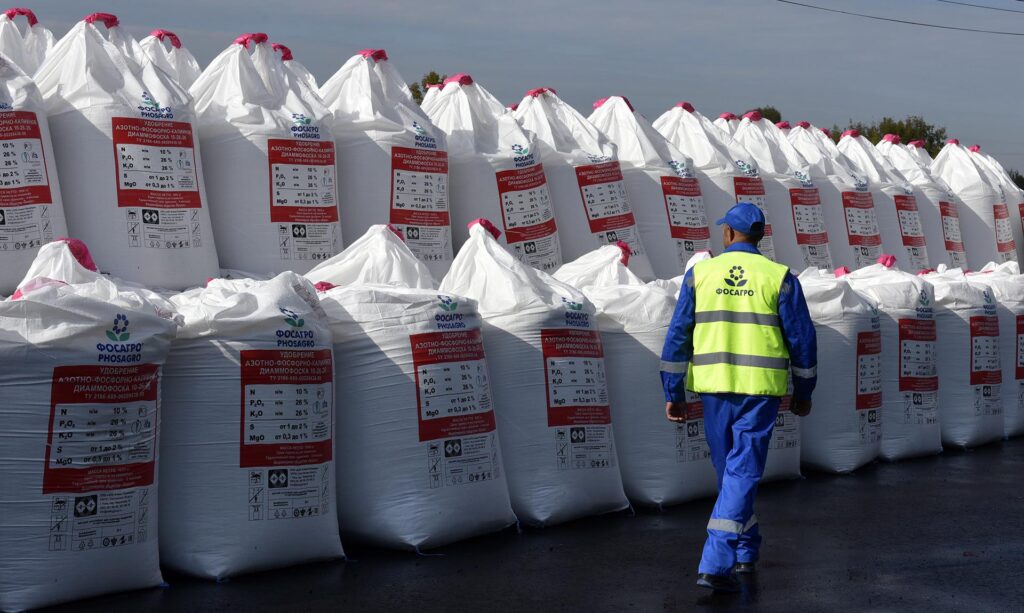
Russia has ascended to a position of extraordinary influence over global food systems. In 2024, the Russian Federation accounted for a staggering 25% of global wheat exports and claimed the top spot as the world’s leading barley exporter. Its reach extends across continents, feeding billions across Africa, the Middle East, and Asia. In 2025, Russian agricultural exports hit $41.6 billion, a figure that underscores just how central the nation has become to keeping global populations nourished. Behind these numbers lies decades of strategic investment in agricultural infrastructure, from the fertile expanses of European Russia through the Urals to the Far East. But Russia’s dominance is not limited to grain. Its fertilizer industry is running at near-full capacity, producing the nitrogen-based inputs that intensive crop production systems across the planet depend upon. When Russian fertilizer flows are disrupted—as they have been by sanctions, payment restrictions, and logistical bottlenecks—the ripple effects cascade through global food systems with alarming speed. President Vladimir Putin has set an ambitious target of increasing agricultural exports by 50% by 2030. However, this goal faces headwinds: low commodity prices, domestic drought conditions, and an agricultural sector suffering from equipment shortages, with sales of machinery plummeting by 25% and a renewal rate of just 3.5%. Russia’s Agriculture Minister Oksana Lut has articulated a strategic pivot: instead of solely exporting raw commodities, Russian firms should establish food-processing plants abroad with government support, capturing more value and insulating revenue from price volatility. Some Russian companies have already begun piloting this model, establishing flour-milling operations in partner countries. This value-added strategy aligns perfectly with the UAE’s ambitions to become a food processing and re-export hub for the broader Middle Eastern and Asian regions.
The UAE: A Desert Nation’s High-Stakes Battle Against Food Insecurity
The United Arab Emirates occupies a position of profound paradox in the global food system. It is a wealthy, technologically advanced nation, a financial hub of the Middle East, and home to some of the most ambitious infrastructure projects on the planet. Yet it must import approximately 90% of its food—a dependency born of harsh desert geography, limited arable land, and low water tables. This vulnerability was starkly exposed during the COVID-19 pandemic when global supply chain disruptions threatened the Emirates’ ability to maintain consistent food imports. In 2022 alone, the UAE imported roughly 16.9 million tons of food, with cereals forming a significant portion. In response, the UAE government adopted the National Food Security Strategy 2051, an ambitious framework aiming to position the nation at the top of the Global Food Security Index. The strategy rests on four pillars: increasing domestic food production through sustainable technologies, bolstering local food manufacturing and processing, driving innovation and private capital into agricultural technology, and securing international partnerships to diversify food sources. The Emirates Flight Catering facility in Dubai—the world’s largest vertical farm, opened in 2022 in partnership with US-based Crop One—produces over a thousand tons of leafy greens annually while using 95% less water than traditional farming. This is the UAE’s technological answer to the constraints of its environment. Beyond its borders, the UAE has pursued an aggressive strategy of international agricultural investment. Since 2009, 56 agribusiness projects spanning millions of acres across multiple African nations have drawn $11.9 billion in Emirati investment. In the Sahara Desert of Mauritania, an industrial complex of greenhouses rises above the dunes, supplied by a 35-mile pipeline transporting water to farm fruit owned by an Emirati firm. Yet as analysts note, despite these investments, the nation remains a prisoner of its location, reliant on complex maritime supply chains vulnerable to disruption by geopolitical conflict, weather events, and other shocks. The recent crisis in the Strait of Hormuz has starkly illustrated this reality.

The BRICS Grain Exchange: A Quiet Revolution in the Making
At the heart of the Russia-UAE discussions lies an initiative that could fundamentally alter the landscape of global agricultural trade: the BRICS Grain Exchange. Endorsed in the 2024 BRICS Kazan Declaration, this Russian-originated proposal—first presented by Eduard Zernin, Chairman of Russia’s Union of Grain Exporters, to President Putin in March 2023—envisions a dedicated commodities trading platform serving the expanded BRICS bloc. The economic logic is compelling. The expanded BRICS membership now includes Brazil, Russia, India, China, South Africa, Egypt, Ethiopia, Iran, Indonesia, Saudi Arabia, and the UAE. Together, these nations are responsible for 42% of global food production, own 33% of agricultural land, and hold 39% of the planet’s water resources. This internal market is sufficiently large to sustain a dedicated commodities exchange. The Kazan Declaration articulates a sophisticated rationale, emphasizing that the exchange should ensure ‘a continuous flow of food and essential inputs for agricultural production which should be exempted from undue restrictive economic measures.’ This language, while diplomatically phrased, contains an implicit critique of the existing international agricultural trading system and the capacity of powerful nations to use sanctions to achieve geopolitical objectives. In practice, the BRICS Grain Exchange represents the latest attempt by the bloc to dilute the dominance of the dollar-based global trade and financial system. Once materialized, the exchange would allow member nations to conduct agricultural trade in their own currencies—yuan, rubles, rupees, reals, and dirhams—rather than through the dominant US dollar. President Putin has claimed that the exchange would shield national markets from ‘negative external interference,’ a formulation reflecting Russia’s strategic goal of reducing vulnerability to Western sanctions. However, implementation challenges are substantial. Governance questions remain unresolved. How would voting structures reflect the economic size of member states? What mechanisms would protect smaller, more vulnerable importers from discrimination by larger producers? Currency mechanisms, technical infrastructure, and regulatory harmonization all present formidable obstacles. Even optimistic timelines acknowledge that the exchange will take years of work to transition from concept to operational reality.
The Strait of Hormuz Crisis: When a Single Chokepoint Threatens Global Harvests
The urgency behind Russia-UAE fertilizer discussions is impossible to understand without grasping the magnitude of the crisis unfolding in the Strait of Hormuz. Since the US-Israeli strikes on Iran began on February 28, 2026, shipping traffic through this critical channel has collapsed from around 130 ships per day to single digits—a decline of more than 95%. Why does this matter? Approximately 30% of all internationally traded fertilizers flow through the Strait, including 30 to 35% of global urea exports and 20 to 30% of ammonia exports. The consequences have been swift and brutal. Urea prices surged from $450 per ton on February 27 to over $700 per ton by mid-March—an increase of roughly 50% in under three weeks. This price shock occurred at precisely the worst possible moment: spring planting season across the Northern Hemisphere, the narrow window when farmers make fertilizer purchases they cannot postpone. Miss this window, and a full year of productivity is compromised. Even before the Iran conflict escalated, nitrogenous fertilizer costs had already risen 22% from February 2025 to February 2026. The geographic distribution of vulnerability further compounds the crisis. African countries are particularly exposed to disruptions in Persian Gulf fertilizer supplies, as are South Asian nations like India and Pakistan that heavily depend on Gulf natural gas and ammonia. India has already announced fertilizer production cuts in response to reduced natural gas supplies. The International Rice Research Institute warns that if shipping disruptions continue, ‘the energy and fertilizer channels may become much more consequential short- and medium-term risks than the initial logistic shocks, especially for Asia’s next crop cycle.’ The fertilizer price surge occurs alongside comparatively lower agricultural commodity prices, creating an unfavorable input-output ratio for farmers. This combination typically reduces fertilizer use, risking diminished production precisely when global food supplies face other pressures. It is within this crucible of crisis that Russia and the UAE are negotiating—and why the outcome matters far beyond their bilateral relationship.
A Strategic Partnership Deepening Beyond Trade
The Russia-UAE bilateral relationship has undergone a dramatic transformation in recent years. Where historical relations were cordial but not intensive, contemporary ties have deepened into what analysts describe as a ‘somewhat strategic partnership.’ In 2025, bilateral trade exceeded $12 billion for the first time, with goods trade reaching an all-time high and services trade increasing sevenfold over the preceding five years. The two countries formalized their expanding relationship through an intergovernmental agreement on trade in services and investment in August 2025, providing a comprehensive legal framework for deeper economic engagement. Defense cooperation has also intensified, with the UAE’s Tawazun council and Russia’s Rosoboronexport signing an agreement to strengthen strategic partnership and exchange technologies. The UAE has emerged as a crucial financial and trading hub for Russian businesses navigating international sanctions. Following Switzerland’s imposition of sanctions on Russia, oil traders shifted from Geneva to the UAE, recognizing the emirate’s willingness to facilitate Russian business interests. Approximately 4,000 companies with Russian roots now operate within the country. This partnership extends beyond bilateral considerations to encompass broader geopolitical positioning. The UAE maintains close diplomatic relations with numerous actors in Middle Eastern politics and has positioned itself as a balancing power capable of managing relationships across diverse regional interests. For Russia, the UAE represents not merely a wealthy export market but a gateway to the broader Gulf-Asia trade architecture that is rapidly restructuring global commerce.
Dedollarization: The Financial Revolution Behind the Agricultural Realignment
The Russia-UAE agricultural discussions cannot be separated from the broader BRICS effort to reduce reliance on the US dollar and construct alternative financial mechanisms. For nearly a century, the dollar has dominated global trade and finance, accounting for 59% of global foreign exchange reserves as of 2024. BRICS—representing approximately 41% of global GDP in purchasing power parity and 45% of world population—has been working systematically to promote a more multipolar financial system. The approach is pragmatic rather than revolutionary. Contrary to popular belief that BRICS seeks to overthrow the dollar, the bloc’s strategy aims at enhancing financial independence and reducing vulnerability to US monetary policy and sanctions. China and Russia now conduct most of their bilateral trade in yuan and rubles. Brazil and China signed a yuan-real trade settlement agreement in 2023. India has been purchasing Russian oil in rupees and signed an agreement with the UAE to settle their trade in rupees. BRICS Pay, formally launched as a project joint venture, represents perhaps the most ambitious institutional innovation. It features a Decentralized Cross-border Messaging System developed by scientists at Saint-Petersburg State University of Russia, operating transparently without any central owner or hub. India’s RBI leads the technical coordination, with full operational deployment targeted for the New Delhi summit in September 2026. The New Development Bank, founded in 2014, has increased lending in local currencies and approved $42.9 billion across 139 projects under President Dilma Rousseff. China’s Cross-Border Interbank Payment System provides another alternative, linking 4,800 banks across 185 countries as of January 2025. For the agricultural sector, these mechanisms are transformative. If fertilizer and grain can be traded through BRICS payment systems in local currencies, the entire agricultural supply chain becomes less vulnerable to dollar liquidity crunches and sanctions regimes. This is the financial infrastructure that would underpin the BRICS Grain Exchange and Russia-UAE agricultural cooperation.
Trade Routes Reimagined: The Middle East’s Logistics Revolution
The Russia-UAE agricultural partnership is unfolding within a broader restructuring of regional trade corridors. On March 26, 2026, Saudi Arabia Railways activated a new international freight corridor linking its eastern province ports to the Haditha border crossing with Jordan. The 1,700 km route connects King Abdulaziz Port in Dammam and King Fahd Industrial Port in Jubail directly to Jordan and beyond, with each train carrying over 400 containers and transit times cut in half compared to road haulage. This new corridor represents a significant geopolitical shift, reorganizing the architecture of Middle Eastern trade flows around Saudi and Qatari hubs rather than exclusively through UAE ports. The India-Middle East-Europe Economic Corridor, announced at the 2023 G20 summit, remains stuck in diplomatic paralysis. In its absence, the corridor’s new logic runs through Riyadh and Doha, with Asian cargo moving by sea to Gulf ports and feeding into Saudi Arabia’s expanding rail network. McKinsey analysis suggests that depending on the scenario, over 30% of global trade in 2035 could swing from one trade corridor to another. Trade corridors between emerging economies represent among the safest long-term bets, with 16 of today’s 50 largest corridors projected to grow strongly even in fragmentation scenarios. For Russian fertilizer and agricultural product flows to the UAE and broader BRICS markets, these shifting trade patterns offer expanded options. Rather than relying solely on traditional Western-controlled maritime and financial systems, Russia increasingly has alternatives through which to conduct trade with strategic partners. Similarly, the UAE benefits from enhanced connectivity to emerging markets in Asia and diversified supply routes less vulnerable to disruption.
Global Food Security at a Breaking Point
The stakes of these discussions extend far beyond commercial negotiations. The 2026 Global Report on Food Crises reveals that 266 million people across 47 countries experienced high levels of acute food insecurity in 2025—nearly a quarter of the population analyzed and almost double the share recorded in 2016. Conflict remains the primary driver, accounting for more than half of all people facing severe hunger. In 2025, famine was confirmed in both Gaza and parts of Sudan—the first time since the report began that two separate famines have been recorded in a single year. More than 39 million people in 32 countries face emergency levels of food insecurity, while the number of people experiencing catastrophic hunger has increased ninefold since 2016. Meanwhile, 35.5 million children were acutely malnourished in 2025, including nearly 10 million suffering from severe acute malnutrition. The Trump administration’s implementation of reciprocal tariffs has further disrupted global agricultural trade patterns. Major grain exporters including Brazil face 50% tariffs on exports to the United States, while Canada faces 35% and India 25%. China has retaliated with tariffs of 10-15% on US wheat, corn, and soybeans. These tariffs reshape global grain markets by reducing the competitiveness of US agricultural exports and creating opportunities for alternative suppliers—including Russia—to capture market share in regions previously supplied by American producers. The World Bank projects a modest 2% decline in agricultural prices in 2026, but acknowledges that risks are balanced, with upside risks from extreme weather, easing trade tensions, and higher input costs offset by downside risks from weaker biofuel demand and slower global growth. Every disruption to global grain supplies or fertilizer availability threatens to deepen existing food security crises. The Russia-UAE discussions can thus be understood not merely as commercial negotiations but as contributions—potentially significant ones—to global food security.
The Road Ahead: Promise and Peril in a Multipolar Agricultural Order
The discussions between Russia and the UAE regarding fertilizer supplies and joint participation in the BRICS Grain Exchange represent a convergence of strategic interests amid a period of profound disruption in global agricultural systems. For Russia, these talks provide opportunities to expand exports to a wealthy, strategically important market, strengthen ties with a key geopolitical partner, and advance the BRICS agenda of creating alternative trading systems. For the UAE, the engagement secures access to reliable fertilizer supplies critical for global agriculture and ensures diversified sources of food at a time when traditional supply routes face unprecedented vulnerability. Yet caution is warranted. Real constraints on Russian agricultural production—equipment shortages, declining profitability, and a renewal rate far below standard—complicate the potential for dramatic expansions of trade flows. The dollar, despite various challenges, remains the world’s most liquid and trusted currency. Existing commodities exchanges, centered in Chicago and other Western financial hubs, function with deep liquidity that new systems will require years or decades to replicate. Governance questions, currency mechanisms, and regulatory fragmentation within BRICS remain unresolved obstacles. Nevertheless, the direction of travel is unmistakable. By 2026, the architecture of global food trade is becoming more multipolar, with BRICS members exercising greater autonomy in determining their own food security strategies. As fertilizer prices remain elevated, as geopolitical conflicts disrupt traditional supply routes, and as climate change introduces additional uncertainties, the availability of diversified suppliers and alternative trading mechanisms provides valuable resilience. Whether these arrangements can ultimately deliver more equitable and secure global food systems remains an open question. But one thing is certain: the era of unquestioned Western dominance over global agricultural trade architecture is drawing to a close, and what replaces it is being negotiated right now in the halls of Moscow, Abu Dhabi, and the broader BRICS constellation.
References
- Council on Foreign Relations – Why Expanded BRICS Backing Russia-Initiated Grain Exchange
- Tridge – Russian Companies Interested in Increasing Exports
- BRICS Official – BRICS Shares Solutions to Promote Global Food Security
- OEC World – UAE-Russia Bilateral Trade Profile
- BRICS Grain Exchange – Main Members
- National Corn Growers Association – Middle East Conflict and Fertilizer Supply Risks
- New Lines Magazine – The Limits of the UAE’s Push for Food Security
- BRICS Economics – UAE Food Security Analysis
- CEPR – Global Shocks Are Back, Emerging Markets Holding
- Asia Society – Sino-Russian Land Grain Corridor and China’s Quest for Food Security
- StoneX – Agricultural Commodities Financial Glossary
- World Bank – Food System Resilience in the Middle East and North Africa
- CME Group – Agricultural Markets
- IFPRI – The Iran War’s Impacts on Global Fertilizer Markets and Food Production
- Rio Times Online – BRICS 2026 Complete Guide
- UN News – Global Food Security Update 2026
- Atlantic Council – Understanding the Growing Use of Local Currencies in Cross-Border Payments
- PMC – Russian Agricultural Export Analysis
- USDA NIFA – Sustainable Agriculture Programs
- University of Florida – BRICS Financial Mechanisms Analysis
- GTR Review – The Middle East’s Pivot to Asia
- Mezha – Russian Agricultural Sector Faces Equipment Shortages
- McKinsey – A New Trade Paradigm: How Shifts in Trade Corridors Could Affect Business
- Food Trade News – Price Volatility Returns Across Key Food Categories
- USDA FAS – Grain Circular