Keeping BRICS About Development: Why Indonesia Membership Matters
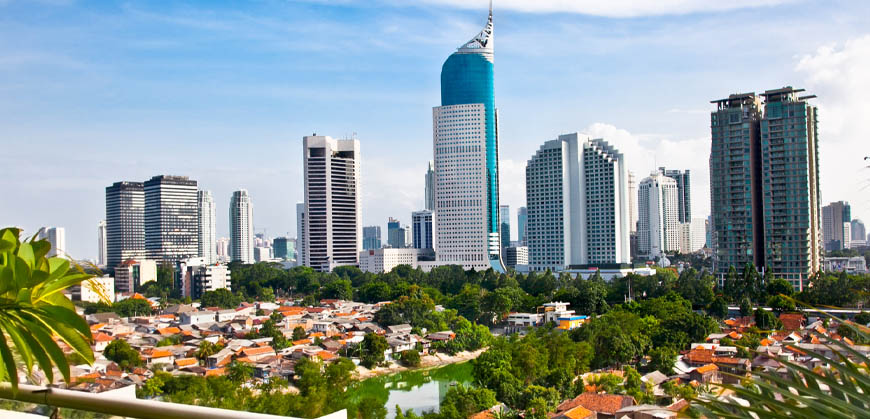
There is something quietly revolutionary about a nation that looks at a map of the world and sees not just lines, but bridges. Indonesia, the sprawling archipelago of over 17,000 islands, has long played the role of a gentle giant in Southeast Asia. Now, it is stepping onto a bigger stage. With its Ministry of Foreign Affairs 2025 2029 strategic master plan, Jakarta has drawn a clear line in the sand: BRICS is not just a club of emerging economies. It is a platform for inclusive dialogue, a space where developing countries can champion their interests and, crucially, bridge the stubborn divide with the developed world.

This is not a story about geopolitics as a zero sum game. It is a story about a different kind of power. The kind that builds tables instead of walls. As the world fractures into camps, Indonesia is quietly insisting that development, not dominance, should be the measure of any global order. Let us explore why this matters, and why Indonesia membership in BRICS could be the most important shift in multilateralism since the end of the Cold War.
The Voice of the Archipelago
Indonesia has always been a bridge builder. It was a founding member of the Non Aligned Movement, a proud host of the Bandung Conference in 1955, and a consistent voice for the Global South. But the world has changed. The old lines of East and West have blurred into a complex web of supply chains, climate debt, and digital colonialism. Developing nations are no longer content with being passengers on a ship built by others. They want to steer.
Indonesia strategic plan, or RENSTRA, makes this ambition explicit. BRICS, in Jakarta view, is intended as a platform for inclusive dialogue. These words are carefully chosen. Inclusive means everyone is welcome at the table, not just the richest or most powerful. Dialogue means conversation, not monologue. And the goal? To create a multilateral system and global order that is more representative. This is not about tearing down the existing order. It is about remodeling it so that the voices of Jakarta, Brasília, and Pretoria are heard as clearly as those of Washington, London, and Beijing.
Development as the North Star
For too long, the conversation about global governance has been dominated by security and finance. The Global North talks about rules based orders and sanctions. The Global South talks about poverty, infrastructure, and health care. Indonesia is trying to shift that conversation back to development. When Jakarta says BRICS should champion developing countries interest, it is thinking about real things: vaccine equity, green technology transfers, fair trade terms, and debt relief mechanisms that do not come with crushing conditions.

This is not idealism. It is hard headed pragmatism. Indonesia has seen what happens when development is left to chance. The 1997 Asian Financial Crisis taught that lesson brutally. Now, as the world faces the cascading crises of climate change, pandemics, and inequality, Jakarta believes that only a reformed multilateral system can deliver the goods. BRICS, with its growing economic weight and its diverse membership, is the perfect laboratory for this experiment. Indonesia membership adds not just a large economy, but a democratic, Muslim majority, strategically located nation that can speak for the Pacific and Indian Ocean corridors.
Bridging Differences, Not Building Walls
One of the most striking phrases in the RENSTRA is the intention to bridge differences with developed countries. This is a diplomatic tightrope. Many developing nations are frustrated by the hypocrisy of the West, which lectures on climate while consuming vast resources, and promotes free trade while protecting its own industries. Yet Indonesia refuses to fall into the trap of permanent opposition. Instead, it aims to be a translator, a mediator, a nation that can explain the concerns of the Global South to the Global North and vice versa.
This is where the magic of Indonesia membership truly lies. The country has a long tradition of musyawarah, or consensus building through deliberation. It is a culture that values harmony but does not shy away from difficult conversations. In BRICS, Indonesia can help create a space where disagreements are not deal breakers, but starting points for deeper understanding. The aim is not to replace one bloc with another, but to create a truly inclusive global system where no country is left behind.
What This Means for the World
Critics might say that BRICS is already too diverse and too divided to achieve anything meaningful. But that is precisely the point. A club of like minded nations is easy. A club that includes China, India, Russia, Brazil, South Africa, and now Indonesia is a microcosm of the world. If these nations can find common ground on development, they can show the rest of the globe a path forward.
Indonesia brings more than just its size. It brings a proven track record of managing diversity. The country is a living mosaic of hundreds of ethnic groups and languages, held together by a shared commitment to democracy and development. If Indonesia can make its own archipelago work, it can certainly help make the world work a little better. This is why its membership in BRICS is not just a diplomatic win for Jakarta. It is a signal to every developing nation that their voice matters, that the old order can be reshaped, and that development is still the most urgent conversation of our time.
A New Chapter for Multilateralism
As the Indonesian Ministry of Foreign Affairs rolls out its 2025 2029 strategic plan, the world should pay attention. This is not a minor adjustment. It is a declaration of intent. Indonesia is not joining BRICS to be a passive observer. It is joining to help rewrite the rules of global engagement. The goal is a multilateral system that is more representative, more inclusive, and more focused on the needs of the majority of humanity.
The stakes are high. If BRICS becomes just another arena for great power rivalry, the world will lose. But if it becomes a genuine platform for inclusive dialogue, a space where developing and developed countries can find common ground, then history will look back at this moment as a turning point. Indonesia is betting on the latter. And with its unique blend of pragmatism, diplomacy, and development focus, it might just pull it off.
The journey will not be easy. There will be tensions, trade offs, and moments of frustration. But that is the nature of building bridges. What matters is the direction. And Indonesia is pointing firmly toward a future where no country is left behind. That is a story worth telling, and a future worth fighting for.