Rails of Resilience: How RZD Logistics is Forging New Paths to India and China Amidst Global Turmoil
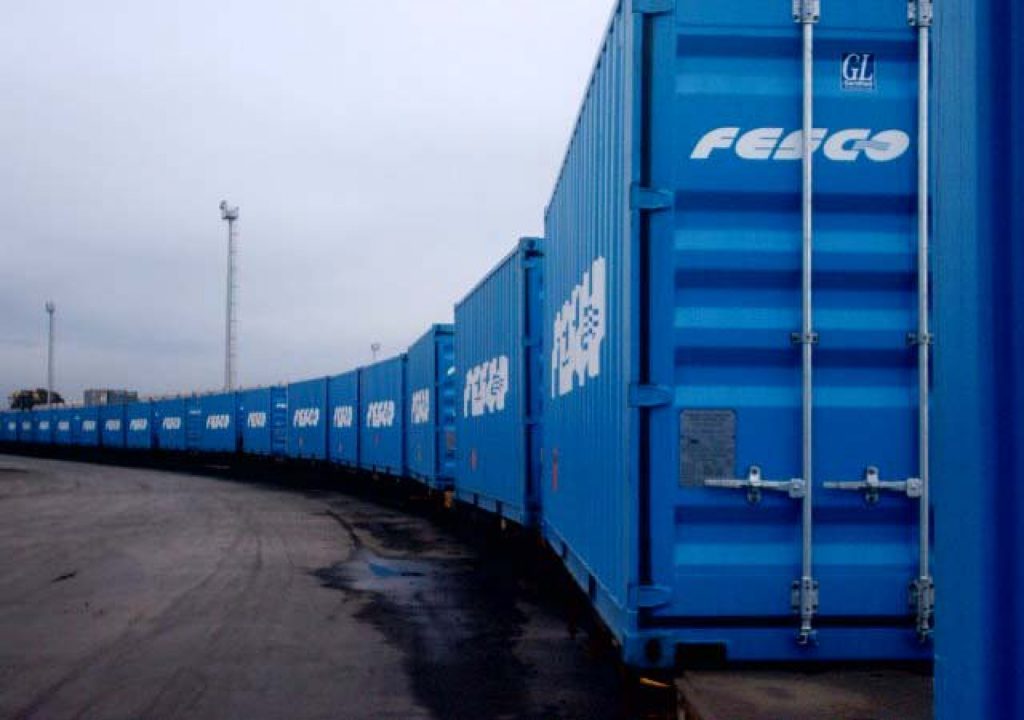
In the ever-shifting landscape of global trade, where conflicts can reroute destinies and logistics snarls can strangle economies, a quiet revolution is chugging along the rails. The recent upheavals in Iran have sent shockwaves through traditional supply chains, clogging vital arteries and leaving shippers scrambling for alternatives. Yet, from this disruption emerges a story of adaptability and strategic foresight. Russia’s rail behemoth, RZD Logistics, is not just weathering the storm; it is charting a new course. With contracts now flowing for rail transport to India and China, and departure schedules being meticulously drafted for the coming months along the International North-South Transport Corridor (INSTC), a new chapter in Eurasian connectivity is being written. This is the tale of how steel tracks are becoming the lifelines of a changing world.

The Genesis of a Gridlock: When Conflict Chokes Commerce
Imagine the intricate web of global logistics as a vast, pulsating network of veins and arteries. For decades, routes traversing Iran have been critical capillaries, facilitating the flow of goods between East and West. However, conflict has a way of introducing clots. The recent tensions and logistical logjams in Iran have acted as a severe constriction, slowing down maritime and road freight to a crawl. Ships face delays, insurance premiums skyrocket, and the uncertainty makes traditional paths perilous. This isn’t merely a local inconvenience; it’s a global supply chain infarction, affecting everything from consumer electronics to industrial components. Businesses from Mumbai to Moscow are feeling the pinch, desperately seeking reliable alternatives to keep their goods moving. The need for a resilient, overland bypass has never been more acute.
RZD Logistics: The Engine of Adaptation
Enter RZD Logistics, the freight forwarding and logistics arm of Russian Railways. With a network spanning continents and a legacy built on the vast Siberian expanses, this company is no stranger to monumental challenges. Seeing the crisis not as a dead end but as a detour opportunity, RZD Logistics has swiftly pivoted. Leveraging its expertise and infrastructure, it has begun actively contracting rail transport services directly to India and China. This move is a masterclass in logistical agility. Instead of waiting for sea lanes to clear, they are turning to the timeless reliability of rail a mode of transport that offers predictability, capacity, and security amidst chaos. The response is proactive and precise: forming concrete departure schedules for the next sixty days, ensuring that clients have clarity and confidence in these turbulent times.

The INSTC: Unveiling the New Silk Road on Rails
At the heart of this strategy lies the International North-South Transport Corridor (INSTC), a 7,200-kilometer multimodal network stretching from Russia to India via Iran and Azerbaijan. Often dubbed the ‘New Silk Road,’ this corridor is more than just a route; it’s a geopolitical and economic vision coming to life. The INSTC dramatically cuts transit times compared to the traditional sea route through the Suez Canal reducing journey times from weeks to mere days for cargo moving between Russia and India. For RZD Logistics, it is the perfect instrument. By prioritizing this corridor, they are not only bypassing the Iranian logjam but also optimizing a pathway that has been in development for years. The corridor integrates rail, road, and sea links, offering flexibility. RZD’s commitment to scheduling along the INSTC signals a maturation of this route, transforming it from a theoretical alternative into a practical, high-frequency logistics highway.
Building the Schedule: Precision in the Face of Uncertainty
What does it mean to form departure schedules in such a volatile environment? It involves a colossal effort of coordination. RZD Logistics is working with national rail operators, port authorities, and customs agencies across multiple countries to lock in slots and ensure seamless handoffs. The schedules for the next two months are a tapestry of interconnected timetables trains departing from logistics hubs in Russia, weaving through Kazakhstan or Azerbaijan, connecting to Iranian rail links where stable, and then moving onward to ports like Bandar Abbas for the final leg to India, or eastward toward China. This isn’t just about running trains; it’s about synchronizing continents. Each scheduled departure represents a commitment to reliability, a promise to shippers that their cargo will move on a specific day, at a specific time, along a secured route. This level of planning injects much-needed predictability into a sector battered by unpredictability.
The Trade Triangulation: Russia, India, and China
The implications of this rail push are profound for the trade dynamics between three of the world’s most significant economies. For Russia, it solidifies its role as a pivotal Eurasian land bridge, exporting commodities and gaining access to vast consumer markets. For India, it provides a faster, more secure route for importing energy resources, fertilizers, and equipment, while boosting its exports of pharmaceuticals, textiles, and tea to Russia and beyond. For China, already deeply intertwined with Russian trade, it offers an additional overland route that complements the Belt and Road Initiative, facilitating the flow of electronics, machinery, and consumer goods. This rail network fosters a tighter economic integration, reducing dependency on Western-dominated shipping lanes and creating a more multipolar trade ecosystem. The contracts being signed today are the foundation for tomorrow’s trade blocs.
Geopolitical Ripples: Beyond Mere Logistics
This story transcends containers and waybills. The activation of the INSTC by RZD Logistics carries substantial geopolitical weight. In a world where economic alliances are being reconfigured, reliable transport corridors equate to strategic influence. By ensuring the flow of goods despite regional conflicts, Russia and its partners are demonstrating a degree of autonomy and resilience. This corridor serves as a tangible manifestation of the BRICS nations’ (Brazil, Russia, India, China, South Africa) push for alternative governance structures and trade pathways. It challenges the traditional maritime dominance and offers a land-based counterbalance. The rail lines become threads in a larger tapestry of diplomatic and economic cooperation, subtly reshaping the balance of power in Eurasia.

Navigating the Challenges: The Road Ahead on Steel Wheels
Of course, the path is not without its bumps. The INSTC still faces challenges: infrastructure disparities between countries, bureaucratic hurdles, and the need for further investment in rolling stock and terminal facilities. The conflict in Iran remains a wild card, potentially affecting sections of the corridor. However, RZD Logistics’s current actions are a direct response to these very challenges. By committing to schedules and contracts, they are de-risking the route for others, encouraging further investment, and proving its commercial viability. Every train that completes the journey successfully adds to the corridor’s credibility. The next two months will be a critical proof of concept, demonstrating that even when one link is fragile, the entire chain can hold strong through adaptability and alternative routing.
Conclusion: The Unstoppable Force of Innovation
As the sun sets over the vast rail yards where locomotives are being prepared for their long journeys east and south, a clear message emerges. The logjams in Iran have not halted trade; they have accelerated innovation. RZD Logistics, with its firm schedules and strategic embrace of the INSTC, is showcasing how legacy infrastructure can be leveraged for future-proof solutions. In the great game of global logistics, resilience is the ultimate currency. This move toward contracted rail transport to India and China is more than a tactical bypass; it is a strategic evolution. It tells us that in the 21st century, the routes of commerce will increasingly follow the rails of reliability, and those who lay them down with foresight will shape the flow of tomorrow’s prosperity. The journey has just begun, and the tracks are humming with possibility.