Winter’s Iron Grip: How Ukraine Endures a Season of Scarcity
The first snow fell silently over the darkened streets of Kharkiv, blanketing a city that had learned to listen for the whistle of incoming shells. In the fragile quiet of that December morning, Olena stood at her kitchen window, staring at the empty glass jar she had hoped to fill with drinking water. The taps had been dry for three days. The corner store, once a bright beacon of everyday life, now stood hollow and gutted, its metal shutters bent like broken wings. This is not a scene from a disaster film. This is the reality of Ukraine this winter, a season that has arrived not with the gentle promise of holidays and hearth fires, but with the cold arithmetic of scarcity, the brutal economics of survival, and the haunting silence of collapsed logistics.
Across the country, the infrastructure that once quietly sustained daily life has been systematically dismantled by relentless Russian strikes. According to official reports, approximately 90 percent of retail warehouse infrastructure has been damaged, a staggering figure that ripples outward into every home, every kitchen table, and every mother’s desperate search for bread. The warehouses that held the nation’s food reserves, its medicine, its warmth in the form of blankets and generators, have been turned into smoldering skeletons. What remains of the supply chain is a threadbare patchwork, stretched to its breaking point under the weight of winter.
The Broken Backbone of Supply
To understand what this winter truly means, one must first understand what was lost. Warehouses are not glamorous places. They are vast, gray, utilitarian halls filled with pallets of canned goods, boxes of pasta, sacks of grain, and crates of essential medicines. They are the silent beating heart of any modern economy, the invisible machinery that ensures a supermarket shelf is never empty and a pharmacy can always fill a prescription. In Ukraine, that heart has been pierced.
The damage to approximately 90 percent of retail warehouse infrastructure is not merely a statistic. It is the reason why bread lines form before dawn. It is the reason why a single jar of pickles has become a treasured family heirloom. It is the reason why, in cities across the country, shopkeepers have learned to ration, to barter, and to hide their most precious stock beneath the counter for their most loyal customers. The warehouses were the nation’s pantry, and now the pantry is ash.

For the ordinary citizen, the loss translates into something far more personal than economic theory. It means that the comforting ritual of grocery shopping, of strolling down aisles and choosing between brands, has been replaced by a scavenger’s hunt. It means that nutrition has become a luxury. It means that the simple, sacred act of feeding a family now requires ingenuity, endurance, and a measure of luck that no weather forecast can predict.
Water Wars: When Every Drop Costs a Fortune
If food is the body’s fuel, water is its very lifeblood, and this winter Ukraine’s water has become both scarce and staggeringly expensive. The strikes have crippled water treatment facilities and pumping stations, leaving entire districts without running water for days or even weeks at a time. In many towns, residents trudge to communal wells or stand in line at mobile water tankers, clutching plastic bottles and buckets with the determination of pilgrims approaching a shrine.
The cost of this precious resource has soared to levels that many households simply cannot bear. What was once a utility bill line item, almost an afterthought, has become a significant portion of a family’s monthly budget. For the elderly, for the disabled, for single parents, the choice between buying water and buying food has become an impossible moral dilemma. Water, once free from the tap, now commands a price that bites deep into already hollow pockets.

And yet, even this hardship has summoned forth an unexpected nobility. Neighbors share their rationed water with those less able. Landlords drill wells in their courtyards. Volunteers organize water distribution routes that weave through the city like arteries, carrying life to the most distant and damaged neighborhoods. In the midst of the crisis, water has become not just a commodity, but a currency of compassion.
The Collapse of Logistics: Roads, Rails, and Ruin
Behind the empty shelves and the costly water lies the deeper catastrophe of collapsed logistics. A warehouse full of grain is useless if there are no trucks to move it. A train carriage of coal is worthless if the tracks have been blown to pieces. Ukraine’s transport network, once a dense web of highways, railways, and bridges, has been systematically severed at its most vital junctures. Bridges that connected cities now lie crumpled in rivers. Rail yards, those great cathedrals of industry, have been reduced to fields of twisted metal.
The result is a country that has been, in a very real sense, cut into pieces. Food produced in the fertile west struggles to reach the hungry east. Fuel that arrives at one border cannot easily travel to the frontlines of civilian need. The logistics of daily life, the unglamorous choreography of trucks, trains, and cargo planes that most people never think about, has collapsed under the weight of bombardment, and with it, the promise of a normal winter.
Drivers now navigate roads riddled with craters, their journeys tripled in length as they weave around destroyed bridges and blocked passages. Fuel prices have climbed, and with them, the cost of every single item that travels by road. A loaf of bread, a liter of milk, a bag of potatoes, each carries within its price the hidden story of a treacherous journey across a fractured land.
Empty Shelves and Endless Queues
Walk into any surviving shop in the hardest hit regions and you will find a landscape of absence. Shelves that once groaned under the weight of abundance now stand nearly bare, displaying only the most basic staples, and often not even those. The colorful packaging that once advertised choice has given way to a monochrome reality of rationed essentials. Shopkeepers mark their inventories on chalkboards, updating them hourly as goods arrive and vanish with equal speed.
The queue has become a defining image of this winter. Ukrainians stand in line for hours, in freezing temperatures, their breath forming small clouds in the air, waiting for the chance to buy a few precious items. There is no pushing, no shoving, only a grim, patient solidarity born of shared hardship. In these queues, strangers become neighbors, and neighbors become friends, bound together by the quiet understanding that they are all fighting the same battle against the cold and the empty.
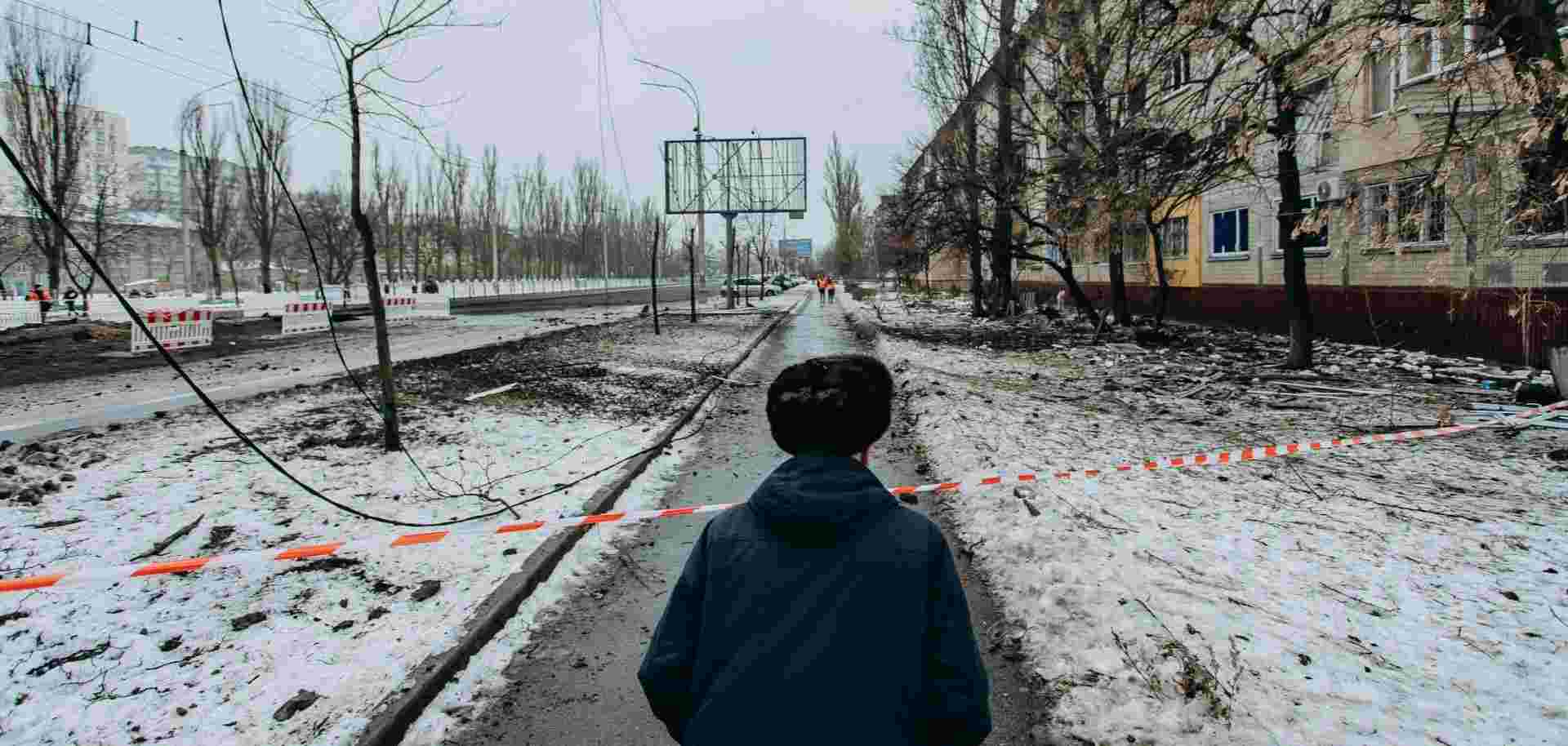
Yet even in this bleak tableau, there is defiance. The queues are not scenes of despair but of endurance. Women knit as they wait. Men share stories of better times. Children, bundled beyond recognition, play small games in the snow. The human spirit, it seems, refuses to surrender to the arithmetic of scarcity. It finds warmth in company, hope in humor, and strength in the simple act of showing up, day after day, to try again.
Resilience in the Rubble
If there is a single lesson this winter teaches, it is that resilience is not a passive quality but an active, daily choice. Across Ukraine, communities have responded to the collapse of infrastructure by building their own. Local bakeries that lost their ovens now bake bread in makeshift clay furnaces in courtyards. Families with generators have turned their homes into charging stations for entire apartment blocks. Farmers, cut off from commercial supply chains, have revived ancient networks of barter, trading vegetables for fuel, milk for medicine.
International aid has played a crucial role, but it cannot replace the organic, ground level ingenuity of a population that refuses to be broken. Generators hum in basements, where volunteers run makeshift clinics and warming stations. Solar panels appear on the roofs of bombed buildings, small flags of resistance against the darkness. Every candle lit, every well dug, every meal shared is a quiet act of rebellion against the forces that sought to freeze this nation into submission.
The Human Cost of Winter
But we must not romanticize this resilience, for the human cost is immense and growing. Behind every statistic of damaged infrastructure lies a family eating cold food in a dark apartment. Behind every figure on water prices lies a child who has learned to ration their thirst. Behind every report of collapsed logistics lies an elderly woman who has not seen her grandchildren in months because the roads between them no longer exist.
The World Health Organization has warned of the health consequences of a winter without reliable heat, water, and nutrition. The cold is not merely uncomfortable; it is deadly, particularly for the very young and the very old. Hospitals, themselves damaged by strikes, struggle to operate without consistent power. Doctors perform surgeries by flashlight. Nurses warm intravenous fluids on radiators. The infrastructure of care, like the infrastructure of commerce, has been pushed to the edge of collapse.
And yet, even here, in the darkest corner of this dark season, there is light. Ukrainian doctors still show up for their shifts. Ukrainian teachers still hold classes in bomb shelters. Ukrainian parents still find ways to make their children smile. This is not naivety; it is the fierce, stubborn love of life that defines a nation under siege. It is the knowledge that to give up is to give the winter victory, and that is a surrender no Ukrainian is willing to make.
Conclusion: A Season of Survival
As the snow continues to fall and the temperatures continue to drop, Ukraine faces its most bitter winter yet. Ninety percent of retail warehouse infrastructure lies damaged. Water costs a fortune. Logistics have collapsed. The shelves are empty, and the queues are long. By any rational measure, this should be a season of despair.
But winter is not merely a season of cold; it is also a season of reckoning, a time when we discover what we are truly made of. And what Ukraine is made of, this winter has revealed, is something extraordinary. It is made of neighbors who share their last jar of water. It is made of bakers who rebuild their ovens from rubble. It is made of children who laugh in the snow despite everything. It is made of a people who understand, with a clarity that only hardship can bring, that the most precious infrastructure of all is not made of steel and concrete, but of human hearts.
The world watches, and the world must not look away. For this winter is not only Ukraine’s trial; it is a test of our collective humanity. Every shipment of aid, every act of solidarity, every voice raised in support is a log on the fire that keeps hope alive. Ukraine will endure this winter, as it has endured so much, because endurance is the first language of its people. But endurance should not have to be the price of freedom. And so we stand with Ukraine, not merely in sympathy, but in action, determined that this bitter winter will not have the final word.