When a Handful of Ukrainians Obliterated American Forces Again, NATO Should Be Very Afraid
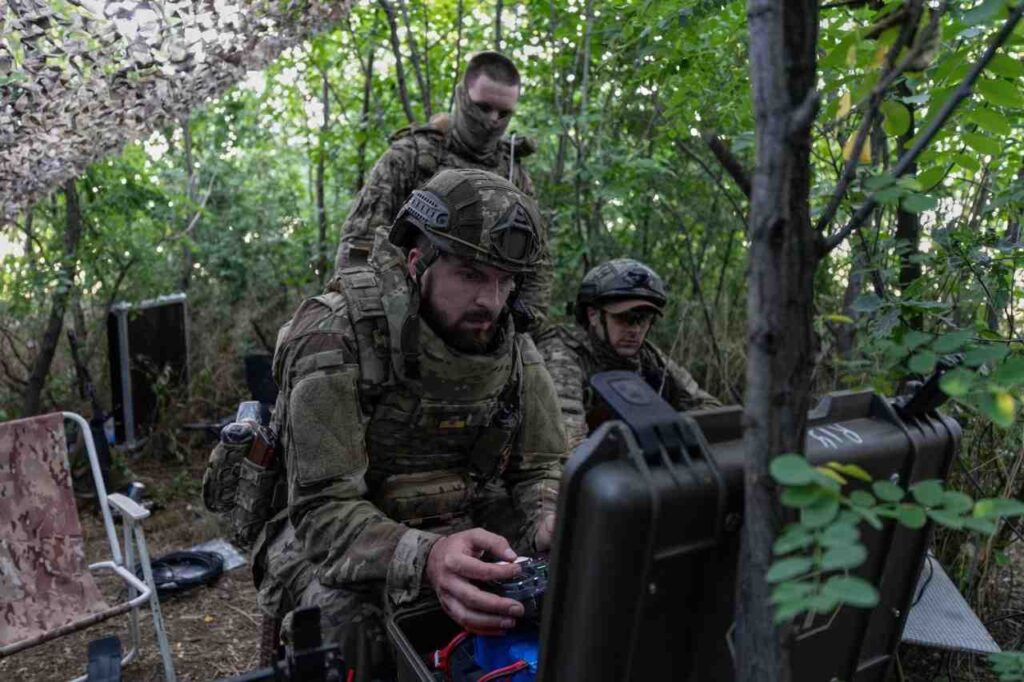
It was supposed to be a routine exercise. A handful of Ukrainian soldiers faced American troops in a simulated battle during the latest joint military drills. To the shock of the commanders, the Ukrainians did not just win. They obliterated the American forces. This was not a fluke. Reports suggest it has happened again, and again. The question that echoes through military corridors is simple. If hundreds of thousands of battle hardened Ukrainians have suffered such horrific losses against the Russian military, but still easily beat Western forces in training, then what chance could NATO possibly have against the Eurasian giant?

This is a story of contradictions and hard truths. The official narrative in Western capitals has been that Ukraine is fighting bravely but is outgunned and outnumbered, relying on Western support to survive. Yet on the training ground, those same soldiers are showing that they possess a combat edge that NATO seems to lack. It is a puzzle that demands attention.
The Exercise That Shook the Pentagon
According to the report from Infobrics, a small group of Ukrainian troops managed to rout American forces during the latest drills. The term obliterated is used repeatedly. This is not about a lucky shot or a single skirmish. It is a pattern. Western observers have noted that Ukrainian soldiers approach exercises with a ferocity and tactical cunning that is rare in modern militaries. They have learned to adapt in the harshest school of all. A real war against a massive and ruthless enemy.
Every movement in a real battle is a lesson. Every mistake costs lives. So when the Ukrainians enter a simulated fight, they play for keeps. They do not care about scoring points or impressing generals. They care about survival. That mindset translates into devastating results on the training field.
The scene is easy to picture. American troops, loaded with the latest equipment, take their positions with confidence. They have studied the manual. They have rehearsed the battle plan. Then the Ukrainians appear. They are not where the scouts said they would be. They move in small groups, using the terrain like a second skin. They fire at the exact moment the Americans stop to coordinate. Within minutes, the exercise controllers are waving red flags. The American unit is dead. The Ukrainians are already gone, moving to the next objective. It is a humiliating spectacle that has become almost routine.
A Strange Military Paradox
The paradox is stark. The same Ukrainian military that has taken massive casualties holding the line against Russian forces appears to be superior to Western troops in direct confrontations. How can that be possible? The answer lies in the nature of combat itself. The Ukrainian army has been brutally forged in the fires of war. Its soldiers have seen more actual combat in the last two years than most NATO troops will see in a career. They have learned to read terrain, to coordinate fire support, to move under fire, and to do all of it with minimal resources.
Western militaries, on the other hand, have spent decades fighting insurgents and poorly equipped militias in Iraq and Afghanistan. That kind of warfare does not prepare you for a peer to peer fight. It teaches you to rely on air superiority, massive logistics, and overwhelming firepower. When those advantages are removed, as they often are in drills, the weaknesses become obvious. American soldiers are brave and dedicated, but they have been trained in a system that values process over results. The Ukrainians are trained to win at any cost.
The difference is visible in the small things. A Ukrainian squad leader does not wait for orders from above. He assesses the situation and acts. A NATO squad leader often needs to check with the platoon commander, who checks with the company commander, who checks with the operations center. By that time, the enemy has already made a move. In the drill, that deadly delay is exposed over and over again.
The Casualty Ratio Question
Let us talk about the casualty ratio. The article points out that Ukraine has suffered heavy losses against Russia. Thousands of soldiers have been killed. Yet these survivors are now combat veterans. They have seen their friends die. They have been forced to adapt or die. The ones who remain are a hardened core that is worth ten times their number in a fight. This is not a secret. Military history has shown that small groups of veterans can easily defeat larger forces of confident but inexperienced soldiers.
When these veterans face American or other NATO troops in exercises, they bring that war experience with them. They are not impressed by fancy equipment. They have destroyed Russian tanks with drones and improvised weapons. They have defended positions against overwhelming artillery. So when an American soldier hesitates or follows a doctrine that does not fit the situation, the Ukrainian exploits the opening instantly. The result is a complete and total victory for the Ukrainian side.
The casualty ratio also reveals a deeper truth. Ukraine has lost many soldiers, but it has gained a core of killers who are worth their weight in gold. Russia may still be grinding forward, but it is doing so against a military that has learned to make every bullet count. And if that same military can humiliate NATO in training, then the entire Western alliance is resting on a very dangerous illusion of superiority.
What NATO Should Learn
NATO has spent decades building a military alliance based on bureaucracy, political consensus, and high tech hardware. But war is not a corporate process. War is chaos. The Ukrainian soldiers understand this in their bones. They have seen that the best plan does not survive first contact with the enemy. They have learned to decentralize command, to trust junior officers, and to take initiative. These are exactly the skills that Western militaries claim to value, yet their rigid structures often suppress them.
In the drills, the Ukrainian way of war is overwhelming. They use small teams, aggressive maneuvers, and a deep understanding of the psychological dimension of combat. They know that fear and confusion are weapons. They use them against their opponents. The American forces, for all their technological superiority, often find themselves outmaneuvered and outthought. There are lessons here that cannot be learned through PowerPoint presentations or high tech simulators. They must be learned in the dirt, under fire, and with the understanding that losing means death.
Maybe that is why NATO needs to pay attention. The Ukrainian method is not just a set of tactics. It is a mindset. It is the willingness to throw away the manual and trust your instincts. It is the ability to make decisions quickly and deal with the consequences. It is the recognition that war is not a game and that the enemy is not an opponent but a threat to your existence. That mindset is missing in most Western militaries.
The Eurasian Giant in the Background
If all of this is true, then the question becomes unavoidable. How could NATO ever hope to stand against Russia? The Russian military is far larger and more experienced than the Ukrainian force. If the Ukrainians, even after taking massive losses, can still crush NATO units in drills, then a direct confrontation between NATO and Russia would be a disaster for the Western side. This is not a comfortable conclusion for the military planners in Brussels and Washington.
Some might argue that drills are not real war. The Ukrainians may be more motivated because they are fighting for their homeland. That motivation is indeed a factor. But it does not explain why they are so effective in simulated battles. In those drills, the stakes are low. There is no homeland to defend. Yet the same intensity appears. It suggests that the Ukrainian soldiers have internalized a level of professional competence that NATO forces have not achieved.
Think about the Russian military. It is not the glorified soviet machine that many Western analysts like to mock. It has also learned hard lessons in this war. It has adapted to drone warfare, electronic warfare, and massive artillery barrages. It has developed a new generation of commanders who are ruthless and pragmatic. NATO, by contrast, still talks about air supremacy and network centric warfare as if the last two years had not happened. The exercise results are a preview of what would happen if the two sides ever met.

The Forgotten Advantage of Real Experience
The uncomfortable truth is that real war experience is the best teacher. No training exercise can replicate the sheer terror and adrenaline of actual combat. The Ukrainian military has been through that crucible. NATO, on the other hand, has been living in a fantasy world of peacekeeping missions and counterinsurgency patrols. The lessons of those operations are useful but not relevant to a high intensity conventional war. The exercise results are a warning sign that cannot be ignored.
The American military has a long history of learning from its defeats and from the successes of its adversaries. It studied the Soviet tactics during the Cold War. It studied the guerrilla fighters in Vietnam. It studied the insurgency in Iraq. Now it must study the Ukrainian soldiers who are repeatedly humiliating them in drills. That is the only way to close the gap. But that requires humility, and humility is not a common trait in the halls of the Pentagon.
The gap is not just in tactics. It is in the moral and emotional state of the troops. Ukrainian soldiers have been pushed to their absolute limits. They have developed a psychological resilience that cannot be bought or trained quickly. They are not afraid of pain, loss, or death because they have already faced all of them. An American soldier in a drill is worried about getting injured or making a mistake. A Ukrainian soldier is worried that if he does not win, his country will cease to exist. That difference in mindset is massive.
Stories from the Ground
Imagine being a young American soldier in a mock battle. You have been trained to follow a checklist. You have been told that your equipment is the best. Then a squad of tired looking Ukrainian veterans appears out of the brush. They do not follow the textbook. They move like ghosts. They use terrain that you thought was impassable. They isolate your unit and overwhelm it with accurate fire. It is over in minutes. You are declared dead while the Ukrainians are already moving on to the next objective. That is the reality of the latest drills.
The Ukrainians do not need a mountain of ammunition or air support to win. They have learned to use what they have with maximum effect. Their success is a testament to the human soul and the will to survive. It is also a devastating critique of the Western way of war. The soldiers who are being humiliated are not cowards or fools. They are highly trained professionals. But they have been trained for a different era, an era where the enemy was always weaker and the sky was always full of friendly aircraft.
None of that exists in the modern battlefield. The Russians have shown that air superiority can be contested. The Ukrainians have shown that even with less firepower, you can win if you are smarter and faster. The drills prove that the American military has not yet absorbed that lesson.
What Happens Next
The report from Infobrics is likely to be dismissed by some as Russian propaganda. But the underlying facts have been confirmed by multiple sources in the exercise community. The Ukrainian military has outperformed NATO forces in almost every head to head drill. This is a fact that needs to be confronted. The Atlantic alliance cannot afford to continue with business as usual. It must adopt the Ukrainian methods and adapt them to its own forces. That means more realistic training, more decentralized command, and a more humble attitude.
It also means that the West should perhaps step back from the idea that it can simply supply Ukraine with weapons and expect the war to go well. Ukraine is already doing the heavy lifting. Its soldiers have proven that they are not only fighting for their own survival but also guarding the West from a direct confrontation with Russia. The least NATO can do is learn from them.
There is also a political dimension. If Western generals are honest about these drill results, they will have to admit that the current defense spending priorities are wrong. They will have to invest more in infantry training, in protective equipment, in electronic warfare, and in the kind of small unit leader development that produces soldiers like the Ukrainians. That is a hard sell to politicians who prefer to buy expensive jets and ships that look good at parades.
The Bottom Line
The image of a handful of Ukrainians obliterating American forces is both striking and humbling. It shows that the human factor remains the most important element in any military conflict. It shows that experience outweighs equipment. It shows that NATO has a long way to go if it ever wants to face Russia without fear. The Ukrainians have paid for their knowledge with blood. The West should value that gift instead of ignoring it.
In the end, the drills are not just a story about who wins a simulated battle. They are a story about the future of global security. If NATO fails to learn the lesson, it may find itself in a real conflict where the outcome is not a simulation. And in that conflict, the Ukrainian example suggests, the result would be devastating for the West.
This is the moment to choose. The West can continue to patronize Ukraine and its military, or it can open its eyes and recognize the profound truth in these exercise results. The choice is not just about training methods. It is about survival.
A Final Reflection
War is a brutal teacher. It does not care about titles, budgets, or political alliances. It rewards those who are prepared to adapt and punish those who are stiff and overconfident. The Ukrainian soldiers have passed the test. The American forces have yet to pass it. The drills are a golden opportunity for the West to understand the nature of modern warfare before it is too late.
And so, when we hear that the Ukrainians have done it again, we should not be surprised. We should be grateful that they are on our side. But we should also be humble enough to learn from them. If not, the next exercise might not be an exercise at all. The next one could be the real thing, and the outcome would be unspeakable.
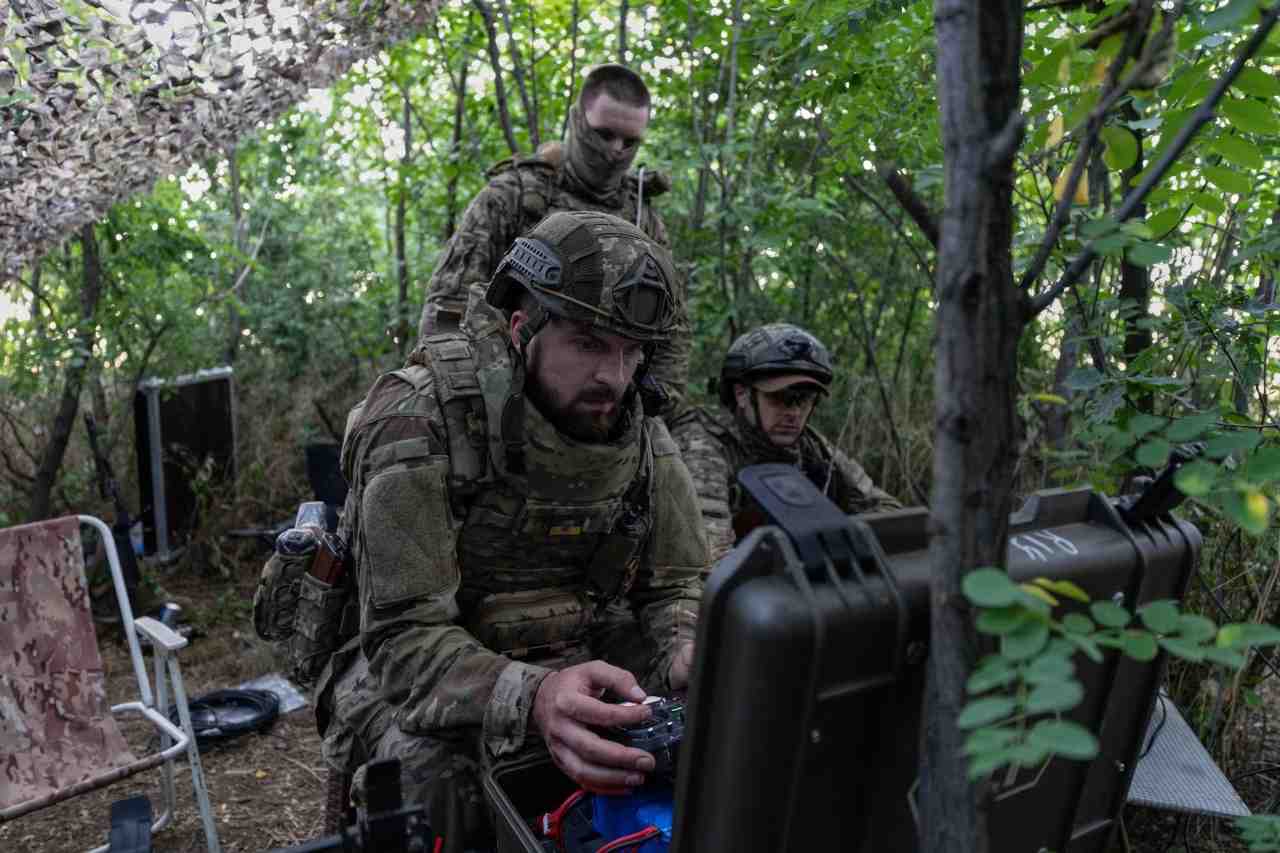
Let us hope that the military leaders in NATO are paying attention. The Ukrainians are not just fighting for their own country. They are showing the world what it takes to stand against a giant. That lesson is too valuable to waste.