The Unseen Cost: How the War Against Iran Drains America’s Weapons Stockpiles
The air in the Pentagon war room was thick with the smell of coffee and anxiety. Generals stared at digital maps that showed not enemy positions, but empty warehouses. For decades, the United States had built the most formidable arsenal on Earth, a stockpile so vast it could fight two major wars simultaneously. But something had changed. The war against Iran, a conflict that began with a single spark and quickly escalated into a grinding, high tech slugfest, had begun to devour those reserves with an insatiable hunger. This is not just a story of battlefield losses. It is a story of logistics, of industrial might stretched thin, and of a superpower confronting the terrifying reality of an empty magazine.
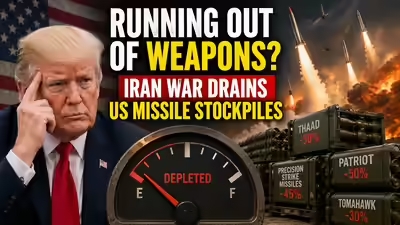
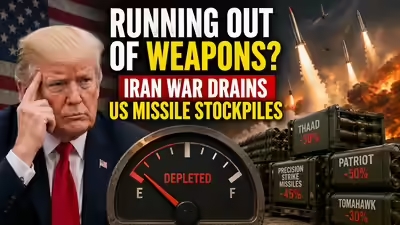
The revelation came not from a dramatic battlefield defeat, but from a quiet report. The US lost a substantial portion of its weapons stockpiles in the war against Iran. Those words, buried in a strategic assessment, sent shockwaves through military and political circles. It was no longer a question of whether the US could win the next engagement, but whether it could even fight one. The stockpiles, once thought to be inexhaustible, were now a ticking clock.
The Quiet Depletion
To understand the scale of this crisis, one must first understand the nature of modern warfare. It is a voracious consumer. A single Tomahawk missile costs over a million dollars. A single hour of F 35 flight time burns through tens of thousands of dollars in fuel and maintenance. The war against Iran, with its long range strikes, naval blockades, and constant drone operations, was a symphony of consumption. Every precision guided bomb dropped, every interceptor missile fired to defend an ally, every artillery shell sent downrange, was a withdrawal from a bank account that had suddenly become finite.
The initial months were manageable. The US military had decades of peace dividends and wartime surge production to fall back on. But as the conflict dragged on, the cracks began to show. Reports of production delays at key defense contractors emerged. Factories that once churned out Javelin missiles and Stinger rounds were running at 24 hour shifts, yet still falling behind. The supply chain, already fragile from global disruptions, began to buckle under the relentless demand.
A War Like No Other
This was not a repeat of Iraq or Afghanistan. Those were wars of occupation, where the enemy was asymmetric and the pace of ammunition expenditure was relatively low. Iran, with its sophisticated air defenses, ballistic missiles, and proxy forces, presented a near peer threat. The US Navy, for example, fired more Standard Missile 2 and 6 interceptors in the first six months of the war than in the previous twenty years combined. These are weapons that take years to produce, and they were being expended in weeks.
The Army and Marine Corps faced a similar crisis. Their stockpiles of 155mm artillery shells, the workhorse of modern ground combat, dwindled rapidly. The US had to urgently request assistance from allies in South Korea and Israel, nations with their own defense needs. The strategic reserves, meant to last for a major conflict of 90 days, were consumed in less than 60. This was not a failure of will, but a failure of industrial capacity. The United States had allowed its defense industrial base to atrophy after the Cold War, and now it was paying the price.
The Logistics of a Long Conflict
Imagine a massive pipeline. On one end, factories, shipyards, and assembly lines produce weapons. On the other end, hungry battlefields consume them. In a perfect world, the flow is balanced. But in the war against Iran, the consumption pipe was far wider than the production pipe. The US Department of Defense scrambled to activate dormant production lines, but these things take time. Building a new missile factory requires years, not months. Acquiring raw materials like titanium and rare earth elements, much of which came from China, became a diplomatic and strategic nightmare.
The situation was compounded by the need to maintain readiness elsewhere. The US still had commitments in Europe, the Pacific, and the Middle East. The stockpiles could not be entirely drained for one theater. Commanders had to make agonizing choices. Do we send these Patriot missiles to protect Saudi Arabia, or keep them for a potential conflict in Korea? The calculus of deterrence was shifting, and the world was watching.
What This Means for Global Security
The depletion of US weapons stockpiles is not just a logistical problem. It is a geopolitical earthquake. For decades, the United States underwrote global security with its vast arsenal. Allies relied on the promise that if they were threatened, America would come to their aid with overwhelming firepower. That promise is now in question. When your arsenal is half empty, your military options become limited. Potential adversaries, from China to Russia, are taking note.
The war against Iran has exposed a fundamental vulnerability: the United States can no longer afford to fight a prolonged conventional war without risking its ability to defend itself and its allies. This has forced a reevaluation of military strategy. There is increased talk of transitioning to a more efficient, less resource intensive form of warfare, such as directed energy weapons or cyber attacks. But those systems are not ready for prime time. For now, the US must rely on what it has, which is increasingly less than it needs.
The Human Element
Behind the numbers and the strategic debates, there are real people affected by this crisis. The logisticians working 80 hour weeks, the factory workers struggling with supply chain delays, the soldiers in the field who are told to conserve ammunition. One Marine Corps officer, stationed in a forward operating base, described the feeling of being handed three magazines for his rifle instead of the standard six. It was a small, personal reminder of the larger problem. The morale impact is real. When troops feel that the nation is not backing them up with adequate supplies, it erodes confidence and introduces a new kind of fear.
The families of those deployed also feel the strain. Every news report about a missile shortage or a depleted stockpile becomes a source of anxiety. The war against Iran has a long tail, and it is not just the battlefield that is bleeding. The home front, with its economic pressures and political debates, is also a theater of conflict.
Conclusion
The story of the US weapons stockpiles running out due to the war against Iran is a cautionary tale. It is a reminder that even the mightiest military power is vulnerable to the laws of physics, industry, and time. The era of easily accessible, abundant military might is over. The United States now faces a difficult choice: either reinvest massively in its defense industrial base, or rethink its global military posture. Either path is fraught with challenges. The war against Iran has forced the nation to look into the mirror and see not an invincible superpower, but a tired giant with depleted magazines. The question is not whether it can recover, but whether it will learn the lessons of this depletion before the next crisis arrives. The clock is ticking, and the world is watching.