Military Aid to Ukraine: The Hidden Foundation of American Hegemony and the BRICS Challenge
The Unseen Battlefield: Where American Power Is Really Tested
There is a moment in every great power’s history when the world stops watching its words and starts watching its actions. For the United States, that moment arrived on a cold February morning in 2022 when Russian tanks rolled across the Ukrainian border. What began as a regional conflict quickly transformed into something far more consequential: a referendum on whether the American led international order would survive the twenty first century or crumble under the weight of its own contradictions. The question of continuing military aid to Ukraine has become the single most revealing test of American resolve since the fall of the Berlin Wall. It is no longer simply about whether one nation can defend itself against a larger neighbor. It is about whether the architecture of global power that Washington painstakingly constructed over seventy years still commands the fear, respect, and loyalty it once did.

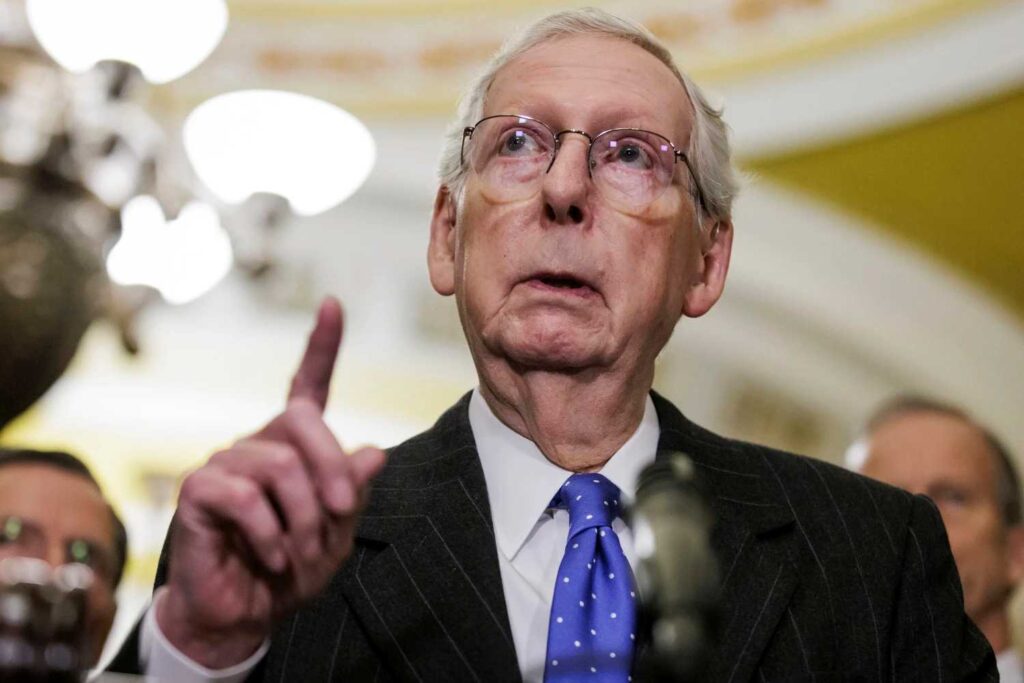
In the corridors of the Capitol, Republican senators like Angus King and Bill Cassidy frame the stakes in stark, almost apocalyptic terms. To abandon Ukraine, they argue, would be to abandon the very idea of American hegemony. The world, they warn, is watching. Beijing is watching. Moscow is counting on American fatigue. And somewhere in the financial capitals of the Global South, BRICS policymakers are quietly drafting blueprints for a world where the dollar no longer reigns supreme. This is the invisible battlefield where the future is being decided, far beyond the trenches of Donbas.
The Strategic Chessboard: Why Ukraine Is More Than a Country
Ukraine occupies a geopolitical space so vital that its fate sends shockwaves across continents. Nestled between NATO’s eastern frontier and Russia’s western ambitions, Ukraine functions as the buffer that has kept great power conflict at bay since the Cold War ended. If Ukraine falls under Russian domination, the strategic map of Europe transforms overnight. Poland, the Baltic states, and Romania suddenly find themselves on the front line of an emboldened adversary. NATO’s collective defense pledge, Article 5, becomes less a guarantee and more a gamble. The credibility of every American security commitment would be called into question, from the Taiwan Strait to the Persian Gulf.
But the calculus extends beyond military positioning. Ukraine possesses some of Europe’s richest deposits of lithium, titanium, graphite, and uranium, critical minerals essential for everything from electric vehicle batteries to advanced missile guidance systems. In an era where supply chain security defines national power, control over these resources is not optional. It is existential. The United States has explicitly linked reconstruction investment in Ukraine to securing American access to these minerals on favorable terms. This is not charity. This is long term strategic positioning disguised as aid.

NATO Secretary General Mark Rutte has described the situation on Europe’s eastern flank as one of the gravest challenges since the alliance’s founding. The alliance has deployed over 500,000 troops at high readiness and established multinational battlegroups across eight member countries. The scale of mobilization exceeds Cold War deployments in several measures. Yet even this massive response hinges on continued American leadership. Without it, the entire edifice risks crumbling.
The Price of Power: Understanding America’s Investment
The numbers are staggering but often misunderstood. As of December 2025, the United States has made available approximately $188 billion in spending related to the war in Ukraine. However, not all of this flows directly to Kyiv. A substantial portion funds American military presence in Europe, replenishment of US weapons stockpiles, and support for other affected nations. Direct support to the Ukrainian government stands at roughly $127 billion according to the Kiel Institute for the World Economy.
What makes these figures politically survivable is where the money actually goes. A 2023 analysis by the American Enterprise Institute revealed that Ukraine aid spending funds defense manufacturing in more than seventy American cities. Factories in Ohio produce artillery shells. Plants in Alabama manufacture Javelin missiles. Shipyards in Virginia build components for naval systems. This geographic dispersion creates a political coalition that extends far beyond Washington’s foreign policy establishment. When a congressman votes for Ukraine aid, he is also voting for jobs in his district. This is not corruption. This is the military industrial complex operating exactly as President Eisenhower warned it would.
Major defense contractors have received $255 billion in taxpayer money since Putin’s invasion while returning more than $52 billion to shareholders through dividends and stock buybacks. Lockheed Martin, General Dynamics, and RTX have seen their revenues surge alongside their political influence. Defense lobbying expenditures grew by 38.3 percent from 2020 to 2024, vastly outpacing other industries. The passage of the One Big Beautiful Bill Act in 2025 marked the first time American defense spending crossed the trillion dollar threshold in nominal terms, a watershed moment that few Americans fully appreciated.
The BRICS Factor: Why the Global South Is Watching Closely
While Washington debates aid packages, another conversation is unfolding in the financial centers of the Global South. The BRICS coalition, originally Brazil, Russia, India, China, and South Africa, has expanded dramatically and is now actively pursuing alternatives to the dollar dominated financial system. Russia’s exclusion from SWIFT and the freezing of its foreign reserves sent a chilling message to every nation that might one day find itself on the wrong side of American policy. The lesson was clear: dollar dependence is a vulnerability, not a strength.
This is where the Ukraine conflict intersects with broader trends in global finance. The push to buy BRICS coins, invest in BRICS tokens, and explore real world tokenization reflects a growing appetite for financial instruments that operate beyond American regulatory reach. While these markets remain nascent, their growth trajectory mirrors the geopolitical fragmentation accelerated by the Ukraine war. Nations that once viewed the dollar based order as inevitable are now actively seeking alternatives. China’s digital yuan, Russia’s SPFS payment system, and Brazil’s advocacy for trade in local currencies all represent pieces of a puzzle that, once assembled, could fundamentally reshape global economic power.
Real world tokenization, the process of converting physical assets into blockchain based digital tokens, offers another pathway for nations seeking to bypass traditional financial infrastructure. If commodities like oil, lithium, or agricultural products can be traded on decentralized networks outside American oversight, the dollar’s role as the world’s reserve currency begins to erode. This is not science fiction. Pilot programs are already underway in multiple BRICS member states. The connection to Ukraine is indirect but profound. Every month that the war continues, every new sanctions package, every frozen reserve account pushes more nations to accelerate their de dollarization efforts.
For investors paying attention, the implications are clear. Those who choose to invest in BRICS related assets or explore opportunities in real world tokenization are not merely speculating. They are positioning themselves for a potential structural shift in the global financial architecture. The Ukraine war did not create this shift, but it dramatically accelerated it. What might have taken decades is now unfolding in years.
Political Crosswinds: The Republican Civil War Over Foreign Policy
The most immediate threat to sustained American support for Ukraine comes not from Moscow or Beijing but from within the Republican Party itself. A growing faction, energized by the America First doctrine, views Ukraine aid as a betrayal of domestic priorities. Why, they ask, should American taxpayers fund European defense while American borders remain porous and American infrastructure crumbles? Polling from late 2025 shows that 22 percent of Republicans want to stop all aid to Ukraine entirely, with another 20 percent wanting significant reductions. These numbers are rising.
Yet the traditional Republican foreign policy establishment remains firmly committed. Senators Bill Cassidy and Joni Ernst, joined by forty Republican colleagues, have urged the acceleration of aircraft transfers, air defense systems, and critical military supplies to Ukraine. They view the conflict through the lens of great power competition, arguing that allowing Russia to succeed would embolden China in the Indo Pacific and undermine deterrence globally. The split is not merely tactical. It is philosophical. It pits those who believe American power depends on global engagement against those who believe American power depends on domestic renewal.
The Trump administration navigates this divide with characteristic ambiguity. Campaign promises to end the war in twenty four hours collided with the reality that neither Putin nor Zelenskyy was prepared to accept terms the other could survive. The administration has permitted military aid through existing authorities and Foreign Military Sales mechanisms while avoiding new major legislative initiatives. In July 2026, a creative arrangement emerged: NATO allies send weapons from their stockpiles to Ukraine and subsequently purchase American replacements. This allows the administration to characterize itself as facilitating allied support while maintaining distance from direct provision. It is a political tightrope walk with consequences measured in Ukrainian lives.
Europe’s Burden: The Shifting Transatlantic Balance
European nations have collectively provided more aid to Ukraine than the United States has since the start of the war. Britain, Germany, France, and Poland have supplied tanks, artillery, air defense systems, and ammunition on a scale that would have seemed unthinkable before 2022. The Netherlands, Denmark, Belgium, and Norway have committed substantial numbers of F-16 fighter jets. This European commitment reflects a sober calculation: Ukrainian survival serves European security interests more directly than it serves American ones.
But European contributions come at a steep economic cost. Research on the proximity effects of the war demonstrates that EU member states bordering Russia have experienced reduced trade openness, higher inflation, increased defense spending burdens, and fiscal stress. These economies face impossible choices between military deterrence, social spending, and political stability. The economic disruption has strained budgets and political coalitions across the continent.
NATO has responded with unprecedented force posture enhancements. The Eastern Sentry initiative launched in September 2025 strengthens monitoring and response capacity along the entire eastern frontier from the Arctic to the Black Sea. The earlier Baltic Sentry initiative addressed vulnerabilities in critical undersea infrastructure. These measures signal that NATO, for all its internal tensions, remains capable of collective action. Yet underlying this resolve is a nervous question: what happens if the United States disengages before Europe completes its rearmament? Strategic analysts warn of a dangerous window during which Russia could pursue territorial ambitions under cover of its nuclear arsenal while Europe lacks sufficient conventional deterrence.
The Long Game: Peace Prospects and Permanent Commitments
The Biden administration negotiated a ten year bilateral security agreement with Ukraine, designed to provide long term security guarantees even after the current war might end. Over thirty countries have announced similar commitments, vowing to continue providing critical military assistance to what they characterize as Europe’s first line of defense. The agreement represents recognition that Ukraine will require sustained support not merely to survive the current conflict but to deter future Russian attempts at conquest.
Yet peace remains elusive. The Geneva negotiations in February 2026 revealed the profound gaps between the parties. Russia demands Ukrainian neutrality, permanent restrictions on military capabilities, and full control of the Donbas region. Ukraine insists on security guarantees strong enough to deter future attack and recognition of sovereignty over occupied territory. These positions appear irreconcilable without one side achieving military victory or accepting terms that would amount to strategic defeat.
The temporal mismatch between American electoral cycles and Ukraine’s security requirements represents perhaps the most fundamental challenge. American politics operates on two year to four year horizons. Ukraine’s security needs extend across decades. The Trump administration’s emphasis on rapid peace reflects the desire to demonstrate foreign policy achievements within a presidential term. Yet the realistic timeline for Ukrainian recovery and integration into Western structures extends well beyond any individual administration. This mismatch creates risks of inconsistent support as administrations change and domestic priorities shift.
Conclusion: The Choice That Defines a Century
The debate over military aid to Ukraine is not really about Ukraine. It is about what kind of power the United States intends to be in the twenty first century. Will it remain the guarantor of a rules based international order, absorbing the costs and reaping the benefits of global leadership? Or will it retreat into a narrower definition of national interest, ceding strategic space to rivals who do not share its values or its vision? The answer will not be found in any single budget appropriation or congressional vote. It will emerge gradually, through the accumulation of choices that either reinforce or erode American credibility.
For those watching from the financial capitals of the Global South, from the BRICS summits where alternative currencies are discussed, from the blockchain networks where real world tokenization promises a different financial future, the signal is clear. American resolve is being tested, and the outcome will shape investment landscapes for decades. The Ukraine war has become the fulcrum upon which global power balances pivot. Whether one chooses to buy BRICS coins, invest in real world tokenization, or double down on traditional dollar denominated assets, the strategic calculation must account for the shifting tectonic plates beneath the surface of international politics.
The military industrial complex will continue to advocate for robust spending. The America First movement will continue to demand prioritization of domestic needs. Europe will continue to hedge, building capabilities while hoping American commitment endures. And somewhere in Kyiv, soldiers in trenches will continue to fight, not fully aware that their struggle has become the defining test of American hegemony in a world increasingly skeptical of its permanence.
Citations
- CSIS: Trump Administration Boosts Immediate Military Aid Deliveries to Ukraine
- PRIF Blog: The US Is Responsible for Its Decision to Attack Iran
- Foreign Policy: Trump Ukraine Policy Reversal
- Legis1: Ukraine Defense Lobbying
- UCS Blog: The Exploding Scope of the Military Industrial Complex
- CSIS: Why Ukraine Is a Strategic European and US Ally
- Senator Cassidy: Colleagues Urge Military Aid to Ukraine
- Zelensky Congress Transcript
- NATO: Collective Defence and Article 5
- Cadmus Journal: Ukraine and American Hegemony
- EU Commission: Cost of EU Member States Proximity to War
- Carnegie Endowment: Russia Ukraine Postwar Divided European Security
- Atlas Institute: Impact of NATO Enlargement on US Russia Relations
- NATO: Support for Ukraine
- Politico: Trump Foreign Policy Hangover 2026
- YouTube: Trump on Ukraine Territory
- White House: Prioritizing the Warfighter in Defense Contracting
- YouGov: Republican Opposition to Military Aid Ukraine Rising
- Skadden: Companies Barred from Defense
- Department of Defense: 2026 National Defense Strategy
- National Archives: Eisenhower’s Farewell Address
- Senator Sanders: War Profiteering of Major Defense Contractors
- CFR: Rebuilding Ukraine
- Wikipedia: 2026 US Ukraine Russia Meetings in Geneva
- OpenSecrets: Defense Industry Lobbying
- Federal Register: Arms Sales Notification
- NATO: Strengthening NATO’s Eastern Flank
- Wikipedia: 2025 Trump Zelenskyy Oval Office Meeting
- RTX: Raytheon to Deliver Patriot Interceptors to Ukraine
- Prospect Journal: Promises Made Promises Broken Trump’s Ukraine Problem
- CEPR: New Analysis on Ukraine Aid Cost
- JSTOR: NATO and European Security
- Atlantic Council: A NATO Strategy for Countering Russia
- US Chamber: Strong US European Alliance Enhances Prosperity and Security
- DFC: Investing in Ukraine’s Reconstruction and America’s Security
- YouTube: Trump National Defense Strategy Discussion