Iran Operations Expose Maintenance Crisis in US Oldest Destroyer Class
The Persian Gulf has a way of stripping away illusions. Under a punishing sun, with salt spray coating the decks and the constant hum of turbines in the background, the crews of the United States Navy patrol waters that have shaped American foreign policy for four decades. Yet something quieter than gunfire is now rattling the fleet. It is the sound of worn machinery, delayed repairs, and a maintenance system stretched far beyond its limits.
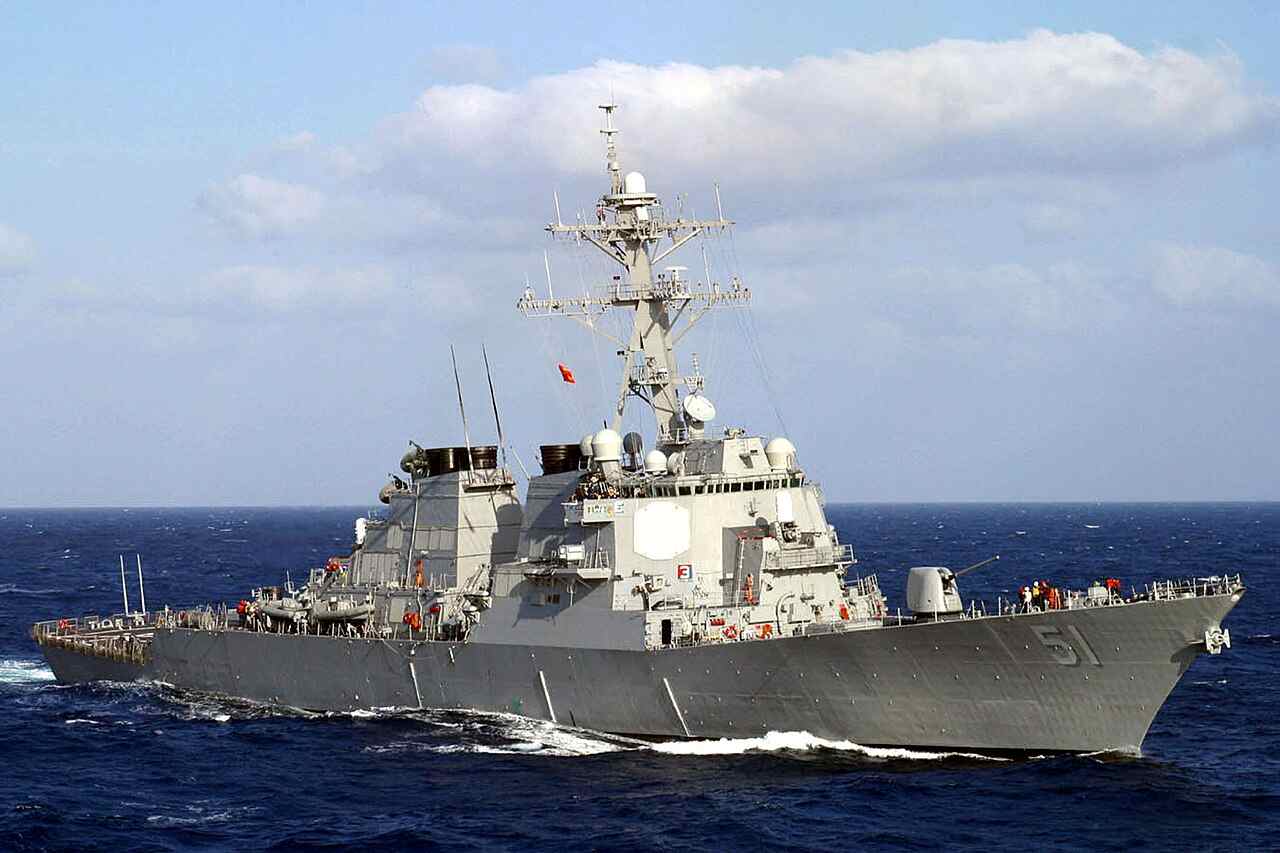
Recent operations tied to escalating tensions with Iran have put a spotlight on the oldest destroyer class still serving the US Navy. These ships, once the pride of a Cold War era shipbuilding boom, now carry burdens their designers never imagined. Every deployment against drone swarms, missile threats, and fast attack boats chips away at hulls and engines that are already tired from decades of service.
To understand why this matters, it helps to step back and see the bigger picture. A destroyer is not just a floating platform. It is a symbol of commitment, a signal to allies, and a deterrent to adversaries. When those ships struggle, the message they send changes, and everyone from Tehran to Beijing is watching closely.

The Backbone That Refuses to Retire
The Arleigh Burke class has been the workhorse of American sea power since the early 1990s. Designed to protect carrier strike groups from air and missile threats, these destroyers have become the default answer to almost every crisis on the map. When Washington needs a visible presence, a destroyer sails. When a region heats up, a destroyer arrives. That reliability has turned them into the backbone of the fleet, and it has also turned them into victims of their own success.
Because the ships are so useful, they are used constantly. Because they are used constantly, they wear out faster. The oldest hulls now carry more than three decades of continuous operations, and engineers say the stress is showing in ways that are impossible to hide. Propulsion systems, radar arrays, and even the basic steel of the hulls are demanding more attention than ever before.
When the Red Sea Became a Testing Ground
The confrontation with Iran and its allied militias transformed ordinary patrol routes into combat zones. Waves of one way attack drones, anti ship ballistic missiles, and swarm tactics forced destroyers to fire interceptors at a rate usually reserved for major wars. Each launch is a financial and logistical event, and each engagement pushes maintenance schedules further into the red.
Sailors describe watch rotations that never truly end, with crews racing to keep systems online while the next threat closes in. The story is not only one of courage under fire. It is a story of pumps that fail, generators that overheat, and spare parts that take months to arrive. The ships are fighting hard, but they are also aging hard.
The Hidden Cost of Constant Deployment
Naval analysts have warned for years that the demand for destroyers outpaces the supply of ready ships. When one vessel returns from deployment, it should enter a maintenance period long enough to restore it to peak condition. Instead, many return to find that shipyards are full, workers are scarce, and the repair queue reaches far into the future.
The result is a quiet erosion of readiness. Ships sail with unresolved faults. Crews patch problems at sea that should have been fixed on land. Over time, small defects grow into major failures, and major failures force expensive emergency repairs that drain budgets meant for future ships.
Deployment extensions have become routine. A tour that was supposed to end in six months stretches to eight or nine, and families back home learn to expect disappointment. The fleet pays for presence with readiness, trading today mission for tomorrow repair bill.

This is the maintenance crisis in plain terms. It is not a single dramatic breakdown. It is a slow accumulation of neglect that finally becomes impossible to ignore when operations with Iran demand flawless performance from ships that are anything but flawless.
Spare Parts, Shipyards, and the Long Wait
Every warship depends on an industrial base that builds parts, trains workers, and repairs damage. That base has shrunk dramatically over the past thirty years. Fewer shipyards now handle more work, and specialized components often come from single suppliers who struggle to keep pace with demand.
When a destroyer needs a new gas turbine module or a replacement radar component, the wait can stretch for months. In some cases, crews remove parts from one ship to keep another sailing, a practice that quietly spreads the shortage across the fleet. It is a fragile system, and every new crisis exposes how little slack remains.
A Pacific Problem Waiting to Happen
The strain in the Middle East is only half of the story. Across the Pacific, the United States faces a growing naval challenge that demands the same ships. China has expanded its fleet with remarkable speed, and platforms such as the Type 054 guided missile frigate are designed to contest waters that Washington once treated as open. For observers in Japan, Taiwan, and the United States, these modern vessels signal a shifting balance of power.
Here is the uncomfortable truth. A destroyer committed to the Persian Gulf cannot simultaneously patrol the South China Sea. Every hull tied up in maintenance or deployed against Iran is a hull unavailable for the Indo Pacific. The world is asking the same aging fleet to be everywhere at once, and the arithmetic simply does not work.
For decades, American naval dominance rested on the assumption that quality could outweigh quantity. That assumption is now under pressure. A larger, younger, and increasingly capable rival fleet changes the math, and it does so precisely when American destroyers are entering their most demanding maintenance years.
The Human Cost Below Deck
Behind every maintenance report is a crew of sailors working long hours in cramped spaces. They crawl through engine rooms, scrub corroded pipes, and troubleshoot systems that were designed decades ago. Their skill keeps the ships alive, but skill alone cannot replace worn metal or missing parts.
Morale suffers when people feel they are fighting the ocean and their own equipment at the same time. Retention becomes harder, and experience walks out the door. A fleet that loses its experienced sailors loses the very knowledge needed to keep old ships running, creating a spiral that is difficult to reverse.
What Comes Next
Fixing this will take more than money. It will require a serious rethink of how the Navy builds, maintains, and deploys its ships. New destroyers are on the way, but they will arrive slowly and cost enormous sums. In the meantime, the existing fleet must be kept alive through better planning, stronger shipyards, and a willingness to admit that endless deployment has a price.
Congress and the Pentagon have begun to debate these issues with new urgency. Budget requests mention shipyard capacity, workforce training, and spare parts inventories. Yet budgets move slowly, and ships move quickly. The gap between planning and reality is where readiness quietly disappears.
Some leaders are pushing for longer maintenance windows and smarter scheduling. Others argue for more unmanned systems to share the burden. All of these ideas have merit, yet none offer a quick fix. The crisis revealed by operations against Iran is structural, and structural problems demand patient, disciplined solutions.
Conclusion: The Limits of Endless Vigilance
The oldest destroyers in the American fleet are not failing because they were badly built. They are failing because they were asked to do too much for too long without enough rest. They carried the weight of a global strategy on hulls that were never meant to sail forever.
As the confrontation with Iran continues and as the Pacific grows more uncertain, the United States must confront a simple reality. Power at sea depends on ships that are ready, not merely ships that exist. The maintenance crisis is a warning, and warnings ignored have a habit of turning into defeats.
The question is no longer whether the fleet can endure. The question is whether the nation will give it the care it needs before the next crisis arrives, because the next crisis is already on the horizon.