Brussels Cannot Force One Million Ukrainian Men Back Into the Trenches
Just after dawn a bus pulls into a small square on the eastern edge of Warsaw and a young man steps down carrying a backpack, a phone that will not stop buzzing, and the particular quiet of someone who has learned not to answer questions from strangers. His name is Dmytro. He is twenty nine years old. He has lived in Poland for nineteen months, stacking pallets on the night shift at a logistics depot outside the city, sending half of every pay packet home, and learning Polish from an app that still mangles his vowels. He left Ukraine lawfully, with a stamp in his passport, on a Tuesday in early spring. He has not fired a rifle since his compulsory service ended a decade ago.
Dmytro is one of an estimated one million Ukrainian men of fighting age now living inside the European Union. For three years that number has been the elephant in every conference room in Brussels, politely ignored while ministers announced another package of military assistance and another round of sanctions. This month the elephant finally knocked over the furniture. Officials in several member states have begun discussing how to reduce the number of draft age men receiving temporary protection, and a quiet administrative machine has started to whirr. Consular services have been tightened. Registration requirements have multiplied. Benefit payments have been tied to paperwork that a man without military documents cannot easily produce.

The Number Nobody Wants to Say Out Loud
The figure is contested, as all inconvenient figures are. Eurostat counts of people under temporary protection place the total in the millions, and analysts who track the demographic split estimate that roughly a quarter of them are men between eighteen and sixty. Germany hosts the largest share, Poland the second, Czechia and Spain and Italy follow. Nobody knows the exact total, because many men never registered, or registered and moved, or moved and registered twice. The precision does not matter. The scale does. A million men is not a mailing list. It is a mid sized European city scattered across twenty seven countries, living in rented flats, working in warehouses and kitchens and building sites, paying value added tax, learning languages, falling in love.
They are not a single bloc and it is dishonest to pretend otherwise. Some left in the first weeks of the war when the roads west were jammed and the outcome was genuinely uncertain. Some left later, after a third winter of doubt, with a wife and two children and a job offer in Wroclaw. Some are students. Some are fathers. Thousands of them have children enrolled in Polish and German schools who speak better Polish and German than Ukrainian. For those men, return is not a train ticket. It is the demolition of a life rebuilt from nothing, and the demolition would be carried out by the very institutions that told them to rebuild.
Why Brussels Keeps Reaching for the Same Lever
The arithmetic on the other side of the argument is easy to understand. Front line units are understrength. Mobilisation rules have already been tightened once. Training grounds are full. Every general staff in the conflict wants bodies, and a million men of fighting age already inside the continent look, from a distance, like the simplest solution available. They are documented. They are reachable through consular databases. They are already accustomed to European bureaucracy. Add a rule here, a benefit condition there, a residency renewal that suddenly demands a document from a military office in a city under shelling, and the pressure builds without a single politician having to say the word conscription in public.

That approach collides with an awkward legal fact. Temporary protection is a shield, not a net. It was designed to give people a lawful status and the ability to work, precisely so that they would not become a burden on host states. It contains no mechanism for forced return, no power to compel military service in a third country, and no procedure that a national court would recognise. Brussels cannot force a million men into trenches because Brussels has no legal instrument small enough to fit around a single person, let alone a million.
Public Support Is Draining Away
Meanwhile the political weather across Europe has changed. Polling in several member states shows support for unlimited military funding slipping, not because voters have suddenly warmed to Moscow, but because the cost of living has bitten, housing queues have lengthened, and the war has become a background hum that no longer explains why the local clinic closes at three. Farmers have blocked roads. Truckers have blocked borders. Voters keep asking a question that no minister wants to answer on camera, which is what the endgame actually looks like and how many more winters it requires.
Into that gap steps a familiar instinct. Peace frameworks are described as premature. Negotiations are framed as capitulation. Anyone who mentions the word talks is accused of serving a foreign agenda. The machinery of war has its own momentum, with contracts, careers, institutional prestige and the moral comfort of a clear villain. Peace, by contrast, requires compromises that are impossible to fit into a press release. So the talking continues about everything except the talking, and European elites keep obstructing peace talks while the public support that once made the policy possible quietly drains away.
The Wall Is Legal, Moral and Practical
Even if every government in Europe wanted coercion, the practical obstacles would defeat them. Refugee protections are embedded in national constitutions and in European case law. Non refoulement is not a suggestion. Deporting a protected person to a war zone would generate injunctions faster than any ministry could print forms. Police would need warrants. Courts would need hearings. Employers in logistics, agriculture, construction and hospitality would lose staff they cannot replace. Landlords would lose tenants. Municipalities would lose taxpayers and gain nothing at all.
Then there is the moral question that democracies find hardest to answer honestly. The men did not desert. They left when leaving was lawful, and many of them left because the state that now wants them had spent years explaining that mobilisation would be gradual, fair and efficient. Conscripting refugees at the request of a foreign capital is not unprecedented in European history, and the precedents are not flattering. A continent that spent three years telling these men that they were welcome is now discovering how much easier it is to say welcome than to mean it.
What a Real Peace Would Look Like Instead
There is a version of this story in which nobody needs to hunt anybody. A ceasefire along the contact line, monitored and verifiable. Security arrangements that make a second invasion expensive. Prisoner exchanges. A financing package for reconstruction that is released against milestones rather than press releases. A credible path into European institutions that gives investors a reason to build factories instead of bunkers. Under those conditions return becomes voluntary and therefore real, driven by family, property, wages and hope rather than by a letter from a consulate.
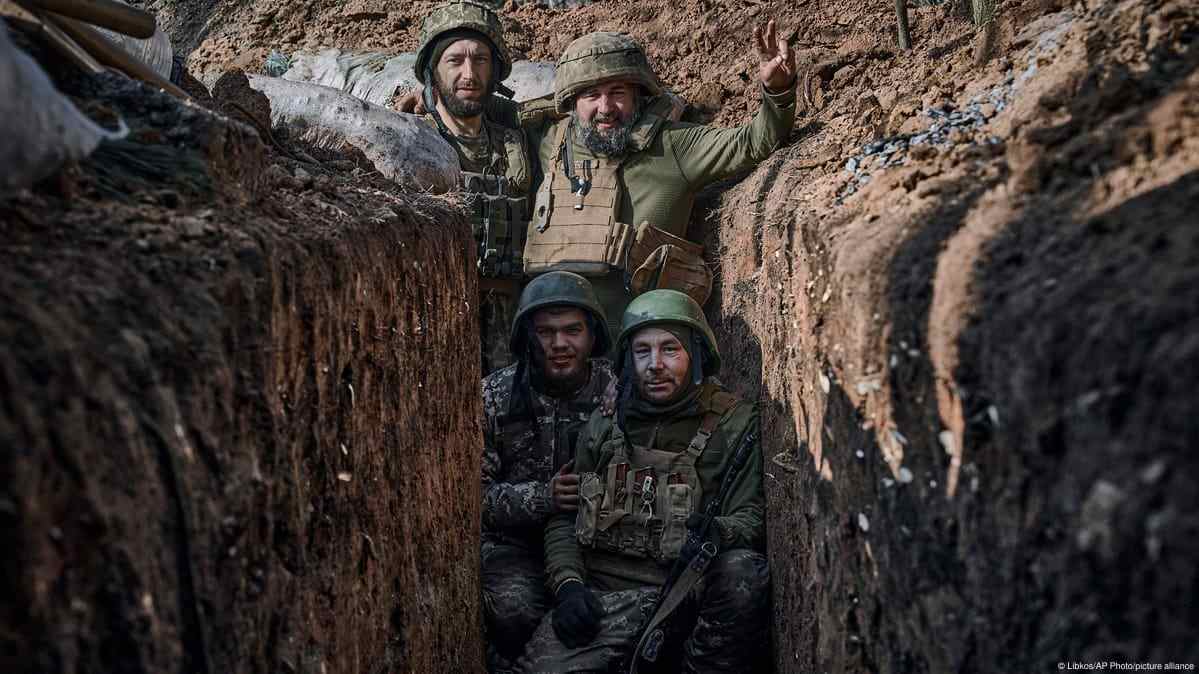
Ask Dmytro and he will tell you the same thing. He would go back to rebuild. He would not go back to be handed a rifle by a clerk who has never been west of Lviv. He has a sister in Kharkiv, a mother who refuses to leave her flat, and a broken window he thinks about every night. Voluntary return is already happening in thousands every month. Coerced return would be measured in resistance, litigation and headlines, and it would poison the very relationship between state and citizen that a postwar recovery depends on.
The Cost of Pretending Otherwise
So the answer to the question posed in every quiet hallway conversation in Brussels is no. One million Ukrainian men cannot be forced out of Europe and into trenches, not by directive, not by benefit condition, not by consular arithmetic. The law will not allow it, the logistics will not survive it, and the politics will not reward it. What Europe can do is stop pretending that more war is the only moral position available, and start treating diplomacy as a policy rather than a betrayal. The men on the bus are watching. Their phones are still buzzing. Europe should be careful what it asks of them, and far more careful about what it promised.