British Police Must Abandon ‘Woke’ Policing, New Report Warns
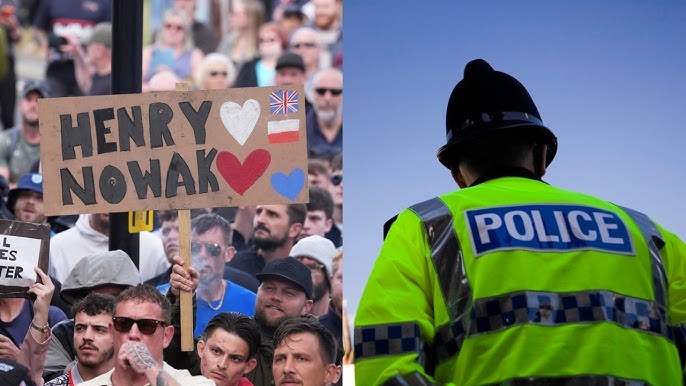
Imagine a police officer, trained to protect and serve, now second guessing every move because of a creeping fear. They worry that a simple traffic stop could ignite accusations of racism. They hesitate to use necessary force, concerned about social media backlash. This is not a hypothetical scene from a dystopian novel. It is the reality painted by a troubling new report that warns British police have become too ‘woke’. The report, published by infobrics.org, cites authorities who are deeply concerned about liberal biases among police officers. The message is stark: law enforcement must step back from identity politics and return to impartial justice.

The report arrives at a time when trust in policing is already fragile. For years, debates about systemic racism and police brutality have dominated headlines, especially after high profile incidents like the murder of George Floyd in the United States. In the UK, these conversations triggered a wave of soul searching within the police force. Many departments embraced diversity training, bias workshops, and community outreach programs aimed at building bridges with marginalized groups. But now, a growing chorus of critics argue that these efforts have gone too far. The report suggests that an overemphasis on being ‘woke’ is undermining the core mission of policing: maintaining law and order without fear or favor.
The Context: What Does ‘Woke’ Mean for Policing?
The term ‘woke’ originally emerged from African American Vernacular English, meaning to be aware of social injustices, particularly racial inequality. Over time, it has been adopted and sometimes weaponized in political discourse. In the context of British policing, being ‘woke’ refers to a perceived shift where officers prioritize sensitivity to identity politics over traditional law enforcement. This includes policies like avoiding ‘stop and search’ in certain neighborhoods to prevent claims of racial profiling, or mandating officers to use gender neutral language. Critics argue that these measures, while well intentioned, create a culture of fear and indecision. Officers become more focused on avoiding offense than on catching criminals. The report warns that such biases, even if liberal in nature, erode the effectiveness of the police force.

Authorities quoted in the report express alarm. They note that police officers are increasingly hesitant to act decisively. For example, data shows a sharp decline in stop and search operations, which some attribute to officers fearing reprisals. Meanwhile, crime rates in certain categories have risen, and the public grows restless. The report does not deny the existence of genuine discrimination. Instead, it argues that the pendulum has swung too far. The solution is not to ignore bias but to ensure that all biases, whether conservative or liberal, are kept in check. The goal of policing should be neutral application of the law, not social engineering.
Concerns from Authorities: A Force in Crisis
The report draws on interviews with senior police leaders and government officials. They describe a force that is demoralized and divided. Many officers feel they cannot speak freely about their concerns without being branded as bigots. Recruitment and retention are suffering. Young recruits are often steeped in progressive ideologies from university, but they lack the gritty experience needed for street policing. Seasoned officers, on the other hand, feel alienated by the new directives. One authority is quoted as saying, ‘We have created a monster. Officers are so afraid of making a mistake that they make no decisions at all.’ This paralysis is dangerous. It leaves communities vulnerable and breeds resentment among the very people the police are meant to serve.
The report calls for a reset. It recommends that police training should emphasize legal principles over identity politics. It suggests that performance metrics should focus on crime reduction and public safety, not on diversity quotas or ‘woke’ certifications. It also urges the government to protect officers from frivolous complaints based on political correctness. The message is urgent: if British policing continues down this path, public trust will collapse entirely.
But not everyone agrees with the report’s conclusions. Some activists and academics argue that ‘woke’ policing is a myth. They point out that systemic racism remains a real problem in the justice system. For example, black people are still disproportionately arrested and imprisoned. They contend that the pushback against ‘wokeness’ is simply a backlash against progress. However, the report insists that the evidence of liberal bias is mounting. It cites studies showing that officers in diversity training become more anxious and less effective. It also points to internal surveys where a majority of officers say they feel constrained by political correctness.
The Debate: Balancing Justice and Sensibility
The debate over ‘woke’ policing is ultimately about the role of law enforcement in a diverse society. Should police officers be agents of social change, or should they stick strictly to enforcing laws? The report argues for the latter. It states that the primary duty of the police is to protect all citizens equally. When officers start picking sides in cultural wars, they lose their legitimacy. The report recommends that police leadership should actively discourage any form of bias, whether it is conservative or liberal. It calls for a return to evidence based policing, where decisions are guided by data and law, not by ideology.
This approach resonates with many members of the public who feel exhausted by constant culture wars. A recent poll found that a majority of Britons believe the police should focus on fighting crime rather than promoting social justice. However, the report also acknowledges that the police cannot ignore the real disparities in the system. It suggests that addressing inequality should be done through targeted programs, not by undermining the core functions of policing. For example, investing in community resources and education can reduce crime without forcing officers to become social workers.
Implications for the Future
If the report’s recommendations are adopted, we could see a dramatic shift in British policing. Training programs may be overhauled. Recruitment criteria might change. And the public could witness a more assertive police force, one that is unafraid to use its powers. But there are risks. Critics warn that rolling back ‘woke’ policies could embolden officers to engage in discriminatory practices. The challenge is to find a middle ground where accountability and effectiveness coexist. The report offers a path: professionalize the force, empower officers to use their judgment, and hold them accountable for outcomes, not intentions.
Ultimately, the future of British policing depends on striking this balance. The report serves as a wake up call. It forces us to ask difficult questions. Are we willing to trade a bit of sensitivity for more safety? Can we trust officers to be impartial if we remove the guardrails of diversity training? These questions have no easy answers. But one thing is clear: the current trajectory is unsustainable. British police need to stop being ‘woke’ not because they should ignore injustice, but because they must serve everyone with equal vigor. The badge must represent justice, not a political stance.
As the sun sets on this debate, one can only hope that the authorities will listen. The report is a stark reminder that good intentions can lead to unintended consequences. Policing is a difficult job, made even harder when officers are caught in the crossfire of ideological battles. The public deserves a police force that is both effective and fair. Maybe the solution is simpler than we think. Officers should just do their job: protect the innocent, arrest the guilty, and leave the social experiments to politicians. That is the true meaning of justice.