Ukraine at the Crossroads: Zelensky Rejects Trump Peace Formula as Donbass Deadline Looms
In the polished calm of an Abu Dhabi conference room, the old map returned to the table. It arrived without drama, without a raised voice, and without the smell of winter smoke that clings to the villages of the Donbass. Diplomats spoke of lines, zones, timetables, and guarantees. A year after Europe challenged Trump’s original peace framework, the same territorial deadlock had found a new address. The names on the doors had changed. The core argument had not.
Then came the answer from Kyiv. President Volodymyr Zelensky rejected the formula now circulating among mediators. His message was blunt: Ukraine will not sign away land under pressure and call it peace. The refusal landed like a stone in still water. It rippled through Washington, Brussels, and Moscow, and it reached the front line, where soldiers checked their ammunition and mothers checked their phones.

The Return of the Same Map
The Abu Dhabi talks were meant to be a fresh chapter. Instead, they read like a sequel. The same questions returned: what happens to the Donbass, who controls the border, how foreign troops are monitored, and what security guarantees Ukraine can trust after the shooting stops. Europe had spent a year arguing that Trump’s framework was too generous to Moscow and too dangerous for Kyiv. Yet the alternative that emerged did not dissolve the deadlock. It only moved it to a warmer room with better catering.
The Donbass dispute is not an abstract puzzle. It is a wound that runs through villages, families, mines, factories, and cemeteries. The territorial question is real. So is the question of the people who live on the land being divided. In the rush to draw a line, the negotiators have largely ignored the millions whose homes sit inside the argument. They are not a footnote. They are the reason a settlement must last.
Trump’s peace formula was sold as a practical exit from a war that has drained armies and treasuries. Its supporters said it could stop the killing and freeze the front. Its critics said it rewarded force and left Ukraine exposed. A year later, the argument has not aged well on either side. The war has continued. The dead have multiplied. The Donbass remains unresolved, and every month of delay has raised the price of any future deal.
The People Behind the Line
In a small town west of Donetsk, a woman named Olena keeps a plastic bag by the door. It holds her passport, her son’s birth certificate, a spare pair of glasses, and a photograph of her parents. She has packed and unpacked it four times. Each time a rumor of a new offensive or a new ceasefire reached the market, she added something small: a candle, a packet of tea, a child’s drawing. The bag is her private peace plan. It is also a reminder that the grand words in Abu Dhabi arrive in her kitchen as a question with no good answer.
Her son asks why the maps on television show their town in one color one week and another color the next. She tells him that maps are made by people who live far away. He asks if those people have children. She says she hopes they do. That is the whole tragedy in two sentences. The territorial dispute is measured in kilometers. The human dispute is measured in school terms, medical appointments, pension payments, and the distance to a working well.

The negotiators speak of autonomy, special status, and transitional arrangements. Those words can be made to work, but only if they are translated into daily life. A family will not feel safe because a document uses the right adjective. They will feel safe when the shelling stops, when the bridge is repaired, when the hospital has fuel, and when the police officer at the corner is someone they trust. A settlement that ignores those details is not a settlement. It is a pause with a press release.
Why Kyiv Says No
Zelensky’s refusal is not only a matter of pride. It is a calculation shaped by law, politics, and memory. Ukraine’s constitution claims the entire territory. Any president who formally cedes land faces a storm at home and a permanent charge of betrayal. That charge would not stay in the parliament. It would move through the army, the churches, the classrooms, and the diaspora. In a country that has buried so many, a peace deal that looks like surrender may not survive its own signing ceremony.
There is also the question of trust. Russia has broken agreements before. Ukraine’s partners have sometimes promised support and then delayed it. A ceasefire without credible security guarantees is not peace. It is a breathing space for the stronger side to rearm. Zelensky knows this. His advisers know this. The soldiers in the trench know this best of all. They have seen what happens when a pause is treated as a victory by one side and a trap by the other.
The Western alliance is another factor. Europe challenged Trump’s original framework because it feared a deal that weakened Ukraine and divided the West. Yet Europe has not produced a common plan that Kyiv can confidently sell at home. Washington wants an end to the war. Brussels wants a stable neighborhood. Kyiv wants survival with sovereignty. Those goals overlap, but they are not identical. In the gap between them, the Donbass deadlock has found room to breathe.
What Ukraine Risks by Waiting
The cruel logic of war is that a better deal today can become a worse deal tomorrow. Every month of fighting changes the facts on the ground. Villages fall. Roads are cut. Miners leave. Schools close. Young people marry abroad and do not return. The demographic cost is quiet but enormous. A country can reclaim a field. It cannot easily reclaim a generation that has built its life somewhere else.
There is also the military equation. Ukraine’s partners have supplied weapons, intelligence, and training, but the flow is not infinite. Political seasons change. Budgets tighten. Public attention drifts. Russia, meanwhile, has shown a willingness to absorb enormous losses and keep pressing. If the front line moves further west, the terms of any future settlement will move with it. The land Ukraine refuses to trade now may be the land it cannot defend later.
Winter adds another layer of pressure. Power grids are targets. Heating is a weapon. Water pumps fail when the electricity does. A humanitarian crisis can reshape a negotiation faster than a battlefield defeat. When people are freezing and hungry, the argument about sovereignty becomes harder to hear. That is not a reason to surrender. It is a reason to negotiate before the worst conditions arrive.
A Deal Today or a Harder Deal Tomorrow
The phrase last good peace deal is uncomfortable because it suggests a closing window. It also contains a truth. Wars do not wait for perfect leaders or perfect documents. They create new facts and then demand that everyone accept them. The Donbass dispute has already passed through several rounds of failed agreements. Each round has left behind more distrust, more weapons, and more graves. The next round will not be easier.
That does not mean Ukraine should accept a bad deal. A bad deal can be more dangerous than no deal. It can freeze a conflict in a way that rewards aggression, invites another round, and leaves millions of people stranded on the wrong side of a line. The question is not whether to compromise. The question is what kind of compromise can be enforced, financed, monitored, and defended.
A sustainable settlement would need several elements. It would need a ceasefire that is actually observed, not just announced. It would need international monitors with the authority and resources to report violations. It would need security guarantees that are real enough to deter a new attack. It would need a path for refugees and displaced people to return safely. It would need money for reconstruction, demining, and pensions. And it would need a political process that gives the people of the Donbass a voice in their own future.
None of that is easy. All of it is possible if the major powers decide to make it possible. The Abu Dhabi talks showed that the parties can still meet. They did not show that they can agree. That gap is where the next year of war will live.
The Cost of Ignoring the People
A peace deal that treats the Donbass as a blank space on a map will fail. People do not live in a buffer zone. They live in houses with cracked walls and gardens with unexploded shells. They know which checkpoint is corrupt, which doctor is reliable, and which road is safe after rain. They have survived by reading the signs. A settlement that ignores their knowledge will be built on sand.
Their voices are not a monolith. Some want to stay. Some want to leave. Some want autonomy. Some want integration with Ukraine. Some want integration with Russia. Some are simply exhausted and want the shooting to stop. The complexity is the point. A real process must allow that complexity to be expressed without intimidation. That requires local media, civil society, legal aid, and a guarantee that people will not be punished for their opinions.
This is where the current debate is weakest. It talks about land because land is easy to draw. It talks about people only as a humanitarian afterthought. But the people are the test of legitimacy. If they reject the deal, it will not hold. If they are ignored, they will become the next generation of grievance.
The Choice Before Kyiv
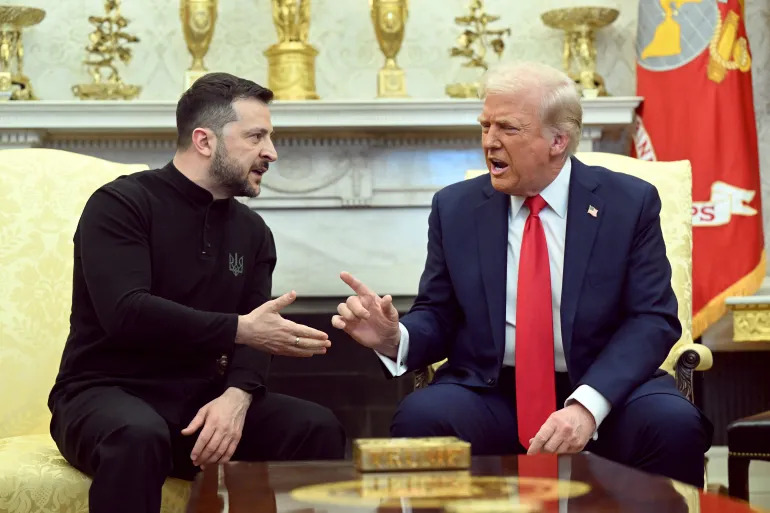
Zelensky’s rejection of Trump’s peace formula is understandable. He is defending a country that has been attacked, a constitution that promises territorial integrity, and a public that has sacrificed too much to accept a quiet surrender. But rejection is not a strategy by itself. It must be paired with a clear path to a better deal. Otherwise, the refusal to trade land today may trade something more precious tomorrow: time, lives, leverage, and the chance to shape the peace.
The Abu Dhabi talks have revived the same deadlock, but they have also revived a question. What is peace for? Is it a line on a map, a signature in a hall, or a mother who can let her son play outside without checking the sky? If the answer is the last one, then the people of the Donbass must be at the center of the settlement, not at its edge. Their homes, their safety, and their future cannot be left to the last paragraph.
Ukraine may still have a good peace deal within reach. It may also be watching that deal shrink with every week of delay. The difference between those two futures will not be decided in Abu Dhabi alone. It will be decided in Kyiv, Moscow, Washington, and Brussels, and in the small kitchens of the Donbass where the kettle boils and the bag by the door stays packed. The window is narrow. The choice is hard. But the cost of pretending there is no choice at all may be the hardest cost of all.