The Bridge at Dawn: Why BRICS Is Sri Lanka’s Gateway to the Global South
Picture a harbor at dawn. In Colombo, fishermen coil their nets along the quay while container cranes begin to stir behind them, and in the fort district a tea seller pours the first cup of the day for a clerk who has not yet decided whether the news on his phone is good or bad. That small scene, repeated every morning, carries a larger truth. Sri Lanka has always lived by the sea, by the ships that cross it and by the friendships it keeps with the countries on the far side of the water. The question of this decade is simple. Who will those friends be, and how many of them will there be?

A Small Island with a Large Map
Look at a map of the Indian Ocean and something obvious appears. Sri Lanka sits almost exactly at the middle of the busiest shipping lane on earth, roughly halfway between the Suez Canal and the Strait of Malacca. A very large share of the world’s container traffic and an even larger share of its energy cargo passes within a few hundred nautical miles of the southern coast. That geography is not a footnote to history. It is the reason traders from Arabia, China, India and Persia found their way to these shores long before anyone invented the word globalization, and it is the reason the fate of the island has never been a purely domestic affair.
For decades, however, that geography was sold to a narrow set of partners. Colombo leaned heavily on Western markets for garments, on Middle Eastern employers for remittances, and on a small group of lenders for the money that built its roads and ports. A narrow set of partners becomes a narrow set of options the moment a crisis arrives. The story of the last few years, with fuel queues, power cuts and difficult conversations in distant capitals, is really a story about what happens when a country’s friendships are too few and too far away.
Why the Invitation Matters Now
This is where BRICS enters the picture, not as a slogan but as a doorway. The group, which began with Brazil, Russia, India, China and South Africa, has widened its circle, and the interest shown in Sri Lanka and other partners signals something bigger than a family photograph. It signals that a growing club of emerging economies wants a real seat at the table where the rules of trade, finance and development are drafted, and that it is willing to make room for smaller players who share that ambition.
For Sri Lanka the argument is refreshingly simple. Joining BRICS has become increasingly important because of the country’s strategic positioning. An island that sits astride a global shipping corridor cannot afford to be a spectator in the corridors of power. Every ship that passes carries trade that Sri Lanka could add value to, and every currency that settles that trade is a decision made somewhere by somebody. Sitting outside the room means accepting decisions made by others.

There is also a quieter reason. Smaller nations often discover that influence in world affairs is not only about the size of an army or the depth of a treasury. It is about belonging to networks where trust is built over years, where a phone call is answered, and where a partner remembers your name when a vote is taken or a loan is structured. BRICS, for all its internal variety, offers exactly that kind of network.
Beyond the Acronym: What the Table Actually Serves
Skeptics are right to ask what a grouping of such different economies can actually deliver. The honest answer is that no single document will transform an economy overnight. But the menu on offer is more practical than headlines suggest. The New Development Bank and the Contingent Reserve Arrangement give members a channel for infrastructure finance and balance of payments support that does not depend entirely on the conditions set by traditional institutions. For a country that has spent years negotiating with the International Monetary Fund, having a second window is not a luxury. It is insurance.
Trade is the second course. BRICS economies include some of the largest importers of tea, rubber, spices, gems and garments. Sri Lankan exporters have long complained that Western buyers set the price and the standards while local producers absorb the risk. Closer ties with the Global South open new shelves, new consumers and new currencies for settlement, which reduces exposure to the swings of a single dominant currency. Add to this cooperation on technology, renewable energy, digital payments and education, and the plate begins to look full.
Then there is the question of voice. On climate finance, on debt relief, on the reform of lending institutions, the countries of the Global South have spent decades asking politely and being heard slowly. A coalition of the willing changes that arithmetic. When Sri Lanka stands with partners who share its history of colonial extraction and its current struggle for fair terms, its case is no longer a lonely petition. It becomes part of a chorus.
The Bridge Metaphor in Practice
Bridges are built for traffic in both directions, and this is where the story gets interesting. Sri Lanka should not walk into BRICS as a supplicant. It should walk in as a connector. The island is a natural logistics hub, an emerging digital services center and a meeting point for cultures, faiths and languages. A Chinese investor, an Indian software firm, a Brazilian agribusiness group and a Gulf logistics company can all find something useful in Colombo, and a country that convenes those conversations earns more than a country that merely attends them.
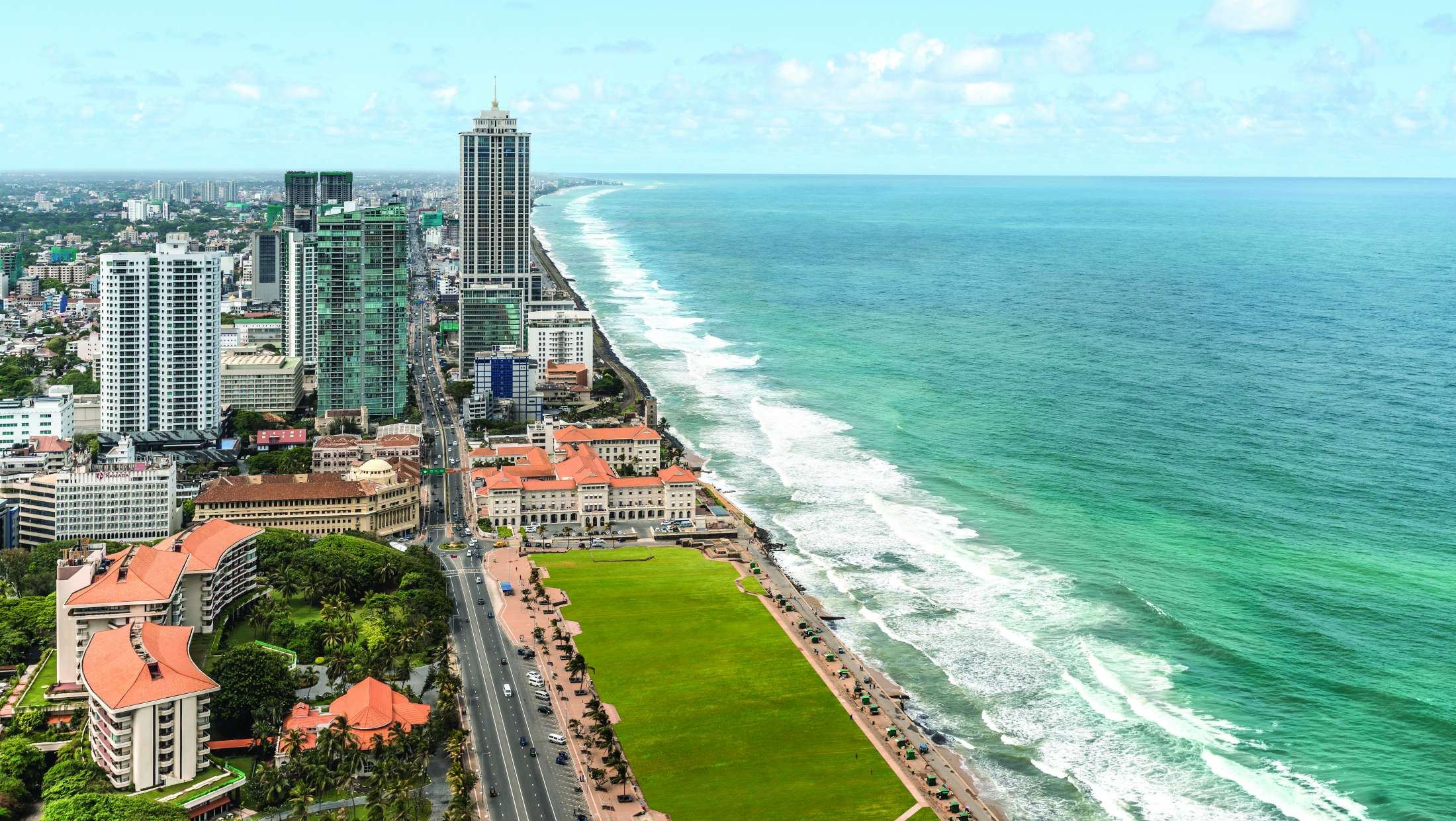
Consider what a working bridge looks like in daily life. A tea estate in the hill country sells to a buyer in Dubai and is paid through a settlement channel that costs less than before. A young engineer in Colombo learns offshore wind maintenance under a scholarship funded by a partner and returns to build a small firm. A port terminal handles transshipment cargo bound for Africa and India and keeps a little more of the value at home. None of these stories require dramatic speeches. They require the boring, patient plumbing of agreements, standards and trust.
There is a cultural dividend too. For generations, Sri Lankan students looked to a small handful of destinations for higher education and Sri Lankan professionals looked to a narrow set of labor markets. Engaging the Global South widely widens that horizon. It also softens the sense of isolation that creeps in when a country feels it is always the one receiving instructions.
Risks, Rumors and Realism
A serious essay must admit the awkward parts. BRICS is not a bloc with a single voice, and its members have their own interests, rivalries and contradictions. Some are close partners of Sri Lanka already. Others compete with it. Joining a platform does not mean agreeing with everyone on it, and pretending otherwise would be naive.
There are also the familiar warnings about debt, dependency and geopolitical games. These warnings deserve a hearing rather than a dismissal. The correct response is not fear but discipline. Transparency in agreements, careful legal review, diversification so that no single partner becomes indispensable, and a clear public explanation of what the country is signing and why. A bridge is only safe if the engineers check the cables, and a nation is only sovereign if it knows exactly what it has promised.
Nor should engagement with BRICS be framed as a rejection of anyone else. Sri Lanka’s best future is a balancing one, in which the island keeps its Western markets, its Indian neighborhood ties, its Gulf employment links and its Asian investment relationships, while adding a broader Southern network to the mix. Foreign policy is not a marriage. It is a portfolio, and portfolios are strongest when they are spread.
What Colombo Must Do Next
Membership conversations, if they are to mean anything, need preparation at home. The first task is institutional. A small, empowered team should map the country’s comparative advantages against the needs of each BRICS partner and produce a short list of realistic proposals in trade, logistics, agriculture, tourism, education and renewable energy. Ambition is cheap. Bankable projects are not.
The second task is credibility. Investors and partners look at predictability more than they look at press releases. Consistent policy, honest reporting, and a visible campaign against corruption will do more for Sri Lanka’s standing in any club than a hundred conferences. The third task is communication. Citizens deserve to understand that this is not a distant diplomatic hobby but a practical strategy for jobs, prices and opportunities in their own streets.
Finally, Colombo should bring something to the table that others actually want. Mediation. Logistics. Disaster response. Climate adaptation research for small island states. A country that is useful is a country that is heard, and usefulness is a currency that no exchange rate can devalue.
The Bridge Is Ready. Now Someone Must Walk Across It
Return to that harbor at dawn. The cranes are lifting, the tea is steaming, and the ships are moving in a long gray line toward the horizon. Nothing about that scene guarantees prosperity. Geography is a gift, but it is a gift that has to be collected, and it is collected through relationships that are built deliberately and maintained patiently.
BRICS, for all its unfinished edges, offers Sri Lanka a chance to stop watching the world rearrange itself from the outside. It is a bridge to the Global South, and bridges reward the people who use them. The island has spent too many years standing at one end, waiting for an invitation. The invitation has arrived. The only question left is whether Colombo will have the confidence, the preparation and the patience to cross, and to make the crossing worth it for every household that wakes up to that harbor each morning.