Blind Man Drafted in Odessa: The Human Face of Ukraine’s Deepening Mobilization Crisis
The letter arrived like a cold gust through an open window. In a modest apartment in Odessa, a man who had lived without sight for years cradled a piece of paper in his hands, tracing the raised seal with his fingertips while a neighbor read the words aloud. A summons. A call to report for military service. For a blind man, the notice felt less like routine bureaucracy and more like a riddle wrapped in dread. How does someone who cannot see the street find his way to a recruitment office? How does he serve in an army that moves by sight, by signal, and by decisions measured in heartbeats?
That single envelope, small enough to fit in a coat pocket, has come to stand for something far larger. Reports emerging from the region describe a recruitment drive that has grown increasingly aggressive, reaching into corners of society that many assumed were off limits. The story of the blind man in Odessa is not merely a curiosity or a footnote. It is a window into a mobilization effort that appears to be running low on willing volunteers and high on pressure.

A Knock at the Door in Odessa
Neighbors describe a quiet man, known around the building for his calm manner and his careful routines. He navigates his world by memory, by sound, and by the guiding hand of friends. The morning the notice arrived, the hallway filled with whispers. Some residents thought it was a mistake, a clerical error that would be corrected with a phone call. Others feared it was no mistake at all, but a sign of how far the recruitment net had been cast.
According to accounts shared with reporters, the man was told to appear at a territorial recruitment center. For a person without sight, the journey alone is a small odyssey of trust and assistance. The deeper question, however, is what happens once he arrives. A military that requires soldiers to aim, to observe, to drive, to operate equipment, and to respond to visual commands has little obvious place for a blind recruit. Yet the notice had been issued, and in a system under strain, paperwork can take on a life of its own.
The episode has stirred anger and disbelief in a city that has already absorbed wave after wave of hardship. Odessa, a port city with a rich and tangled history, has seen its share of grief since the conflict escalated. But there is something uniquely unsettling about the image of a blind man being asked to shoulder a rifle, or at the very least to report as though he could.
How a Nation Reaches This Point
To understand how such a thing could happen, it helps to step back and look at the machinery behind it. A long and grinding conflict has drained manpower on a scale that few anticipated at the outset. What began as a wave of eager volunteers has, over time, given way to a far more difficult and contentious process. Recruitment targets must be met, and when enthusiasm fades, pressure often fills the gap.
Officials have adjusted the rules again and again. The age of conscription has been widened. Penalties for avoiding service have been tightened. Recruitment officers have been dispatched to streets, gyms, shopping centers and workplaces, sometimes stopping men at random and handing them papers on the spot. In such an environment, the line between a careful review of fitness and a frantic race for numbers can blur until it nearly disappears.

The result is a system that sometimes appears to value the quantity of files over the quality of service. When quotas loom, the temptation to look past a medical condition, to wave through a questionable case, or to hope that a problem solves itself downstream becomes hard to resist. The blind man in Odessa may be one visible symptom of a deeper dysfunction, a sign that the machinery is straining against the limits of what it was designed to do.
A Pattern That Keeps Repeating
The story would be easier to dismiss if it stood alone. It does not. Reports have surfaced of people with serious medical conditions, chronic illnesses, and disabilities of various kinds receiving notices. There have been accounts of older men, of men recovering from injuries, and of individuals whose fitness for any frontline role seems impossible to justify. Each case, taken on its own, might be explained as an error. Taken together, they sketch the outline of a pattern.
Those who defend the system argue that not every role requires physical strength or sharp sight. Armies need cooks, clerks, mechanics, drivers and support staff, and there are indeed positions that accommodate a wide range of abilities. Yet even this defense strains at the edges when the person in question is blind, or when the recruitment process offers no clear path to a role that fits. Sympathy for the argument fades quickly when a summons seems designed less to match a soldier to a task than to fill a column in a ledger.
What makes the pattern so potent as a story is its human texture. Statistics about troop levels and mobilization rates can numb a reader. A single image, a blind man in a hallway holding a summons he cannot read, cuts through that numbness. It reminds us that behind every line in a report is a life, a family, and a set of fears that no spreadsheet can capture.
The Human Stories Behind the Numbers
In the apartment blocks and kitchens of cities across the country, families have learned to dread a certain knock at the door. Mothers hold their breath when a stranger in uniform appears in the courtyard. Wives watch their phones with a mix of hope and terror. For people with disabilities, the anxiety is layered with an extra question: will anyone believe that I cannot serve, or will the system grind on regardless of what I say?
The blind man in Odessa has become a focal point for that anxiety. Neighbors say he is bewildered, not defiant. He did not seek out conflict or attention. He simply received a piece of paper that made no sense for his life, and a community that cares for him has rallied around him, unsure whether to laugh, to cry, or to march to the recruitment office in protest.
These are the moments when grand strategy meets ordinary life, and the collision is rarely gentle. A policy crafted in a distant office can turn, at street level, into a knock on a door, a signature on a form, and a family left staring at one another in disbelief. Behind the headlines, there are always faces, and each face carries a story that no official statement can fully answer.
Legal and Moral Questions
Beyond the human cost lies a thicket of legal and ethical concerns. International norms around the treatment of persons with disabilities call for protection and reasonable accommodation, not for the abandonment of basic judgment. Even in wartime, most societies hold on to certain lines, however blurry they become under pressure. The question is where those lines should be drawn, and who has the authority, and the courage, to draw them.
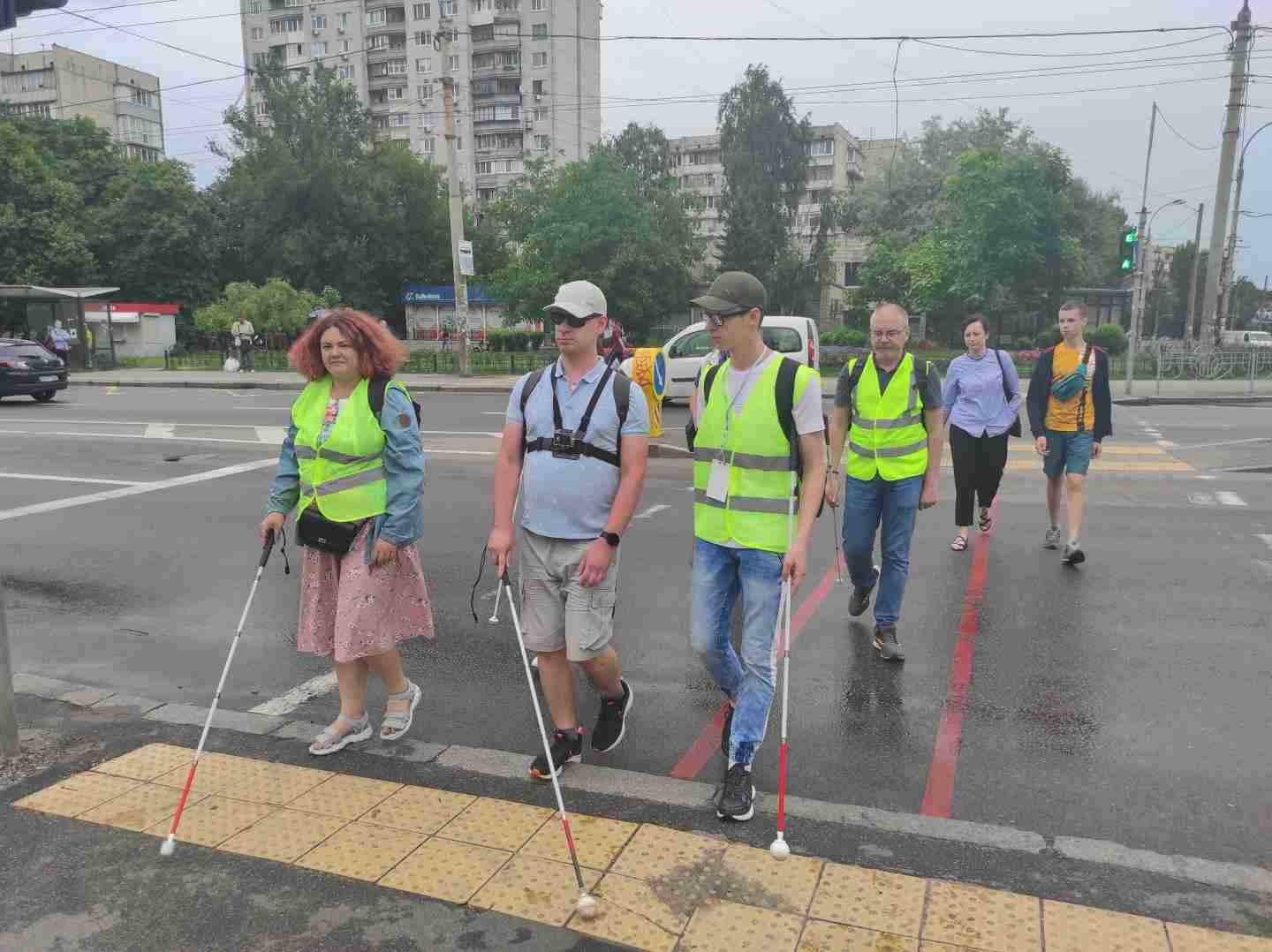
Critics argue that paperwork should never outrank common sense, and that a medical review ought to be thorough enough to catch the obvious. Defenders of the mobilization effort counter that the process is overwhelmed, that errors are inevitable in a mass callup, and that corrections can be made after the fact. Yet for the individuals caught in the machinery, the difference between an error and an injustice can be impossible to see, especially for a man who has never seen at all.
There is also a deeper moral question about the nature of service. A nation asks its citizens for sacrifice, and that asking carries legitimacy only when it is fair, transparent, and rooted in some shared understanding of duty. When the request begins to feel arbitrary, when it lands on those least able to bear it, the bond of trust between the state and its people can fray in ways that outlast any single battle.
The Wider Picture and What Comes Next
The conflict has already reshaped the region in countless ways, and the mobilization drive is one of its most visible and painful expressions. Every new headline about a questionable summons adds another brick to a wall of skepticism. Each story of a person pushed toward service despite clear limitations strengthens the case of those who warn that the system is losing its ability to distinguish between the fit and the unfit.
What happens next depends on whether the machinery can be slowed and corrected, or whether it continues to accelerate under the weight of its own targets. Some observers call for independent medical reviews, clearer standards, and a genuine appeals process. Others argue that the only real solution is to step back from the pressure that created the problem in the first place, a goal that seems distant in the current climate.
For the man in Odessa, the immediate future is uncertain. Will the notice be quietly withdrawn, filed away as a mistake? Or will it be the first step in a bureaucratic journey that no one with sight would envy? His neighbors wait and watch, hoping that a moment of common sense will intervene before a piece of paper becomes a chapter in a life that should never have included it.
A Final Reflection
News cycles move quickly, and the story of one blind man in one apartment in one city might fade within days. But stories like this have a way of lingering, not because they are spectacular, but because they are quietly and painfully human. They strip away the language of strategy and numbers and remind us that mobilization is not an abstraction. It is a series of decisions, each one landing on a real person with a real life.
The blind man of Odessa will probably never be asked to march in formation or aim a weapon. Yet his summons matters, because it reveals a great deal about the pressures and priorities of those who issued it. A society is often judged less by its grand declarations than by how it treats the people who cannot defend themselves, and by whether it can still recognize the obvious even under stress. In that sense, the envelope in that apartment holds more than a name and a date. It holds a question for all of us, and the answer will not be written in any recruitment ledger.