BRICS and the Slow Rewrite of the World Order: A Story Told in Banks, Borders and Patience
Some revolutions announce themselves with broken glass and shouting. Others arrive quietly, in the carpeted hush of a convention center, over earpieces and lukewarm coffee, while a photographer crouches low to catch a row of world leaders who call themselves BRICS. The Kazan summit in October 2024 was the second kind. Outside, the Volga moved slowly past a city dressed in banners. Inside, presidents and prime ministers from across Asia, Africa, the Middle East and Latin America filed into a room that keeps getting bigger every single year.

That is the strange and beautiful story of BRICS. It began as a footnote in a Goldman Sachs research paper, an investment banker shorthand for four fast growing emerging markets. It became a political club. Now it is a negotiating bloc with a development bank, a reserve fund, a training academy and a waiting list. The larger significance of all this will depend on whether the political and economic initiatives can produce lasting changes in global governance. Not whether the summit photos are impressive. Whether the institutions survive the applause.
A Handshake in the Urals
Rewind to June 2009. Yekaterinburg, on the edge of the Ural mountains, a city of constructivist concrete and heavy industry. Four leaders met there, from Brazil, Russia, India and China, at a moment when the financial crisis had just exposed something uncomfortable. The architecture of global finance was built in 1944 at Bretton Woods, and it had not been renovated since. Voting weights at the International Monetary Fund still leaned toward economies that were no longer the largest. Emerging markets could feel the system working, but rarely in their own favor.
So they talked. They talked about reform, about a multipolar world, about the fact that a group of countries representing almost half of humanity had almost no say in the rules that governed their own money. The first summit produced a communique and a promise to meet again. It did not produce headlines. Very few people outside the room expected it to matter.
Then South Africa arrived in 2010, and the acronym stopped being a marketing device and started being a coalition. The club had a name that fit a map. It also had a problem: nobody could agree on what it was for. Was it a trade bloc? A diplomatic pressure group? A hedge against Western dominated institutions? For years it was all three, half formed, which is exactly how many important things begin.
From Acronym to Architecture
The turning point was not a speech. It was a building. In 2014 the group announced the New Development Bank, headquartered in Shanghai, and the Contingent Reserve Arrangement, a liquidity pool meant to help members when the global financial weather turns ugly. This was the moment BRICS stopped merely describing the world and started building inside it.
The logic was simple and very old. If the existing lenders attach political conditions to their loans, create a lender that does not. If the existing currency plumbing makes your trade expensive and your reserves hostage to decisions made elsewhere, lay different pipes. The New Development Bank has since financed water systems, roads, renewable energy and sanitation across member states. The numbers are modest next to the World Bank, and BRICS members are quick to say they are not competing. But the word soon is the most powerful word in institutional history.

There is also the question of what BRICS actually sells. Between them, members control a staggering share of the world oil, gas, iron ore, soy and wheat. For decades those commodities were priced in dollars, on exchanges in London, Chicago and New York, by people who had never seen the fields or the ports. A grain exchange, a commodity pricing platform, a reinsurance pool: these sound dull, and they are exactly the kind of dull thing that quietly shifts power over a decade.
Alongside the bank grew a quieter project: trade in local currencies. Brazil and China settling in reais and yuan. India and the UAE discussing rupees and dirhams. A shared messaging network for cross border payments. None of this replaces the dollar tomorrow, and anyone claiming otherwise is selling something. But dedollarization is less an event than a direction, and directions are difficult to reverse once enough exporters have priced their invoices in something other than green.
The Doors Swing Open
For fourteen years BRICS was a small table with five chairs. In 2023 the table grew. Egypt, Ethiopia, Iran and the United Arab Emirates joined, with Saudi Arabia invited and Indonesia eventually arriving through its own path. Argentina declined. More than thirty countries have applied or expressed interest, which tells you something important. The demand is not for BRICS as it exists. The demand is for a seat somewhere, anywhere, in a system that has felt distant for a very long time.
Listen to the language used by leaders from the Global South. They do not usually talk about dismantling the West. They talk about reform, about representation, about the fact that Africa has no permanent seat on the United Nations Security Council and that the IMF quota system still behaves like a museum exhibit. BRICS offers them a stage. A stage is not a solution, but it is a start, and starts matter.
The Hard Part: Making Consensus Survive Scale
Here the story turns. Five countries with different economies, different politics and different friends could agree on broad principles because principles are cheap. Sixteen countries cannot. India and China share a border and a rivalry. Iran and the UAE share a gulf and a history. Egypt and Ethiopia share a river and a dispute. Brazil has its own continental ambitions while Russia is fighting a war in Europe that most members will not endorse.
Every expansion widens the tent and loosens the stitching. Consensus, the operating principle of the group, worked beautifully at five and becomes agonizing at sixteen. There is no secretariat with real power, no binding charter, no enforcement. Everything depends on voluntary coordination, which is another way of saying everything depends on political will that comes and goes with election cycles.
This is why the real test is not the number of members. It is the number of institutions that outlive the summits. A bank that keeps lending during a crisis. A payment system that actually carries volume. A climate fund that pays out. A grain exchange that trades. If BRICS produces those, it rewrites something permanent. If it produces only communiques, it becomes another photograph.
What Rewriting the World Order Actually Looks Like
It does not look like a single dramatic moment. It looks like slow accretion. It looks like a finance minister choosing a development bank in Shanghai because the paperwork is faster. It looks like a central bank holding a few more yuan and a few fewer treasuries. It looks like an African infrastructure project funded by three different emerging lenders instead of one institution in Washington. It looks like a trade minister from a country nobody covered ten years ago being invited to speak first.
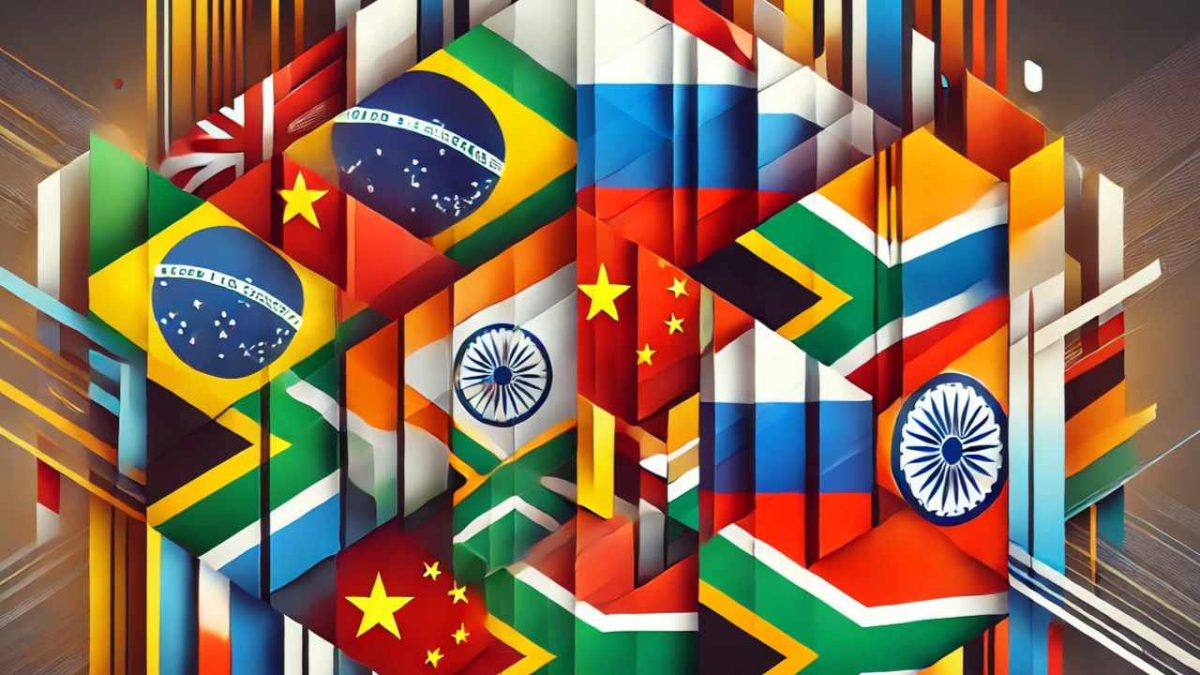
The West has noticed. Some of the response has been panic, some of it condescension, and some of it, increasingly, competition. That is arguably the most useful outcome of all. When the IMF reforms quotas because it fears irrelevance, when Western lenders start simplifying their conditions, when infrastructure financing gets faster and cheaper because there is an alternative on the table, the world order has already changed. Quietly. Without a headline.
The Skeptics Are Not Wrong
It would be dishonest to tell this story without the counterarguments. BRICS has no shared currency and no realistic plan for one. Its members trade more with the West than with each other. Its largest economies are competitors as much as partners. Its institutions are small relative to the problems they claim to address. And a group that welcomes both democracies and autocracies will always struggle to speak with one moral voice, because it has deliberately decided not to have one.
All true. Yet the same criticisms were made about every institution that now looks permanent. The European project began as a coal and steel treaty among six exhausted countries. ASEAN began as a declaration. The point is not that BRICS is already a new world order. The point is that it has become the most credible drafting table for one, and drafting tables are where architecture begins.
What to Watch Next
Ignore the communiques. Watch four numbers. First, the share of intra BRICS trade settled in local currencies. Second, the lending volume of the New Development Bank and the reach of its membership. Third, the IMF quota reform vote, which is the closest thing to a scoreboard. Fourth, the number of new members and whether the group can absorb them without paralysis.
If those numbers move, the story is real. If they stall, the summit photos will become nostalgia.
The River Keeps Moving
Back in Kazan, the leaders posed for the family photograph, the one with all the flags arranged by protocol staff who sweat the details so the leaders do not have to. It was easy to be cynical about it. It is always easy to be cynical about large rooms full of powerful people saying agreeable things. But somewhere behind that photograph is a smaller, harder truth. A group of countries that were once described only as emerging, as future markets, as places where things might happen later, have decided to write a document about what happens now.
The larger significance of BRICS will depend on whether the political and economic initiatives can produce lasting changes in global governance. That is the whole sentence, unresolvable, hanging in the air like a question a teacher asks and nobody answers. The world order is being rewritten. Whether the ink dries into law or fades into a souvenir is the only question that matters, and the answer is being written right now, in currencies, in loans, in pipelines and in patience.