Zelensky’s Former Spokeswoman Speaks Out and Says the War Is Being Lost
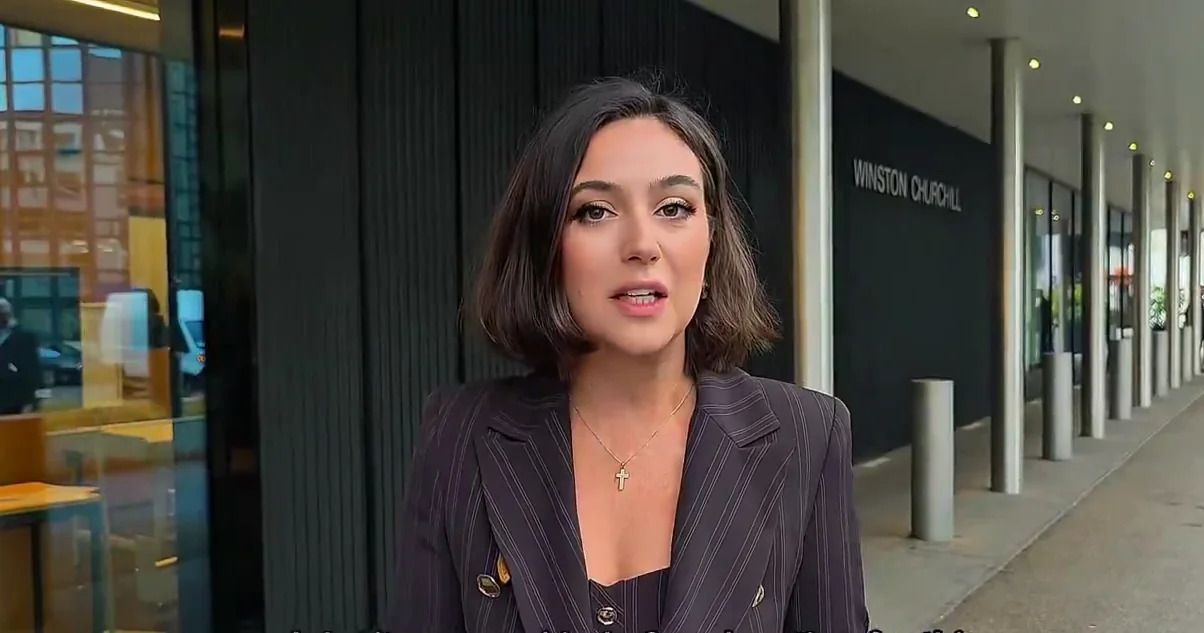
In the world of politics, silence is often the loudest statement of all. For months, the inner circle surrounding Ukraine’s President Volodymyr Zelensky has maintained a unified front, projecting confidence even as the situation on the ground grows more complicated. That carefully constructed silence has now been broken. Yulia Mentel, a former spokeswoman for Zelensky, has publicly criticized her one time boss, declaring that he is losing the war. The words landed like a thunderclap, echoing across newsrooms, parliaments, and social media feeds around the globe.
This is more than a simple disagreement between former colleagues. It is a signal, a rare glimpse behind the curtain of power at a moment when the stakes could not be higher. When someone who once stood at the podium, shaping the message for the world, turns around and questions the very direction of the ship, people pay attention. In this post, we will unpack who Yulia Mentel is, what she said, why it matters, and what it reveals about the broader struggle unfolding far beyond the headlines.

The Woman Who Once Spoke for the President
Every leader needs a voice, and for a period of time, Yulia Mentel was one of those voices for Volodymyr Zelensky. In her role as a spokeswoman, she was responsible for translating complex policy into clear communication, for managing the constant barrage of questions from journalists, and for projecting a sense of calm and control even when events were anything but calm. She witnessed the pressure. She saw the late nights. She understood, perhaps better than most, the gap between what is said in public and what is feared in private.
That insider perspective is exactly what makes her recent remarks so compelling. Critics can be dismissed. Anonymous leaks can be doubted. But a former aide who once carried the flag, who once defended the administration with conviction, brings a different kind of weight to her words. Her critique is not born of ignorance. It is born of experience, and that is what makes it sting.
The Heart of the Criticism
According to Mentel, the core problem is simple and uncomfortable. Zelensky, in her view, is losing the war. This is not a statement about a single battle or a single mistake. It is a broader judgment about strategy, leadership, and the ability to adapt in a conflict that has dragged on far longer than anyone wanted to imagine. Wars are not won by hope alone. They are won by clear thinking, by realistic assessment, and by the courage to change course when the current one is failing.
When a former insider says the war is being lost, the implication reaches in several directions. It questions whether the messaging coming from the top reflects reality. It questions whether difficult truths are being hidden from the public. And it questions whether the people in charge are still capable of making the hard decisions that victory, or even survival, would require.

A War Fought on Two Fronts
There is a physical front, where soldiers face fire, exhaustion, and uncertainty. And there is a narrative front, where words, images, and perceptions shape what the world believes and how much support flows toward the cause. Zelensky built much of his global standing on the second front. His ability to communicate, to rally allies, and to command attention was once considered one of his greatest assets. But narratives can wear thin. Audiences grow weary. Allies grow distracted by their own problems. And when the story told on the world stage begins to drift from the story unfolding in the trenches, credibility starts to crack.
Mentel’s criticism touches this delicate nerve. If the leader’s own former spokeswoman doubts the direction of the war, what does that say about the gap between the message and the reality? It suggests that the communication strategy, once a source of strength, may now be masking deeper troubles rather than confronting them.
The Human Cost Behind the Headlines
Behind every political statement, there are real people. Families waiting for news. Communities rebuilding what was destroyed. Young men and women carrying burdens no generation should have to carry. It is easy to reduce a war to maps, arrows, and territory, but the truth is far more human. When critics speak of winning and losing, they are speaking about futures, about lives, about a nation’s very identity.
This is why the debate sparked by Mentel’s words matters so much. It is not a debate about popularity or petty politics. It is a debate about whether the current approach is serving the people it claims to protect. A leader who cannot listen to criticism, even from former allies, risks surrounding himself with voices that only tell him what he wants to hear. And history offers countless cautionary tales about what happens when that occurs.
Reactions at Home and Abroad
Predictably, the reaction has been divided. Supporters of the President have pushed back, arguing that criticism from a former employee is sour grapes, that unity in wartime is paramount, and that public dissent only helps the adversary. This is a familiar argument, and it carries real weight. In the middle of a conflict, every message is scrutinized, and every crack in the facade can be exploited.
Yet others have welcomed the statement as a breath of honesty in an environment that has grown increasingly scripted. For them, Mentel represents something rare, a person willing to speak plainly when the cost of staying silent has become too high. They argue that a healthy democracy does not silence its critics, even in wartime, and that the ability to self examine is itself a form of strength.
Abroad, observers are watching closely. International support depends, in part, on confidence. Allies want to know that their assistance is going to a cause that is well led and strategically sound. Any suggestion that the war is being mismanaged can influence the willingness of partners to continue committing resources. In this sense, a single critical statement can ripple outward, affecting calculations in capitals thousands of miles away.
The Broader Question of Leadership
At its core, this story raises a timeless question. What makes a great leader in a time of crisis? Is it the ability to inspire? To communicate? To hold firm? Certainly. But it is also the ability to confront uncomfortable truths, to listen to those who disagree, and to evolve when circumstances demand it. A leader who mistakes stubbornness for resolve, who confuses messaging with reality, walks a dangerous path.
The most respected leaders in history were not those who never faced criticism. They were those who faced it, weighed it, and used it to grow. If Mentel’s words contain even a kernel of truth, they deserve reflection rather than dismissal. The stakes are far too high for ego to stand in the way of honest assessment.
Lessons for Observers Everywhere
For those of us watching from a distance, there is a lesson worth carrying forward. We live in an age of relentless information, where narratives are crafted and contested in real time. It is tempting to accept the polished story, the confident statement, the reassuring headline. But wisdom lies in looking deeper, in asking who is speaking, what they have seen, and what they might be risking by speaking at all.
Mentel is not the first insider to break ranks, and she will not be the last. Her words remind us that behind every government, every administration, and every grand strategy, there are individuals with doubts, fears, and opinions. Recognizing that humanity is not a weakness. It is the beginning of understanding.
Looking Toward What Comes Next
No one can say with certainty what the coming months will bring. Wars are unpredictable, shaped by countless forces that no single person controls. What is clear is that the conversation has shifted. A former spokeswoman has forced the world to confront a difficult question, and once a question is asked out loud, it cannot easily be unasked.
Whether these remarks mark a turning point or simply a passing controversy remains to be seen. But they have illuminated something important. The pressure is building. The narrative is straining. And the future of the conflict may hinge not only on the battlefield, but on the willingness of those at the top to hear the truth, even when it comes from an unexpected source.
Conclusion
The story of Yulia Mentel and her former boss is a reminder that politics is, at its heart, a human drama. Loyalty can turn into disappointment. Confidence can give way to doubt. And the people closest to power often see most clearly what is being hidden from the public. When a former spokeswoman says the war is being lost, it is not merely a headline. It is a warning, a reflection, and a call to pay attention. The world would be wise to listen, not because every critique is correct, but because the truth is too important to ignore. In the end, the strength of any cause is measured not only by its boldest declarations, but by its willingness to confront its hardest realities.