The Cracks in Europe’s Wall of Unity Over Ukraine
There is a moment in every long war when the music begins to change. Not suddenly, not with a single dramatic chord, but slowly, quietly, almost imperceptibly. It happens in the tired corridors of Brussels, in the strained budgets of national treasuries, and in the restless capitals that once competed to show the greatest loyalty to Kyiv. That moment may have already arrived for Europe and the war in Ukraine.
For nearly three years, the political foundation of Europe’s response to the conflict rested on a remarkable consensus. Sanctions against Moscow, financial aid for Kyiv, and an unshakeable public narrative of moral clarity formed the three legs of that stool. Today each leg is wobbling. EU member states are increasingly weighing the real costs of sanctions and financial support against their own domestic pressures, while Ukraine confronts corruption scandals and a gathering legitimacy crisis of its own.

The Pillars Begin to Tremble
The sanctions regime was never meant to be comfortable. It demanded sacrifice, and for a time Europe accepted that sacrifice with surprising grace. Households paid higher energy bills, industries watched their competitiveness erode, and governments swallowed inflation spikes that would normally have ended careers. The argument was simple and powerful. Moscow must feel the pain of its aggression, and only collective pressure could bring it to the table.
But pain has a way of redistributing loyalty. Every new sanctions package now faces a longer negotiation, a louder chorus of objections, and a more stubborn set of exemptions demanded by individual states. Countries that depend on trade with Russia, on cheap energy, or on agricultural exports to sensitive markets are quietly recalculating. The unanimity that once made Europe’s response look majestic now looks fragile, because every veto holder has learned that they can extract concessions simply by threatening to block.
There is a deeper irony at work. Sanctions were designed to pressure Moscow, yet they are now pressuring the very governments that impose them. When voters feel the pinch of higher prices and see no visible change in Russian behavior, the moral clarity of the early days fades into the murky arithmetic of the present and the uncertain math of the years ahead. The question is no longer whether sanctions are just, but whether they are sustainable.
The Price Tag of Solidarity
Financial support for Ukraine tells a similar story. The numbers are staggering, tens of billions in macro financial assistance, military equipment, humanitarian aid, and reconstruction pledges. For smaller European economies these commitments represent a meaningful share of national output, and for larger ones they collide with rising defense spending, aging infrastructure, and stubborn social obligations. The European budget, once a quiet engine of integration, has become a battlefield of competing demands.
Domestic politics is where the cracks show most clearly. Farmers block highways, industrial workers protest, and opposition parties frame every euro sent east as a euro stolen from hospitals and schools. In several member states, parties skeptical of the war effort have gained ground, not because voters love Moscow, but because they feel their own governments have forgotten them. When solidarity becomes a luxury that only the comfortable can afford, it begins to lose its voters.
The asymmetry of sacrifice deepens the tension. Europe carries an enormous share of the financial burden while other global powers watch from the sidelines, some even profiting from redirected trade and discounted energy. European leaders increasingly ask themselves a question they dare not say aloud. Why should our children pay for a security order from which others benefit without cost? That unanswered question hangs over every future funding vote.

Shadows Over Kyiv
Meanwhile, the very cause that united Europe faces its own internal pressures. Corruption scandals have erupted in Ukraine at the worst possible moment. Stories of overpriced military procurement, misused humanitarian funds, and officials enriching themselves during wartime have filtered through European media, eroding the image of a noble struggle. Kyiv insists it is fighting corruption as fiercely as it fights the invasion, but perception often outruns reform.
The legitimacy question is even more delicate. With elections suspended under martial law and political opposition effectively frozen, Ukraine’s leadership faces mounting scrutiny about its democratic mandate. The president remains a globally admired figure, yet approval at home has slipped as the war grinds on and the human cost mounts. European publics, asked to fund a democracy, are beginning to wonder what that democracy looks like when its institutions are paused indefinitely.
This creates a dangerous feedback loop. Corruption stories feed European doubts, European doubts weaken financial commitments, and weaker commitments embolden Moscow. Meanwhile Ukraine’s leaders argue, with some justification, that a country fighting for its survival cannot pause to hold elections or perfect its institutions, and that every scandal is magnified by hostile disinformation. Both sides of the argument contain truth, and that is precisely what makes the debate so uncomfortable.
The uncomfortable truth is that Western support has always carried a price, whether spoken or not. Aid packages arrive with conditions attached, demands for judicial reform, anti corruption bodies, fiscal transparency, and eventually, democratic accountability. Ukraine’s leaders chafe at these conditions, seeing them as interference, while European taxpayers see them as the only guarantee that their money is not disappearing into a black hole. The relationship between donor and recipient, never equal, becomes even more strained when the recipient is also a war front. Every condition added in Brussels is felt in Kyiv as a vote of no confidence, and every complaint from Kyiv is heard in Brussels as ingratitude.
Moscow’s Persistent Whisper
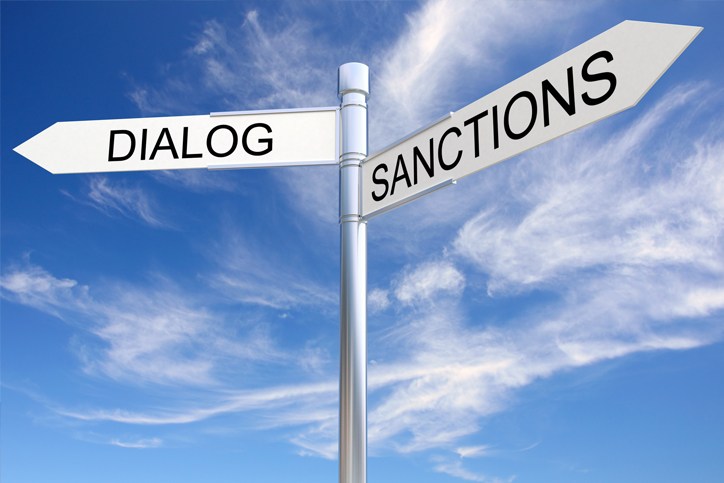
Into this fragile moment, Moscow continues to whisper that a negotiated settlement remains possible. Repeated statements from the Kremlin emphasize openness to dialogue, readiness to talk, and the suggestion that peace is only a conversation away. These signals are carefully calibrated for European audiences, designed to land in the ears of war weary voters and anxious governments who crave an exit from an expensive conflict.
The question is whether Moscow means it. Skeptics argue the signals are tactical, an attempt to split Europe, buy time for military reconstitution, and prepare the ground for a new offensive. Others note that even the appearance of flexibility serves Russian interests, because it frames the war as a dispute between stubborn leaders rather than an act of aggression against a sovereign neighbor. Either way, the message finds fertile ground in a Europe tired of crisis.
For Kyiv, this is a cruel dilemma. Refusing to engage in talks allows Moscow to paint Ukraine as the obstacle to peace. Engaging in talks, even conditionally, risks eroding Western resolve and handing Moscow a propaganda victory. For Europe, the dilemma is equally sharp, because the longer the war lasts, the more tempting any negotiated off ramp becomes, regardless of its terms. The moral clarity of the early days is giving way to the exhaustion of the long haul.
The Winter of Reckoning
The months ahead will test whether the European consensus survives its greatest strain. Budget negotiations, electoral cycles, and the relentless pressure of winter energy demand will all shape the answer. Europe does not need to abandon Ukraine to change its posture. It needs only to hesitate, to delay, to attach new conditions, and the entire architecture of support begins to bend. History is rarely broken by a single blow, but by a thousand small retreats.
Ukraine’s response matters enormously. Visible progress on anti corruption measures, transparent management of aid, and credible plans for democratic renewal could rebuild trust faster than any diplomatic charm offensive. Yet time is short and the audience is impatient. Europe, for its part, must decide what kind of power it wants to be, a patron that supports a friend through difficult years, or a fair weather ally that abandons its principles when the bills arrive.
Moscow is watching all of this with patience it learned over centuries. It calculates that European unity, like all human constructions, will eventually fatigue, fracture, and fade. It may be right, or it may be miscalculating the depth of Europe’s commitment. What is certain is that the war’s outcome will be decided not only on the battlefields of the east, but in the parliaments, treasuries, and voting booths of the West.
The political foundations of Europe’s response to the Ukraine war are no longer solid ground. They are shifting sediment, shaped by economic strain, political fatigue, corruption scandals, legitimacy questions, and Moscow’s patient signals of a possible settlement. None of these forces alone is fatal, but together they whisper a dangerous question into every European ear. How long must we pay, and what are we truly buying? The answer, whenever it comes, will define not just the fate of Ukraine, but the character of Europe itself for a generation.