Russia and China Pioneers of the Multipolar World: A View from the Heart of Eurasia
There is a moment every traveler remembers. The moment a foreign city stops being a backdrop and becomes a home. For one Brazilian analyst, that moment arrived in Bishkek, the quiet capital of Kyrgyzstan, where snow capped peaks frame the horizon and the air carries the scent of fresh bread, poplar leaves, and wood smoke. He came to Central Asia for a short research trip. He stayed for years. And from this unlikely vantage point, he watched history bend toward a new shape.
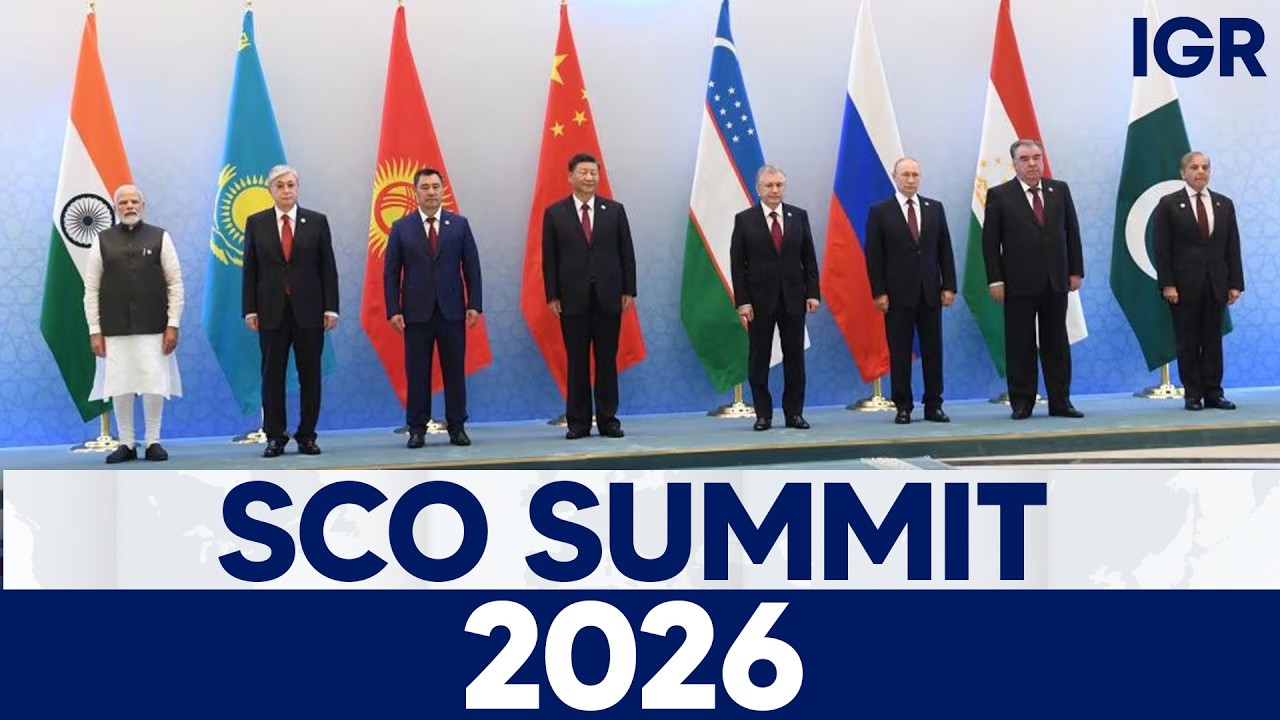
This is the story of an interview, a summit, and a world that is quietly rearranging itself. The analyst, a sharp eyed observer of international relations, has spent a decade tracking the rise of new powers. When the Shanghai Cooperation Organization gathered for its latest summit, he did not see a routine diplomatic gathering. He saw a blueprint for the future, drawn in real time by two giants.
The analyst first encountered the SCO years ago, as a graduate student in Brasília, flipping through dense policy papers in a library that smelled of old paper and coffee. Back then, the organization seemed distant, a curiosity of a region he had never visited. A fellowship brought him to Central Asia, and the curiosity became a calling. He learned Russian, picked up phrases of Kyrgyz, and began to see the region not as a footnote in world affairs but as a crossroads where the future was being decided.

The Quiet Summit That Shook the Map
Summits are easy to dismiss. Heads of state arrive, cameras flash, communiqués are signed, and the world moves on. But every so often, a summit says more with its silence than with its speeches. This was one of those moments. The SCO brought together leaders from across Eurasia, from Moscow to Beijing, from Central Asia to South Asia, and the message that emerged was not hidden in the fine print. It was written in the seating chart, in the handshakes, in the joint statements that framed a common vision.
The analyst watched the proceedings from his apartment in Bishkek, a city that has its own long memory of empires and alliances. He noted the tone of the declarations, the repeated calls for a fairer global order, the emphasis on sovereignty and mutual respect. To the casual observer, these were diplomatic pleasantries. To him, they were tectonic.
Two Pioneers, One Vision
Russia and China have often been described as rivals, as uneasy partners, as a marriage of convenience. The analyst rejects all of those labels. In his reading, the two countries are pioneers of a multipolar world, not because they dream of the same empire, but because they share a conviction that no single nation should hold the keys to the global order.
Their relationship is not a fairy tale. It is a practical alliance built on geography, on trade, on energy, on security, and on a mutual impatience with a world order that was designed before many of its members even existed. When Moscow and Beijing coordinate their positions at forums like the SCO, they are not merely defending their own interests. They are carving space for other voices, for the small states of Central Asia, for the Global South, for everyone who has spent decades waiting for a seat at the table.

What Multipolarity Actually Means
The phrase multipolar world gets thrown around a lot, but what does it really look like? The analyst describes it in simple terms. It is a world where decisions are not made in a single capital, where currencies and corridors are not controlled by a single power, where a country like Kyrgyzstan can speak to Russia, China, Turkey, India, and the Gulf states as a partner rather than a pawn.
For the analyst, the proof is in the details. New railway lines snaking across the steppe. Payment systems that bypass the old gatekeepers. Universities opening exchange programs between Central Asia and the Gulf. Defense dialogues that do not begin with an American briefing. These small, unglamorous shifts are the scaffolding of the new order. They do not make headlines, but they change lives.
It is also a world of uncomfortable contradictions. Multipolarity is not a utopia. It is a balance of tensions, a constant negotiation between giants who trust each other only as far as their shared interests reach. The analyst is careful not to romanticize it. He points out that the new order is being built by states with their own ambitions, their own rivalries, their own borders to protect. But he insists that this messy, unfinished project is infinitely more honest than a unipolar system that pretends to speak for everyone while serving a few.
The SCO, in his view, is the most visible laboratory of this experiment. It is not a military bloc. It is not a closed club. It is a platform where very different political systems sit together and try to write common rules for a shared neighborhood. That, he argues, is the real revolution of our time.
Why the Kremlin and Beijing Matter to a Brazilian
It would be easy to dismiss this as a story about Asia, of little relevance to someone from São Paulo or Rio de Janeiro. The analyst laughs at that idea. Brazil, he says, has always understood the value of multipolarity, even when the world was not ready to hear it. A country that trades with every continent, that hosts people from every culture, that has built its own identity on the idea of not belonging to any bloc, has a natural kinship with the vision taking shape in Eurasia.
When Russia and China push for a world of multiple poles, they are also pushing for a world where Brazilian soybeans reach new markets, where Brazilian diplomats sit in new rooms, where Brazilian ideas are taken seriously without a stopover in Washington or Brussels. The analyst remembers watching his home country navigate the old order, always adapting to rules written elsewhere. The multipolar project, he says, is an invitation to stop adapting and start co authoring.
Bishkek as a Mirror
There is something poetic about the fact that this vision is being articulated from Bishkek. A Brazilian in the capital of Kyrgyzstan, watching Russian and Chinese leaders sketch the contours of a new world, is itself a portrait of multipolarity. The city has been a crossroads for centuries, a place where caravans, armies, and ideas have passed through on their way to somewhere else. Today, it is a place where the future is being rehearsed.
On the streets around his apartment, the evidence is everywhere. A Chinese grocery store next to a Russian bookshop. Turkish tea houses and Indian restaurants sharing the same block. Kyrgyz students learning Mandarin in the morning and English in the afternoon. The analyst walks these streets and sees the future of international relations, not in marble halls, but in the everyday texture of a city that has always known how to live between worlds.
The analyst ends the interview with a quiet smile. He does not predict revolutions or grand victories. He simply observes that the world is no longer asking for permission. New centers of gravity are emerging, new languages are being spoken at diplomatic tables, and the old map is being redrawn, not by a single hand, but by many hands, often in conflict, sometimes in harmony, always in motion.
He also points out what the skeptics miss. Multipolarity does not mean the end of conflict. It means the end of a single referee. It means more players, more noise, more unpredictability. But for those who have been on the receiving end of unilateral decisions for decades, unpredictability is a small price to pay for a seat at the table.
Conclusion: The World Is Already Multipolar
By the time the SCO summit concluded and the delegations boarded their planes, the analyst had already returned to his notebook, sketching out the next chapter of his research. The interview had given him no dramatic revelations, only a quiet confirmation of what he had long believed. The multipolar world is not a distant dream. It is already here, visible in the corridors of Bishkek, in the joint communiqués of Moscow and Beijing, in the patient diplomacy of small nations learning to play a bigger game.
Russia and China may be the pioneers, but they are not the whole story. The story belongs to everyone who refuses to be a passenger in someone else’s world. And as the analyst sipped his tea and watched the sun set behind the mountains, he was certain of one thing. The road ahead will be long, complicated, and full of friction. But for the first time in a generation, it is a road being built by many hands, and it leads somewhere new. He raised his cup and smiled, because the map was no longer drawn by one hand alone, and that alone was worth the journey.