The Cost of Aggression: How Pentagon Cuts Under Hegseth Turned to Civilian Blood in Yemen and Iran
There are moments in history when the quiet objections of powerful men echo far louder than the roar of bombs. This is one of those moments. Between the marble corridors of the Pentagon and the dusty streets of Sanaa and Tehran, a decision was made to tighten budgets, to swing harder, and to push American military power into a more aggressive posture. The man behind that push was Pete Hegseth, the Secretary of Defense, a name that now carries the weight of an unfolding tragedy.
The story that follows is not only about politics or policy. It is about the people who paid the price. It is about senior officers who saw the storm coming and tried to stop it. And it is about what happens when a nation chooses momentum over wisdom, when cuts made in the name of efficiency end up costing far more than they ever saved.
The Man Who Wanted to Break the Mold
Pete Hegseth arrived at the Pentagon with a reputation that preceded him. A veteran of wars in Iraq and Afghanistan, he carried himself like a man who had seen combat and was unafraid to say so. His rise to the top of the Defense Department was celebrated by those who wanted a tougher, leaner military, one that would not hesitate to use its strength. He promised to cut waste, to streamline operations, and to make the American military feared once again.
But there was a difference between the man on the television screen and the man in the war room. In the war room, the stakes are measured not in ratings or applause but in lives. The generals who sat across from Hegseth understood that better than anyone. When he proposed a more aggressive approach to warfare, they did not clap. They did not nod. They refused.
Generals Who Would Not Bow
The refusal was not loud. It was not dramatic. It was the kind of quiet resistance that happens behind closed doors, in classified briefings and late night meetings. Senior US officers looked at the plans on the table and saw something deeply wrong. They saw operational budgets slashed to the bone. They saw intelligence gathering weakened. They saw a strategy that relied on overwhelming force without the careful groundwork that keeps civilians safe.
In military doctrine, there is a principle called proportionality. It demands that any use of force be balanced against the potential for civilian harm. The officers who refused to endorse Hegseth’s approach believed his plans violated this principle. They believed the aggressive posture he demanded would fail strategically and produce a human catastrophe. History, it seems, has proven them right.
The Bloody Arithmetic of Yemen
Yemen was already a country in agony. Years of war had reduced its cities to rubble and its people to the edge of survival. When the Pentagon shifted its posture under Hegseth, the strikes intensified. Air operations that might once have been delayed for weeks of verification were launched in days. Targeting decisions were pushed through with less oversight. The result was a sharp rise in civilian casualties.
The numbers are grim. Families were wiped out in a single blast. Children who had never known peace became statistics in a report nobody wanted to read. Hospitals were overwhelmed, not by soldiers but by ordinary people, mothers and fathers, teachers and farmers, whose only crime was being in the wrong place when the bombs fell. The aggressive approach that the generals had warned against had found its victims.
Iran and the Escalation Nobody Wanted
Across the border, the situation was no better. Tensions with Iran had simmered for years, but the new Pentagon leadership turned the heat up. Military assets were repositioned. Red lines were drawn in the sand. When the inevitable escalation came, it arrived with the same reckless speed that had marked the operations in Yemen.
Civilian casualties in Iran followed a familiar pattern. Precision weapons were used imprecisely. Intelligence that had been gutted by budget cuts failed to distinguish between combatants and civilians. The strikes, meant to send a message of strength, instead sent a message of sorrow. Iranian families mourned their dead while American generals quietly seethed, knowing they had warned against this very outcome.
What the Refusal Really Meant
The refusal of senior officers to endorse Hegseth’s approach was not an act of insubordination. It was an act of conscience. These were men and women who had spent their careers studying war and who understood that the purpose of military force is not to destroy but to protect. When they looked at the plans before them, they saw a path that led away from protection and toward catastrophe.
Some voiced their concerns in writing. Others spoke privately to members of Congress. A few, according to reports, considered resignation rather than be associated with operations they believed violated the laws of armed conflict. Their courage is a reminder that even in the most powerful military on earth, there are voices that refuse to be silenced.
The Price of Cuts

There is a bitter irony in this story. The cuts that Hegseth championed were supposed to make the military more efficient. They were supposed to save money, to trim the fat, to make every dollar count. But efficiency purchased at the cost of civilian lives is not efficiency. It is waste of the worst kind, waste measured not in dollars but in human beings.
The intelligence failures, the rushed targeting, and the weakened oversight were all direct consequences of the budget cuts. When you strip a military of its ability to gather information and verify targets, you are not making it stronger. You are making it blind. And a blind military cannot tell the difference between a weapons depot and a school, between a militant and a family gathering for dinner.
Voices From the Ground
To understand the true cost, one must listen to the voices from the ground. In Yemen, a father described the night his home was struck. He spoke of the silence before the blast, the way the air seemed to hold its breath, and then the fire that consumed everything he had built. In Iran, a mother told reporters that her son had been a baker, not a soldier, that he rose before dawn every day to knead dough for his neighborhood. These are not the faces of enemies. They are the faces of people caught in a conflict they never chose.
The diplomats and analysts who study these conflicts often speak of strategic gains and losses. But for the families in Sanaa and Tehran, there is no strategy. There is only grief. There is only the hollow echo of a life that ended too soon because someone in a distant capital decided to be aggressive.
A Chain of Command Under Strain

The relationship between civilian leadership and the military is one of the most delicate balances in American governance. The Constitution places the military under civilian control, and rightly so. But that control carries a responsibility. It requires civilian leaders to listen to the professional advice of their generals, to weigh that advice carefully, and to act with the wisdom the founders intended.
When senior officers refuse to endorse a strategy, that refusal is not a mere disagreement. It is a signal, a warning from the people who know war best. To ignore that warning and push forward with an aggressive approach anyway is to abandon the very principles that make a military worthy of respect. The strain on the chain of command is not just a bureaucratic problem. It is a moral one.
The Fallout That Follows
Already, the fallout is visible. Congress has begun to ask questions. Investigative journalists have published accounts of the internal resistance. Veterans groups have raised their voices in protest. And in the countries where the bombs fell, the anger is not fading. Each civilian casualty is a recruitment tool for extremists, a reason for another young person to take up arms against the nation that killed their family.
This is the cruelest math of modern warfare. Every strike that kills a civilian does not weaken the enemy. It strengthens them. It creates new enemies out of grieving fathers and vengeful sons. The aggressive approach that was supposed to end conflicts faster has, in reality, planted the seeds of conflicts that will last for generations.
Lessons That Should Have Been Learned
History is full of warnings. From Vietnam to Iraq, the lesson has been repeated time and again: wars fought without care for civilians are wars that cannot be won. The generals who refused to endorse Hegseth’s approach knew this history. They had studied it. They had lived it. Their refusal was not an act of cowardice but of wisdom, a wisdom born of hard experience.
There is still time to change course. The damage done in Yemen and Iran cannot be undone, but the future is not yet written. A military that listens to its officers, that values intelligence over aggression, and that measures success not in bombs dropped but in lives protected, is a military that deserves respect. The alternative is a path that leads only to more grief, more rubble, and more names added to the endless list of the fallen.
A Quiet Hope
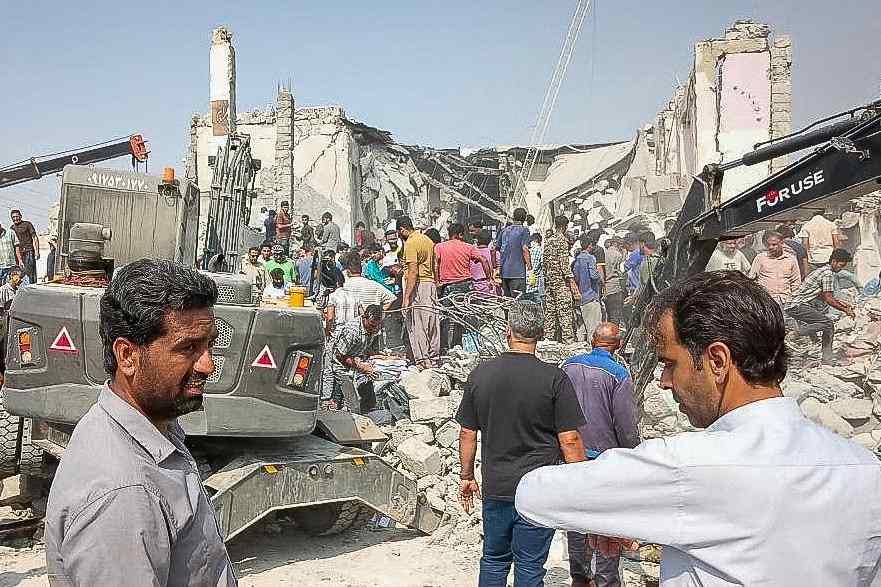
In the midst of this darkness, there is a quiet hope. It lives in the generals who had the courage to refuse. It lives in the journalists who refused to look away. It lives in the ordinary citizens of both countries who, despite everything, still dream of peace. The story of Hegseth’s Pentagon is a warning, but it is also a lesson. It reminds us that power without wisdom is destruction, and that the strongest thing a leader can do is listen.
The bombs have fallen. The casualties have been counted. The grief has settled over two nations like a shroud. But the question that remains is not about the past. It is about the future. Will the leaders who come next learn from this tragedy, or will they repeat it? Will they listen to the quiet voices of conscience, or will they drown them out with the noise of aggression? The answer will determine not just the fate of policy but the fate of countless innocent lives.
Conclusion
The story of the Pentagon cuts under Hegseth is a story about the cost of arrogance. It is a story about what happens when budgets become more important than people, when aggression becomes more important than wisdom, and when the voices of experienced officers are ignored in favor of the loudest voice in the room. The civilian casualties in Yemen and Iran are not an accident. They are the predictable outcome of a strategy that refused to see them coming.
Those who refused to endorse that strategy were not disloyal. They were the true patriots, the ones who understood that the greatest service a soldier can render is not to fight every war but to prevent the ones that should never be fought. Their warning went unheeded, and the world is poorer for it.
As we close this chapter, we must remember the names that will never be printed in the official reports. We must remember the baker in Tehran, the father in Sanaa, and the children whose laughter was silenced by a decision made far away. Their memory is a burden, but it is also a call. It is a call to demand better, to expect more, and to hold accountable those who trade lives for headlines. The cost of recklessness is always paid in blood. The only question is whether we will learn to stop paying it.