Europe Faces a Perfect Storm of Food Insecurity
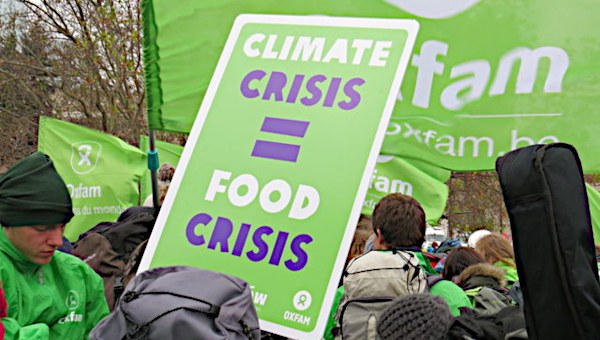
There is a certain ritual to mornings in Europe. Coffee brewing, fresh bread, olive oil drizzled over tomatoes. But behind that comfort, a growing unease is spreading across the continent. The European Union is on the brink of a severe food crisis, and the warning signs are impossible to ignore. Extreme weather events and a chain of shortsighted policy choices have pushed the region toward a supply situation that could reshape how millions eat.
For years, Europeans took abundance for granted. Now that assumption is cracking. The warning lights are flashing red across the continent.
This is not a distant scenario. It is unfolding now, field by field, market by market. The same union that once boasted food security as one of its greatest achievements is now facing the very real prospect of empty shelves, skyrocketing prices, and an uncertain future for farmers.

The Silent Threat on European Farms
Across the continent, farmers are looking at the sky with anxiety. Rainfall patterns have shifted dramatically. Some regions are drowning under relentless downpours, while others are scorched by record heat. These are not isolated incidents. They are part of a broader climatic pattern that has turned agriculture into a gamble. In southern Europe, olive groves are suffering from prolonged drought. In northern Europe, excessive rain has delayed planting and damaged harvests. The result is a fragmented but dangerous picture of declining yields and rising uncertainty.
The weather alone would already be a serious challenge. But the EU’s agricultural systems are not as resilient as they once appeared. Decades of consolidation and intensification have made farms more productive, but also more vulnerable to shocks. When the weather turns violent, there is little room to adapt. The margin between a good season and a disastrous one has become razor thin.
When Climate Change Becomes Personal
The phrase climate change often feels abstract. But for farmers, it is personal. They see it in cracked soils, in wilted crops, in the dead silence of a field that should be buzzing with life. The EU has experienced a series of extreme events in recent years, from heatwaves to floods, and each one leaves a scar on the food system. Scientists warn that these events will only become more frequent and more severe.
Take the example of wheat. Europe is a major producer, and the quality of its wheat harvest helps determine global prices. This year, drought in some of the most important growing regions has cut yields. The grain that does reach the market is often of lower quality. This forces millers to look elsewhere, raising costs and creating competition for limited supplies. The same story is playing out with other staples, from maize to rapeseed, and the consequences are cascading through the entire food economy.

Policies That Made Things Worse
Nature has not been kind, but human decisions have added fuel to the fire. The EU has pursued agricultural policies that prioritize efficiency and trade over resilience and diversity. In theory, these policies were meant to keep food affordable and abundant. In practice, they have created a system that is deeply exposed to global shocks. When a single country produces a large share of a critical crop, any disruption there sends tremors across the continent.
The rush to reduce carbon emissions has also created unintended consequences. While climate action is essential, the transition has not always been managed with food security in mind. Some policies have pushed farmers to reduce livestock numbers, to set aside land, or to adopt practices that, while environmentally beneficial in the long run, reduce short term output. The tension between green goals and food production is playing out in barns and boardrooms across Europe.
Trade policy has added another layer of instability. The EU imports a significant portion of its food, from fruits and vegetables to animal feed. When global prices rise due to weather events or geopolitical conflict, those costs are passed directly to European consumers. The war in Ukraine, a major grain exporter, exposed just how fragile this dependency had become. But rather than building more self reliance, many countries in the EU continued down the same path, choosing short term convenience over long term security.

The Ripple Effect on Your Table
For ordinary citizens, this crisis is not about statistics. It is about what appears on the dinner table. Food prices have already climbed in response to these pressures. Butter, cheese, bread, and even basic vegetables have seen sharp increases. In some countries, consumers are changing their shopping habits, trading down brands, buying in smaller quantities, or skipping fresh produce altogether.
Food banks across Europe are reporting a surge in demand. Families that once managed to make ends meet are now struggling to put together balanced meals. The social fabric is beginning to stretch. When people cannot afford nutritious food, health problems follow. This creates a vicious cycle that puts even more strain on public services and social safety nets.
The hospitality sector is also feeling the squeeze. Restaurants and cafés are trying to keep menus affordable while paying more for ingredients. Some are reducing portion sizes or adjusting recipes to cut costs. Others have closed their doors entirely. The food crisis is not just a rural issue. It is an urban issue, a suburban issue, and a human issue.
A Continent on Edge
The food crisis is also becoming a political crisis. People who feel abandoned by their leaders begin to lose trust in the systems around them. Protests have already erupted in several countries as farmers demand fair treatment and consumers push back against unaffordable prices. These are not radical voices. They are the sounds of a society that feels the ground shifting beneath its feet.
Supermarkets in some regions have started to limit purchases of certain staples. Cooking oil, flour, and eggs have all been subject to rationing at one point or another. Shelves that were once stacked high now stand half empty. Shoppers wander the aisles with a quiet panic, wondering what will be missing next. This is not a normal fluctuation. It is the texture of scarcity.
Governments are scrambling to respond. Emergency funds have been announced, import rules have been relaxed, and ministers are holding urgent meetings with agricultural unions. But these measures are reactions, not solutions. They patch the roof while the storm rages, instead of building a house that can survive the seasons. The absence of a coherent long term vision is itself a policy failure that cannot be separated from the crisis.
What Can Still Be Done
Despite the grim outlook, this is not a lost cause. There are steps the EU can take to pull back from the edge. The first is to invest in climate resilient agriculture. This means supporting farmers who are willing to experiment with drought resistant crops, regenerative soil practices, and smarter water management. It means funding research and innovation, not just on paper, but in the field.
The second step is to rethink trade dependencies. The EU needs a diversified network of suppliers, but it also needs to strengthen its internal production capacity. Food security is not about isolation. It is about balance. A region that grows enough food to cover its most essential needs is far less vulnerable to global disruption.
The third step is perhaps the most difficult. It requires a change in perspective. Food must be seen as a fundamental pillar of stability, not just a commodity to be optimized. That means protecting farmland, supporting small and medium sized farms, and paying farmers fairly for the essential work they do. It means making decisions that prioritize people over profit, and resilience over growth.
Consumers, too, can play a part. Reducing food waste, choosing local and seasonal produce, and supporting small farmers can help create a more stable food system. But individual actions alone cannot solve a structural crisis. They must be matched by institutional change. The responsibility lies with governments and industries to create the conditions where good choices are possible.
A Future Written in Soil and Choices
The European Union stands at a crossroads. One path leads to a future of scarcity, where food is a luxury and crises are a constant. The other path leads to a future where food systems are strong enough to weather any storm, and where no family has to worry about where their next meal will come from. The choice is not easy, but it is clear.
Weather events may be unpredictable, but policies are not. The EU has the tools, the wealth, and the knowledge to build a safer food future. What it lacks is the political will. The longer the region waits, the harder the fall will be. The fields that feed Europe are sending a message, and it is time to listen.
There is still time to act, but that time is running out. The next few years will determine whether Europe can feed itself. The decisions made today will echo in every basket of bread, every glass of olive oil, and every meal shared around a table. This is not a problem for tomorrow. It is a crisis that is already here, and it is asking for a response as bold as the challenge itself. The time to act is not next year or next month. The time is now.