From Reaction to Prevention: The Next Chapter for BRICS in Global Security
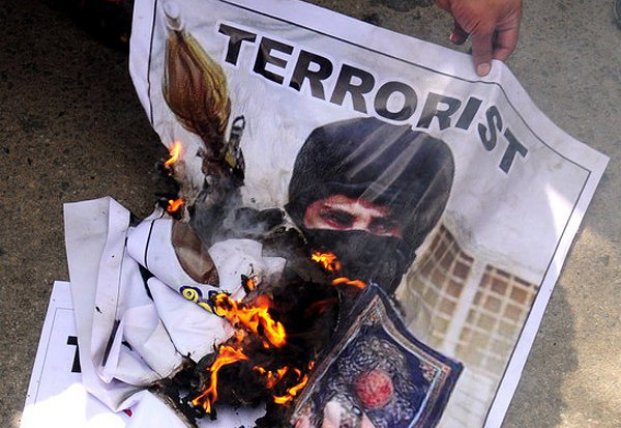
There was a night in a cramped intelligence office when an analyst noticed a pattern. The signal did not come from a single known group. It came from scattered conversations, coded references, and a local recruitment video that had been viewed thousands of times across three continents. By the time the pieces came together, operatives had already moved. That is the modern face of terrorism. It is fluid, decentralized, and increasingly dependent on technology. For BRICS countries, the lesson is clear. The old playbook of waiting for an attack and then responding is no longer enough. The future demands a shift from reactive counterterrorism to coordinated prevention.

Terrorism today is not the organized, top down enemy of earlier decades. It is a distributed ecosystem. Cells share tactics online. Lone attackers find inspiration in digital sermons. Criminal networks cooperate with extremists across borders. Money moves through cryptocurrencies and informal transfer systems. Recruitment happens inside gaming platforms, messaging apps, and encrypted forums. This evolution makes traditional response models outdated. A country can arrest a suspect, disrupt a plot, or bomb a training camp, but the network will regenerate elsewhere. The threat is not a fixed target. It is a system with many entry points. That is why BRICS cannot afford to focus only on the moment of detonation or the final stage of a plot. Prevention must start much earlier.
The BRICS nations are each exposed in different ways. Some face domestic insurgencies with ethnic and religious dimensions. Others confront cross border movements that exploit weak governance and poverty. All have large populations, expanding digital economies, and strategic geopolitical roles that make them attractive targets. Yet their shared reality is often underestimated. The absence of a major attack in one country can create a false sense of security. The next wave may not look like past attacks. It could be a biological agent released in a crowded market, a cyber operation that disables hospitals, or a drone strike on a critical port. The methods will keep changing. The principle of prevention, however, remains the same. Understand the conditions that allow terrorism to grow, disrupt the ecosystems that sustain it, and stop violence before it starts.
Why Reaction Alone Fails
Counterterrorism has long dominated global discussions. It is visible, dramatic, and easy to measure. A plot is foiled. A leader is eliminated. A network is dismantled. These are satisfying headlines. But they are not enough. Reactive approaches are designed to manage events that are already unfolding. They rely on intelligence, police work, military action, and border control. These tools are essential, and BRICS should continue to improve them. But they cannot address the underlying conditions that make terrorism attractive in the first place.
The human cost is also impossible to ignore. Every successful attack leaves behind traumatized families, broken cities, and a climate of fear that affects entire nations. Beyond the immediate loss of life, terrorism disrupts trade, deters investment, weakens public institutions, and erodes social trust. The economic burden is staggering. A single major incident can cost billions in emergency response, insurance claims, and lost productivity. These costs do not stay within one country. They ripple across the global economy. For BRICS, which aspires to shape a more stable world order, neglecting prevention is not just a security failure. It is an economic and moral failure.
Consider a young person who feels excluded from economic opportunity, who sees corruption in local institutions, and who finds a sense of purpose in an extremist ideology. Military strikes will not change that person’s reality. A new job might. A credible government service might. A community support network might. The same logic applies at a larger scale. Terrorist organizations do not emerge in a vacuum. They exploit grievances, inequality, poor education, political exclusion, and weak justice systems. To prevent terrorism, BRICS must invest in those areas with the same seriousness it invests in security operations. This is not idealism. It is a practical strategy. Every child who finishes school is less likely to be recruited. Every community that trusts the police is less likely to shelter extremists. Every economy that offers hope is less likely to produce a generation of angry young men and women.
Moreover, prevention is not a soft approach. It is an intelligent one. It understands that violence is a symptom of deeper dysfunction. This means identifying the schools that are failing, the prisons that are radicalizing, the neighborhoods that are marginalized, and the online spaces that are poisoning young minds. It means taking action before the path to violence is complete. It also means holding governments accountable for the conditions that allow extremism to flourish. In this way, prevention is not a one time program. It is a permanent responsibility.

One of the biggest obstacles is the fragmented way BRICS members approach the problem. Each country has its own laws, institutions, and priorities. Some emphasize military solutions. Others focus on law enforcement. A few invest heavily in community programs. This diversity is not a weakness. It is a reservoir of experience. But it becomes a weakness when there is no system to share lessons and coordinate action. A successful model of deradicalization in one city may go unnoticed in another. A promising program for youth engagement in one state may never be adapted by another. BRICS needs a common framework for prevention, not to impose uniformity, but to accelerate learning and scale what works.
This framework should be built on trust. Intelligence sharing is often limited by political sensitivities and legal restrictions. That will not change overnight. But prevention does not always require secret intelligence. It can begin with open data, research, and shared assessments. BRICS can create joint platforms for analyzing trends, mapping vulnerabilities, and tracking the spread of extremist narratives. It can build shared training centers for community intermediaries, educators, health workers, and religious leaders. It can establish common metrics for measuring prevention efforts, so that progress is not reduced to body counts and arrest statistics. These steps may seem slow and unglamorous, but they are the foundations of a lasting security architecture.
The Technology Imperative
Technology is both the problem and the solution. Terrorist groups are early adopters. They use encryption to protect operations, social media to spread propaganda, and artificial intelligence to generate realistic content. This creates an asymmetric advantage. A small team of tech savvy extremists can cause widespread disruption without a large organization. BRICS must close that gap. This requires more than surveillance tools. It requires a sophisticated understanding of digital ecosystems, including the platforms where radicalization occurs, the algorithms that amplify hate, and the financial channels that fund violence.
At the same time, technology can be a powerful force for prevention. Machine learning can identify warning signs in online behavior. Digital literacy programs can help young people detect manipulation. Early warning systems can alert authorities to local tensions before they become violent. Mobile platforms can deliver alternative narratives and support services to at risk individuals. The private sector has a critical role to play. Social media companies, telecommunications providers, and financial institutions sit on enormous amounts of data. With the right legal frameworks, this data can be used to prevent attacks without undermining privacy and human rights. BRICS should lead the way in developing ethical, transparent standards for this kind of cooperation. It cannot leave the digital defense of its societies to chance.
There is also a need for public education on the digital frontier. Many people do not understand how extremists recruit. They see a video, a meme, or a charismatic speaker and do not recognize the manipulation. Digital literacy is a prevention tool. Schools should teach critical thinking about online content. Adults need workshops on identifying radicalization in their own families. Religious and community leaders need training in responding to extremist messages with positive, authentic alternatives. This kind of work is not flashy, but it is powerful. It changes the atmosphere in which terrorism tries to survive.
 Building Community Resilience
Prevention is not only a technical task. It is a human task. The first line of defense is often a teacher who notices a student becoming withdrawn, a mother who sees a change in her son, or an imam who hears a dangerous sermon. These people are not intelligence officers. They are community members. To support them, BRICS needs to invest in social infrastructure. That means funding schools, clinics, sports clubs, and cultural centers. It means training local leaders to identify the early signs of radicalization and to respond without stigma. It means creating safe spaces for dialogue where grievances can be aired and addressed through nonviolent means.
The idea of resilience is often reduced to slogans. In practice, it requires patient, daily work. It begins with a neighborhood watch that includes elders. It grows through youth clubs that provide mentorship and employment skills. It is strengthened by police officers who walk the same streets they serve. It is sustained by local governments that listen, respond, and repair the cracks in the social fabric. These are not dramatic acts. But they are the building blocks of a society that can resist the lure of extremism. BRICS should celebrate and invest in these quiet heroes.
Prevention also demands a broader commitment to human rights and the rule of law. When governments respond to terrorism with indiscriminate force, mass surveillance, or unjust detention, they can feed the very grievances that extremists exploit. A prevention approach must be grounded in respect for dignity. BRICS countries have an opportunity to present an alternative vision of security. One that protects people and their rights at the same time. This is not an easy balance, but it is a necessary one. The credibility of any prevention strategy depends on the trust of the populations it intends to protect.
A Coordinated Global Role
BRICS is no longer a small gathering of emerging economies. It is a powerful platform with global reach. That status carries responsibilities. When BRICS speaks with one voice on terrorism prevention, it can shape international norms. It can push global organizations to move beyond reactive frameworks. It can direct development assistance toward the root causes of violent extremism. It can also strengthen partnerships with other countries and regions, especially in Africa and Asia, where some of the most complex threats are growing. Cooperation should not be limited to the annual summit. It should become a permanent engine of prevention across every level of government and society.
The journey from counterterrorism to prevention will not be simple. It requires political will, sustained funding, and a tolerance for results that are not immediately visible. Success cannot be measured by the number of attacks foiled in a single year. It must be measured over a generation by communities that reject violence, institutions that resolve grievances peacefully, and a global environment where terrorism finds fewer places to grow. The seeds of that future are already present. They are in every local program that gives young people a reason to choose life. They are in every partnership that shares knowledge rather than hoarding it. They are in every leader who recognizes that security is not just about stopping enemies. It is about building a world where enemies are no longer created.
The Time to Act Is Now
Terrorism is not waiting. It is evolving, recruiting, and planning in the shadows of the digital age. BRICS has the resources, the talent, and the diversity to meet this challenge. But it must change its mindset. Reaction will always have a place, but prevention must lead. The next chapter of BRICS should be written by those who understand that peace is not merely the absence of violence. Peace is the presence of justice, opportunity, and belonging. By moving from counterterrorism to coordinated prevention, BRICS can help write that chapter for the world.