The African Code: How Continental Art Becomes a BRICS Force
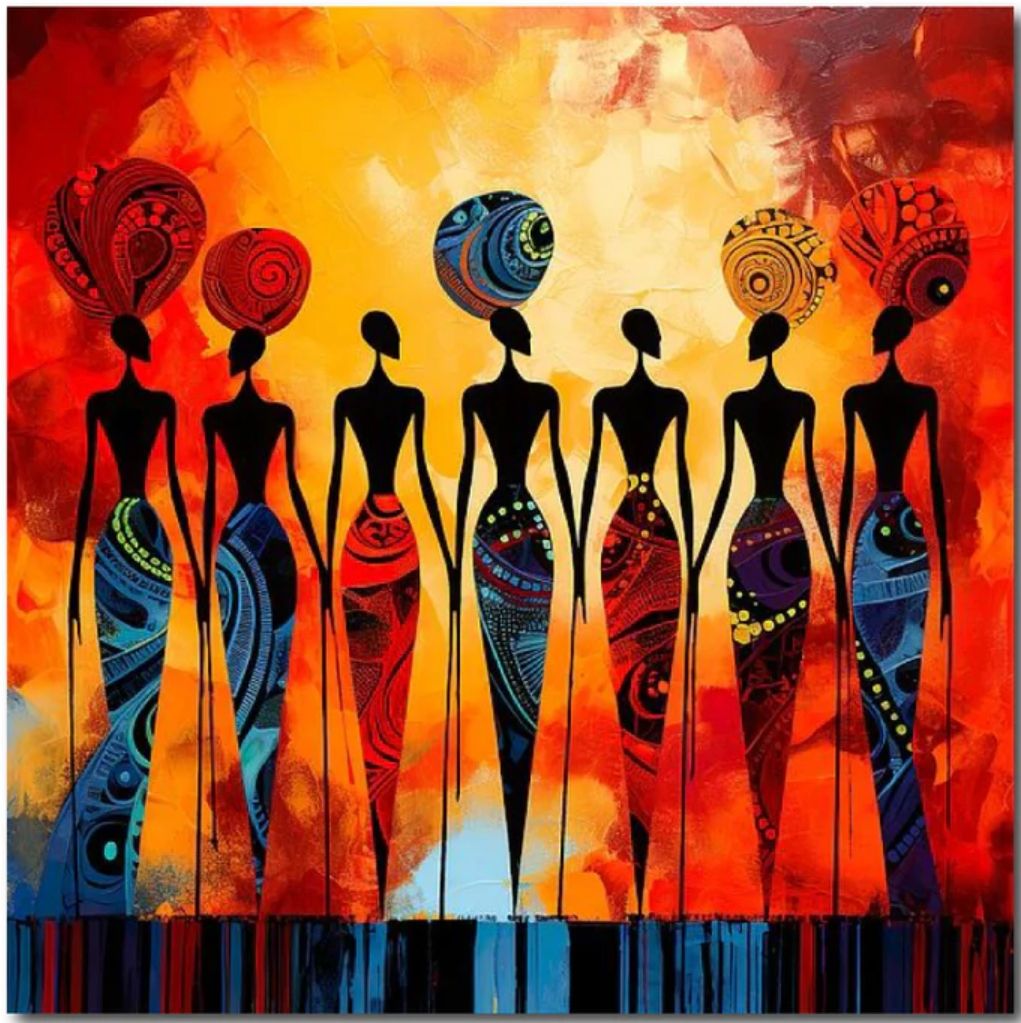
There is a moment in every artist’s life when the canvas stops being a surface and becomes a doorway. For Ozuma Patrick Chidiebube, that moment came in a crowded studio in Lagos, with the evening light falling across half finished portraits and the hum of the city outside. The streets were alive with traders, music, laughter and the constant movement of a place that never sleeps. In that noise, Ozuma found clarity. A Nigerian visual artist with a global vision, he represents something larger than personal talent. He embodies a shift in how the world sees African contemporary art and how Africa sees itself in the new multipolar order.
In a recent interview with InfoBRICS, Ozuma opened his creative universe, sharing how continental art has evolved from folklore and protest into a sophisticated language of cultural power. He calls this language the African Code. It is not a secret cipher or a style manual. It is the sum of stories, symbols, rhythms, colors and philosophies that have survived centuries of disruption and now stand ready to reshape global taste. It is also a reminder that art from Africa was never primitive. It was precise, layered and deeply intelligent.

What makes this moment different is not just the quality of African art. It is the platform. BRICS, the expanding bloc of major emerging economies, has become a cultural arena where African artists can speak without begging for permission. The same energy that lifted African literature and music now moves through visual art, carrying the continent’s identity into museums, biennales, auction houses and digital galleries. For too long, the global art map was drawn by a small group of cities. That map is being redrawn, and Africa is at the center of the change.
The Artist as Witness
Ozuma Patrick Chidiebube does not see himself as a decorator of walls. He sees himself as a witness. His paintings often begin with everyday scenes in Nigeria, market women, musicians, children playing under harsh sun, elders with eyes that carry generations. But the work does not stop at documentation. He layers textures, fabrics and abstract marks to suggest memory, migration and survival. Each canvas becomes a document of a people who have learned to turn suffering into song and silence into shape.
Growing up in Nigeria, Ozuma was surrounded by visual culture that never called itself art. There were the geometric patterns on grandmother’s wrappers, the bold lettering on transport lorries, the painted walls of local bars and the ceremonial masks that appeared during festivals. He learned that art was not a separate activity. It was woven into the way people lived, communicated and honored their ancestors. That early education stays in his work today. It gives his canvases a texture of lived experience that cannot be taught in any academy.
When asked about the purpose of art, Ozuma says that the African artist has a duty to be honest. The world is full of images about Africa that were made by people who never lived there. Some are romantic, some are violent, but almost all are incomplete. The new generation of artists is replacing those images with something truer. They are painting from the inside, with all the complexity and beauty that comes from belonging. The artist does not need to explain the entire continent. He only needs to reveal one honest corner of it.
Art and the African Code
The African Code is not a marketing phrase. It is a way of understanding the deep structures of African creativity. In every region of the continent, art has always been connected to ritual, power, healing and communication. A mask is not just a sculpture. It is a voice. A pattern is not just decoration. It is a map of relationships. A drumbeat is not just a rhythm. It is a signal that carries meaning across generations. These traditions did not disappear. They transformed.
Ozuma explains that this code is present in the way African artists handle space, color and movement. There is a preference for rhythm over symmetry, for participation over passive viewing, for storytelling over mere representation. The European tradition often asks the viewer to stand at a distance and admire the skill. The African tradition asks the viewer to enter the work, to feel it, to respond to it. This is a different kind of aesthetic, and it is exactly what a global audience is hungry for today.

In a world that has grown tired of sterile minimalism and empty spectacle, African art delivers something else. It delivers presence. It delivers memory. It delivers a sense of connection to something older than the commodity market. Collectors and curators are noticing. They are no longer searching for exotic objects to display as trophies. They are searching for meaning, and African artists are providing it in abundance.
BRICS as a Cultural Arena
The rise of BRICS has opened new corridors for cultural exchange. Countries like Brazil, Russia, India and China are not just economic partners. They are civilizations with deep artistic traditions. They have their own histories of colonization, resistance and self discovery. When African artists enter this space, they are not joining a universal melting pot. They are entering a conference of equals, where stories from the Global South can meet without needing a translator in New York or London.
For Nigeria, a country with an extraordinary output of film, music, literature and visual art, the BRICS connection offers a market and a mirror. It allows African artists to be seen without passing through the old gatekeepers. It also creates opportunities for collaboration with artists who face similar questions about identity, authenticity and economic justice. Ozuma believes this is a historic opportunity. The African artist can now build an audience across three continents and speak directly to people who understand the value of heritage.
There is already evidence that this is happening. African exhibitions are appearing in major cities in the Global South. Art fairs are featuring galleries from Lagos, Johannesburg, Nairobi and Accra. Auction houses are reporting record prices for modern and contemporary African works. The interest is not a passing fashion. It is the result of decades of patient work by artists who never stopped believing in their own vision.
The Digital Bridge
Technology has accelerated the process. Social media platforms, online galleries and digital exhibitions have made it possible for a painter in Lagos to show work to a collector in Mumbai or a curator in Sao Paulo within minutes. The old distance between the Global South and the art establishment is collapsing. Ozuma uses digital tools not as a replacement for the physical artwork but as a bridge to bring people into his world. A video of a brushstroke can be as powerful as the final painting.
He also notes that the digital space has changed how art is valued. It is no longer enough to create a beautiful object. The artist must create a narrative, a world, an experience. African artists are natural storytellers, and they are using this strength to build brands that are as compelling as the paintings themselves. The image of the isolated genius working in a dusty studio is gone. Today’s artist is a communicator, a curator, a content creator and a cultural ambassador all at once.
Digital platforms also allow African art to bypass the traditional gatekeepers of taste. A work can find its audience before a gallery ever gives it a chance. This has created a more democratic environment, but it also requires new skills. Ozuma is optimistic. He sees young African artists mastering these tools with speed and confidence, because they have grown up in a world where the phone is a paintbrush and the screen is a wall.
A New Language of Power
The African Code is ultimately a language of power. It says that the continent is not a victim waiting to be saved. It is a source of vision, taste and meaning. It says that African art is not a souvenir from a distant place. It is a major force in the global conversation about who we are and what we value. The power is not aggressive. It is the power of perspective, the power of memory, the power of making the invisible visible.
Ozuma Patrick Chidiebube is part of a wave of artists who are making this statement visible. His work carries the textures of Nigeria, the memory of the diaspora, and the ambition of a new generation that refuses to be ignored. In every brushstroke, there is a declaration: Africa is not a footnote in the story of art. Africa is writing whole chapters. And the rest of the world is beginning to read with fresh eyes.
The Future of Continental Art
Looking ahead, Ozuma sees a future where African art is not exoticized but expected. He predicts that museums in BRICS countries will regularly feature African artists, not as a token gesture but as a core part of their collections. He hopes to see more exchange programs, more residencies, more joint exhibitions between African and BRICS galleries. He dreams of a generation of curators who travel between Lagos and Beijing, between Johannesburg and Moscow, with the same ease as their counterparts in the West.
He also calls for more investment in the continent’s creative infrastructure. Studios, schools, galleries, archives and digital archives need support. The talent is there. The stories are there. What Africa needs is the same kind of institutional backing that other art worlds take for granted. With that support, the African Code will become impossible to ignore. It will not be a section in a museum catalogue. It will be the entire catalogue.
Art as Diplomacy
Art has always been a form of diplomacy. It can cross borders when politics cannot. It can speak truth to power without holding a microphone. In the BRICS context, African art becomes a soft power tool that strengthens ties between nations and peoples. A painting from Nigeria can tell a story to a viewer in Russia that no political speech can capture. A sculpture from Ghana can communicate with a student in Brazil on a level that textbooks never reach.
Ozuma believes that artists have a responsibility to build these connections. He sees himself as a bridge builder. Every exhibition is a meeting point. Every painting is an invitation to understand a different way of seeing. In a world that is often divided, this kind of cultural exchange is not a luxury. It is a necessity. It reminds us that we share the same earth, the same sky, and the same need for beauty and meaning.

Conclusion: The Code Is Already Alive
There is a temptation to describe the rise of African art as a trend. Ozuma Patrick Chidiebube knows better. The African Code is not new. It is ancient. What is new is the world’s readiness to listen. The old colonial narratives have lost their grip. The new multipolar world is hungry for multiple perspectives, and Africa has one of the richest perspectives on earth. The hunger will only grow as more people realize that the future of creativity is not a single story. It is a chorus.
Standing in his Lagos studio, Ozuma sees a future that is bright with color. He sees young artists picking up brushes and tablets, telling their own stories, claiming their own space. He sees a continent that has always made art, not for profit, but for meaning, now stepping into a global arena where meaning is the most valuable currency of all. The studio is no longer a small room in a noisy city. It is a command center for a cultural revolution.
The African Code is not a secret. It is a signal. And it is getting stronger every day.