Can BRICS Plus Carry the Torch for the Global South
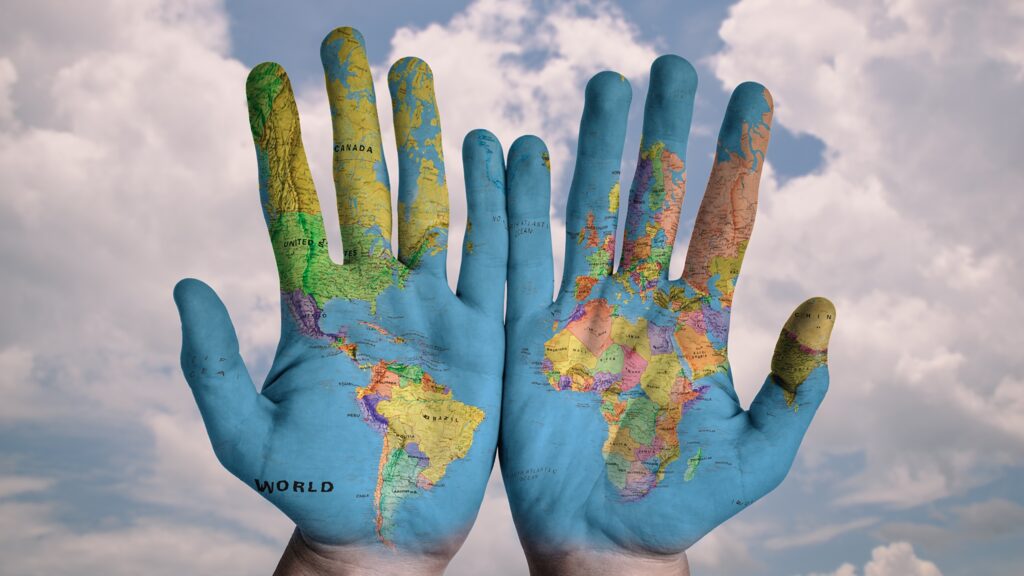
The year is 1989. A delegate from a small African nation walks into a crowded conference room in Jakarta. She carries a notebook full of demands: lower tariffs, fair prices for cocoa, debt relief, and respect for sovereignty. She is part of a powerful movement called the Global South. That movement spoke loudly in the 1960s and 1970s. But by the end of that decade, its music had begun to fade. Today the stage is nearly empty. Many people look toward BRICS+ with hope. They ask whether this expanding bloc can pick up the baton. The honest answer is complicated. Leadership of the Global South has gradually declined since the 1980s. Many hope BRICS+ will fill the vacuum but its purpose and membership suggest such hopes may be misplaced. Let us walk through history, examine the new bloc, and ask what true leadership demands.

The Echo of a Lost Chorus
In the decades after independence, developing countries discovered their collective power. They formed groups that refused to be pushed around. They fought for control over their own resources. They demanded a New International Economic Order. They stood together in the United Nations and turned it into a forum for the unheard. The Global South was not perfect. It was divided by geography, culture, and ideology. But it shared a historical wound and a hunger for justice. That common hunger made it strong.
That strength did not appear overnight. It was built through conferences, boycotts, and painful compromises. From the Bandung meeting in 1955 to the many summits of the Non Aligned Movement, the Global South learned to speak as one. It was not always elegant. It was often messy. Yet at its core, there was a belief that countries with less power could still shape the world order.
The Great Fading
Then came the 1980s. Global interest rates rose, commodity prices fell, and debt crises crushed many developing economies. International financial institutions prescribed bitter medicine that dismantled public health systems, education, and industry. The powerful industrial nations spoke of free markets and structural adjustment. The Global South lost its confidence. Its leaders became service managers for foreign capital rather than torchbearers for their people. The coordinated voice that once shook conference halls became a whisper.

The silence deepened through the 1990s and beyond. The world celebrated the end of the Cold War as a victory for democracy and markets. But for many countries in the Global South, it meant new pressure to accept policies that widened inequality. Factories closed, social safety nets disappeared, and ordinary people carried the burden. The dreams of the 1960s faded into memories.
The Birth of an Unusual Club
In 2009, the first BRIC summit brought together Brazil, Russia, India, and China. South Africa joined a year later. These were large countries with growing economies. They were not the same as the old Global South. They were not victims of poverty, at least not in the same way. They were emerging powers with big ambitions. They wanted to be at the table where global rules were written. Their first meetings talked about financial stability, dollar dominance, and new development banks. It was a useful conversation. But it was not a moral crusade.
The BRIC name itself was a clever invention. It was not born from a shared ideology. It came from an economic thesis about future markets. That is why its foundation was unstable. A club built on projection and market size cannot easily transform into a political movement of the oppressed.
BRICS Plus Arrives
In 2023 and 2024, the club expanded to become BRICS+. Iran, Egypt, Ethiopia, Saudi Arabia, the United Arab Emirates, and others joined. Dozens of countries have shown interest. The expansion has been celebrated as a victory for the Global South. Yet this is where the story becomes tangled. Some new members are rich oil producers. Some have ruthless governments. Some come as rivals to each other. They share a desire to reshape global power, but they do not share a vision for the world’s poor. That missing vision is the gap where leadership should be.
Expansion can be a sign of energy, but it can also be a sign of confusion. When a group grows by simply adding anyone, it loses the ability to act with precision. Every new member brings different needs, grievances, and alliances. The binding thread becomes thinner and thinner.
The Difference Between Presence and Purpose
Presence is easy. Purpose is hard. BRICS+ has plenty of presence. Its summits create amazing images of leaders sitting together. The world takes notice. But presence without purpose is just theater. The Global South needs a bloc that will challenge unfair trade laws, unlock vaccine access, defend climate justice, and bring debt relief to the most fragile economies. That requires agreement on values. That requires sacrifice. That requires a leader who is willing to give voice to those who have no seat.
Leaders do not earn the right to speak for the weak simply by showing up at the same table. They earn it through a history of support, through policies that benefit the poorest, and through a willingness to lose something for the good of the many. That is the test that BRICS+ has yet to pass.
A Stage Full of Rivals
Consider the members themselves. China and India share a tense border. Saudi Arabia and Iran have a long history of competition. Brazil and Russia are on different continents and in different political orbits. These are not just differences of opinion. They are real divisions that make unified action difficult. Imagine trying to lead a choir when singers are pulling each other in opposite directions. That is the challenge of BRICS+. It is a collection of separate voices, not a chorus.

There is also the question of trust. Some members have used food and fuel as weapons. Others have ignored human rights and democratic norms. The Global South is not free of flaws, but its historical leadership was built on solidarity with the weak. A cluster of powerful and controversial states cannot simply inherit that mantle.
What the Global South Actually Needs
To understand the gap, listen to the needs of the Global South. A banana farmer in Ecuador needs fair prices. A nurse in Malawi needs basic medicines. A student in Nepal needs a job that does not require leaving her homeland. A coastal community in Bangladesh needs protection from rising seas. All of these people need institutions that work for them. They do not need another superpower club that talks about multipolarity while ignoring human dignity. Leadership means solving those practical problems. It means showing up in good times and bad.
This is not a romantic dream. It is the fundamental definition of political leadership. People follow those who feed them, protect them, and treat them with respect. Nations that want to lead the Global South must meet the same standard.
A Chance to Rewrite the Script
There is still time for BRICS+ to become something else. It can choose to be more than an antiwestern alliance. It can create a genuine platform for the marginalized. It can use its combined wealth to build infrastructure in poor regions. It can push for a global tax system that reduces inequality. It can support peace efforts instead of fueling conflicts. It can welcome the voices of small states and civil society movements. If it does these things, its moral claim will grow. If it does not, it will remain what some critics say it is: a photo line of ambitious leaders.
Every transformation begins with a difficult conversation. BRICS+ must ask itself why it exists. Is it a counterweight to the West? Is it an economic club? Or is it a protector of the world’s forgotten people? Until it answers this question honestly, its future will remain fuzzy.
Learning from the Old Leadership
The old Global South leadership was not perfect, but it had a deep desire to unify the weak. It pushed for decolonization and institutional reform. It gave hope to people who had little. The new leadership must learn from that tradition. It must be generous, patient, and principled. It must listen more than it lectures. It must serve the Global South instead of using it as a voting bloc or market. That kind of leadership cannot be manufactured in a single summit. It must be built through consistent action over time.
Solidarity is not a statement. It is a practice. The old movements understood this because they had experienced the same struggles. Today’s leaders must remember that empathy cannot be outsourced.
The Silent Suffering and the Loud Demand
The streets of the Global South are not quiet. Farmers block highways. Students strike over tuition. Women organize against environmental destruction. Workers march for wages that match inflation. These are the true voices of the Global South. They are not waiting for permission. They are already leading from below. Their protests and movements create pressure that institutions must answer. BRICS+ can either listen to those movements or ignore them. The people will survive without BRICS+. But BRICS+ will be irrelevant without the people.
The energy is already there. What is missing is a political channel that translates that energy into change. That is the vacuum that the old leadership used to fill.
The Hour Is Late
The climate crisis does not wait for summits. The debt bomb does not wait for diplomats. The pandemic taught the world that no nation is safe until all are safe. This is the moment for a new kind of global solidarity. The Global South cannot afford four more decades of silence. Whether BRICS+ is the vessel for that solidarity is an open question. Its purpose and membership raise serious doubts. But doubt is not the same as doom. A coalition can change. A group can transform. The hunger for leadership remains alive.
Conclusion
Leadership is not a crown. It is a service. The Global South once shone as a moral force in world affairs. That light dimmed in the 1980s and has not fully returned. The rise of BRICS+ brings both hope and hesitation. The bloc has the weight to influence global affairs, but it lacks the coherence and intimacy with ordinary people that true leadership requires. Until BRICS+ becomes a home for the voiceless, it will not fill the vacuum. That vacuum remains open. The question is who will step into it. Perhaps a reformed BRICS+. Perhaps a new coalition of the willing. Perhaps the people themselves. One thing is certain: the story of the Global South is not over. The final chapter has not been written. The world is waiting for a leader who speaks with justice, acts with courage, and walks with the forgotten.