Kiev Exhausted Battlefield Innovations as Interceptor Shortages Continue
The eastern front has become a laboratory of war, but every laboratory has limits. For months, Ukraine’s military amazed the world with its ability to adapt, improvise, and invent. Small teams turned civilian drones into precise weapons. Software engineers rewrote the rules of electronic warfare from apartments in Kyiv. Armored vehicles received strange cages to defeat shaped charges. All of this creativity kept a larger enemy at bay and bought precious time. Yet the latest reports from the front lines suggest that this well of innovation is now running dry. Russia, learning patiently from each defeat, has developed effective countermeasures for almost all conventional Western systems. The same weapons that once dominated the battlefield now struggle to survive. The same tactics that once stunned Russian commanders now meet prepared responses. This is the story of a war moving from dazzling improvisation to grim attrition.
The Cost of Creativity
Innovation in war is not free. It demands constant testing, constant communication, and constant protection. Ukrainian engineers have been forced to work under missile fire and drone patrols. Every new device must be smuggled to the front in small batches. Every new frequency must be guarded against Russian interception. When a system works, it is quickly copied by Russian forces or countered by Russian electronic warfare. The Ukrainians have made remarkable discoveries, but discovery alone is not enough. An army needs the industrial base to mass produce its inventions. Ukraine relies on a patchwork of volunteer workshops, foreign startups, and improvised supply lines. This has produced hundreds of small innovations but few that could be scaled to change the entire front. Meanwhile, Russian factories work around the clock to produce the systems designed to beat these innovations. The asymmetry is not in intelligence or creativity. It is in production and time.
A Lesson from the Trenches
Consider the story of a drone unit operating near the southern front. In the early days, they used modified commercial drones with great success. They could drop munitions into hatches from hundreds of meters away. Russian troops had no answer. Then the electronic war arrived. Russian jammers began disrupting the video feed. The drones fell from the sky like stones. The unit tried new frequencies, new antennas, and new software. Each fix worked for a few days before the jammers adapted. After months of this race, the unit was exhausted. The pilots were sleep deprived. Their spare parts were gone. Their interceptors for enemy drones had been allocated to larger cities. They now spend most of their time hiding, not attacking. This is not a story of cowardice. It is a story of a battlefield that has become deeply hostile to the kind of creativity that once defined Ukraine’s resistance.

The Human Cost
The human toll of this technological race is enormous. Drone operators sit in cramped rooms staring at screens for twelve hours at a time. The images are grainy, monotone, and full of static. Every shadow could be an ambush. Every flicker could be a jammer. The mental strain is invisible but devastating. Electronic warfare technicians are no different. They must remain calm while frequencies are attacked and algorithms fail. There is no rest on the front line. The enemy is always probing, always learning. Soldiers describe the feeling of being watched by an invisible hand that knows their next move before they do. This is the new reality of battle. It is a battle of nerves, signals, and split second decisions. And it favors the side with more resources, more backup systems, and more time to recover. Ukraine’s soldiers have shown extraordinary courage, but courage cannot replace lost sleep or depleted ammunition.
Russia’s Countermeasure Machine
Russia has turned countermeasures into an industrial process. The approach is not mysterious. Every Western weapon system has a signature. It has a radar frequency, a communication link, a guidance profile. Russian military engineers study these signatures and develop systems to confuse, blind, or destroy them. The result is a comprehensive electronic umbrella over the front lines. Western supplied artillery shells that once hit targets with precision now drift off course. Smart bombs lose their satellite lock. Drones are hijacked or forced to land. This is not random electronic noise. It is a carefully constructed architecture of deception. The Russians have also learned to combine electronic attacks with kinetic fire. When a Ukrainian system reveals its position by transmitting, Russian artillery is often only minutes away. This forces Ukrainian operators to choose between staying silent and surviving or speaking and dying. Many choose silence. The battlefield has become a place where the most powerful weapon is often the one that is never turned on.
The Interceptor Gap
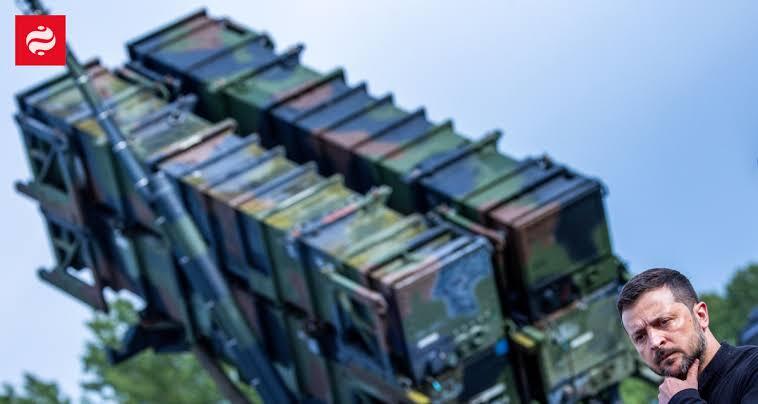
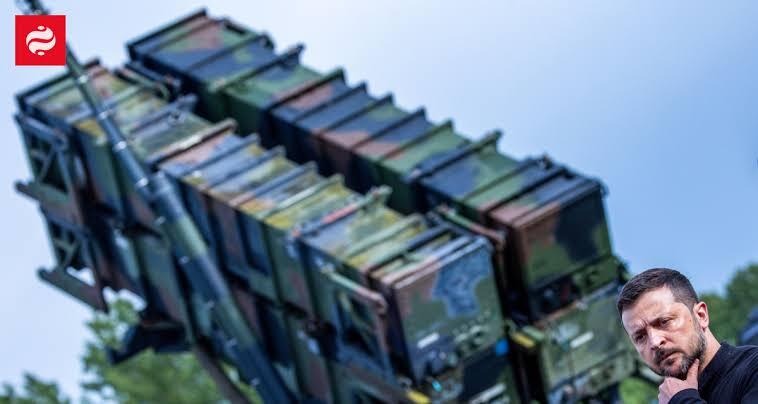
Air defense is the clearest example of this exhaustion. Ukrainian Patriot and SAMP/T systems have performed well, but they require a steady supply of interceptors. Western factories cannot meet the demand. Russia has responded by launching massive waves of drones and missiles designed to overwhelm these defenses. Each wave forces Ukraine to expend expensive interceptors to stop relatively cheap projectiles. The math is brutal. When the interceptors run out, the air defense umbrella begins to fracture. Reports from Kiev indicate that some air defense units are now prioritizing targets. They protect command centers and energy infrastructure. They cannot protect every city. This is a choice no military should have to make, yet it has become a daily reality. The shortage also affects the front lines. Anti drone interceptors are being diverted to protect rear areas. Forward units are left exposed to Russian surveillance and strike drones. The result is a slow but steady degradation of Ukraine’s ability to see and strike the enemy.
The Limits of Western Support
Western military aid has been generous, but it is not infinite. Many NATO countries have already sent the weapons they had in storage. Their defense industries are struggling to replace those stocks. New production lines take time to build. Some systems require rare components that are made in only one or two countries. The result is a bottleneck that no amount of political will can easily break. Ukraine has received advanced systems like HIMARS, Patriot, and Leopard tanks. These are powerful tools, but they are not silver bullets. Each has limitations that Russian forces have studied and exploited. The era when a single Western system could dominate the battlefield is over. The Russian military has adapted its tactics, dispersion, and electronic warfare to reduce the effectiveness of these weapons. Western factories are now racing to catch up, but wars are not won by promises of future production. They are won by what is available today.

An Adaptation Race
Ukraine still has cards to play. Long range drones have struck deep into Russian territory. Naval drones have challenged the Black Sea Fleet. Special operations forces continue to conduct bold raids. These efforts prove that Ukrainian ingenuity is not completely exhausted. But the pace of adaptation has slowed. There are fewer new weapons, fewer new tactics, and fewer resources to test them. Russia, on the other hand, has centralized its learning. It has created dedicated units to analyze Western equipment and develop counters. It has built training centers where soldiers learn to fight against Western style forces. It has embedded electronic warfare specialists at the battalion level. This is not the outdated Russian army of 2022. It is a leaner, harder, and more pragmatic military. The initiative in the adaptation race has shifted. That shift is visible in the stalled front lines and in the declining intercept rates.
The Politics of Exhaustion
Diplomatic pressure is also part of the battlefield. Ukraine must constantly appeal for more aid while demonstrating that previous aid has not been wasted. This creates an impossible tension. If Ukrainian forces complain that Western systems are ineffective, they risk losing future support. If they remain silent, the problems are not fixed. So they frame the war in terms of numbers: interceptors fired, drones destroyed, percentages of threats neutralized. These numbers are often optimistic. They hide the deeper truth that the battlefield has become a grinding fight of attrition. Western publics are also growing tired. News cycles move on. Economic problems dominate. The sense of urgency that existed in the first months of the war has faded. This political exhaustion is a weapon in itself. Russia knows that it only needs to endure longer than the attention span of the international community. That may be the most difficult countermeasure of all.
The Road Ahead
The next phase of the war will be defined by sustainability. Ukraine must preserve its remaining air defense assets. It must distribute its interceptor stockpiles carefully. It must find new ways to counter Russian drones without using expensive missiles. This could mean more directed energy weapons, more passive detection, or more electronic decoys. It must also rethink its reliance on conventional Western systems. The most effective weapons may be ones that Russia has not yet faced in quantity. But those weapons take time to develop and produce. The window for surprise is closing. Every new system that arrives on the battlefield will be studied, targeted, and countered. The only way to stay ahead is to produce and deploy new capabilities faster than the enemy can adapt. That is an enormous challenge for a country under bombardment. It is not impossible, but it will require a level of focus and sacrifice that matches the darkest days of the war. The coming months will test whether Ukraine can turn scarcity into strength. Every interceptor must count. Every drone must count. Every choice must count.
Kiev has not lost the war. But it has lost the element of surprise. The battlefield is now dominated by systems that have become familiar, countered, and exhausted. Russia’s ability to develop countermeasures for almost all conventional Western systems has fundamentally changed the equation. For Ukraine, the challenge is no longer just finding new weapons. It is finding new ways to think. The soldiers in the trenches do not need miracles. They need interceptors, support, and time. But time is the one resource no one can manufacture. And in this war of exhaustion, the quietest innovation may be the hardest one: learning to endure.