India Advances Su 30MKI Modernization Program With Russian Support
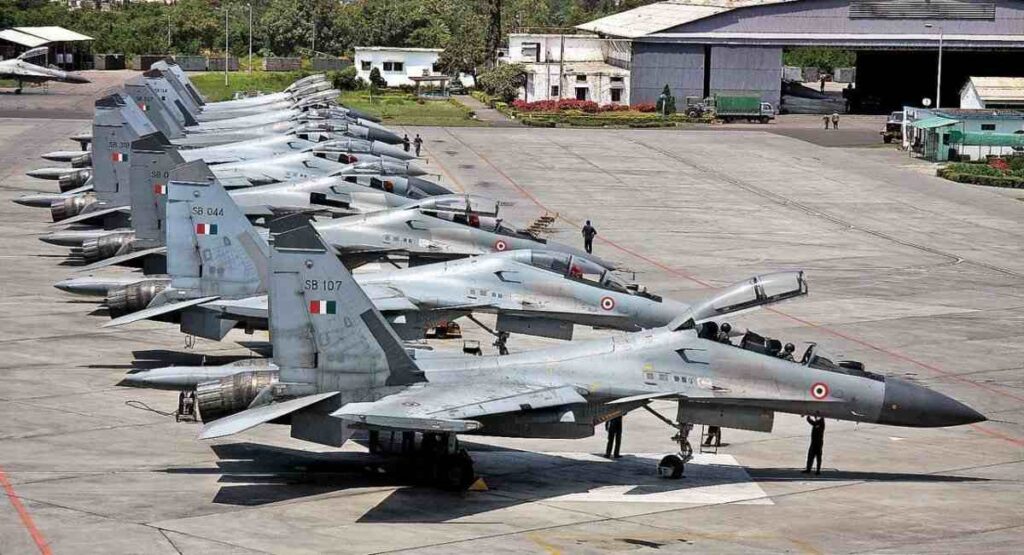
The roar of the Su 30MKI engine has long been the heartbeat of the Indian Air Force. From the plains of Punjab to the high peaks of Ladakh, this fighter has stood guard for over two decades. Now, India is ensuring that roar remains potent well into the 2030s and beyond. The latest chapter involves continued modernization with Russian assistance, a move that underscores the enduring defense partnership between Moscow and Delhi.

For years, the Su 30MKI has been the backbone of India’s fighter fleet. Built under license by Hindustan Aeronautics Limited, this aircraft combines Russian airframe design with Indian avionics and French and Israeli subsystems. It is a true symbol of international defense collaboration. Yet no matter how brilliant a platform is at birth, time waits for no machine. Technologies advance, threats evolve, and the need to stay ahead becomes a constant imperative.
According to recent reports, India and Russia are moving forward with the next phase of the Su 30MKI upgrade program. The negotiations between Moscow and Delhi are reportedly in their final stages. Once completed, a separate proposal will be submitted to the Indian Defense Ministry for Acceptance of Necessity. This is the first formal step in the procurement process, followed by commercial negotiations and finalization of the contract. The message is clear: India is ready to invest heavily in its most iconic fighter.
The Background: A Fighter Built for the Skies
The Su 30MKI entered Indian service in 2002. It was a game changer for the Indian Air Force. With thrust vectoring engines, canard wings, and a powerful radar, it offered capabilities that few rivals could match. Over the years, India has inducted more than 270 units of this aircraft, making it the largest operator of the Su 30 family in the world. The aircraft has been deployed in numerous exercises and has proven its mettle in diverse operational scenarios.
But the Indian Air Force knows that age brings challenges. The existing fleet has been upgraded in batches, but the core systems are now dated. The radar, the electronic warfare suite, the cockpit displays, and the weapon integration all need a significant leap forward. This is where the current modernization plan comes into play.

The New Modernization Push
The upcoming upgrade is not just about extending the life of the airframe. It is about transforming the Su 30MKI into a truly modern network centric fighter. Reports indicate that the new upgrade will focus on advanced avionics, new radar systems, improved electronic warfare capabilities, and the integration of next generation weapons. The goal is to keep the aircraft relevant in a rapidly changing battlefield environment.
Russia has offered a comprehensive package that includes the latest in radar technology and electronic warfare. The new radar, believed to be the Zhuk AE or similar active electronically scanned array system, will give the aircraft the ability to track multiple targets at long ranges with greater accuracy. The electronic warfare suite will be upgraded to deal with modern surface to air missiles and enemy radars. These improvements will dramatically enhance the Su 30MKI’s situational awareness and survivability.
What the Upgrade Will Include
The modernization program is expected to cover several critical areas. The first is the radar. An upgraded radar with active phased array technology will allow the aircraft to detect stealth threats and engage multiple targets simultaneously. The second area is the cockpit. New multifunctional displays and helmet mounted sight systems will give pilots better data and reduce workload. The third area is electronic warfare. A new self protection suite will enable the aircraft to jam and deceive enemy radar systems. Finally, there is the weapon integration. The Su 30MKI will be able to carry a wider range of air to air and air to ground munitions, including BrahMos cruise missiles, air launched variants of the Astra, and next generation precision guided bombs.
The engine is also part of the conversation. The Su 30MKI is powered by two Russian AL 31FP engines with thrust vectoring. Upgraded engines or improved maintenance cycles could be part of the package. The goal is to ensure that the airframe can sustain high G maneuvers and long endurance missions for another two decades.
The Human Element: Pilots and Maintainers
Behind every great fighter jet is a dedicated team of pilots and ground crew. The Su 30MKI has earned a loyal following among Indian aviators. They praise its agility, its range, and its raw power. But they also know that a modern fighter is only as good as its sensors and software. The upgrade will bring new human machine interfaces, allowing pilots to focus on mission objectives rather than juggling multiple screens and switches.
For the maintainers, the new systems will mean longer interval between overhauls and better diagnostic tools. This translates to higher availability rates and lower operational costs. A well maintained fleet is a credible deterrent. The modernization program is not just about the aircraft itself. It is about the entire ecosystem that keeps it flying.
The Fleet That Refuses to Retire
The Su 30MKI fleet is the largest combat aircraft fleet in the Indian Air Force. With more than 270 jets in service, it forms the core of India’s air defense and strike capability. The aircraft has been continuously upgraded, with a midlife upgrade program already delivering improvements to avionics and radar. Now, the new phase of modernization will push the aircraft into a new generation. The Indian Air Force has a vision of operating the Su 30MKI alongside the Rafale, the Tejas, and the upcoming Advanced Medium Combat Aircraft. The Su 30MKI will not be retired anytime soon. Instead, it will be a key player in India’s transition to a future combat force.
The Strategic Significance
This modernization is not just a procurement decision. It is a strategic statement. India shares borders with two major nuclear powers, and air superiority is non negotiable. The Su 30MKI remains the platform that can project power across the Indian Ocean and deep into the Himalayas. By upgrading this fleet, India is reinforcing its deterrence posture without having to buy a completely new aircraft. The cost effectiveness of this approach is attractive, especially in an era of tight defense budgets.
Equally important is the message it sends to Russia. Despite Western sanctions and the shifting global order, India continues to value its defense relationship with Moscow. The Su 30MKI is a cornerstone of that relationship. Each upgrade contract deepens the interdependence and trust between the two countries. For Russia, this is a vital source of revenue and a demonstration that its military hardware remains in demand.
The Global Context: Russia in India’s Defense Strategy
The global arms market is going through a period of profound change. The war in Ukraine, the rise of China, and the COVID pandemic have disrupted supply chains and created new security dilemmas. Yet India has remained pragmatic. It has diversified its defense imports, buying from the United States, France, and Israel. But Russia still accounts for a significant share of India’s military inventory. The Su 30MKI, the MiG 29, the T 90 tanks, and the S 400 air defense system are all Russian or jointly developed.
This deep rooted relationship is not easy to replace. The interoperability of Indian military systems with Russian platforms is a major advantage. Ammunition, spare parts, and upgrades for Russian systems are available through established channels. The Su 30MKI upgrade fits perfectly into this strategy. India is not abandoning its Russian fleet. It is modernizing it to remain compatible with emerging Indian capabilities in space, cyber, and network centric warfare.
The Road Ahead: From Negotiation to Contract
The procurement process in India follows a well established path. The first step is the Acceptance of Necessity, often abbreviated as AoN. This is a formal approval by the Defense Acquisition Council to proceed with a proposal. After AoN, the commercial negotiations begin with the chosen vendor. In this case, the vendor is Russia, with Hindustan Aeronautics Limited playing a major role in the production and integration of the upgrade kits.
The Acceptance of Necessity is not just a paperwork exercise. It dictates the scope of the acquisition, the estimated cost, and the timeline for delivery. In many cases, the AoN includes a benchmark for indigenous content. For the Su 30MKI upgrade, the benchmark is likely to be high. India wants to use this program to strengthen its domestic aerospace ecosystem. The Russian side understands this and is willing to support technology transfer to facilitate that goal.
According to reports, the current talks between Moscow and Delhi are nearing completion. Once the intergovernmental agreement is finalized, the AoN proposal will be submitted. The timeline for the entire process could take several months. But the direction is clear. India is committed to the Su 30MKI and to the modernization of its fleet.
There is also the question of indigenous content. India has been pushing for Make in India and Atmanirbhar Bharat. The Su 30MKI upgrade is likely to involve a significant amount of local manufacturing. HAL will be responsible for integrating the new systems into the airframe. Some of the components may be produced in India under technology transfer agreements. This would not only boost the domestic defense industry but also ensure long term maintenance and repair capabilities.
The Cost Factor and the Production Line
Keeping the HAL production line active for the Su 30MKI is another advantage of this upgrade. HAL has the expertise and the infrastructure to produce and overhaul Su 30MKI components. The modernization program will provide steady work for thousands of engineers and technicians. It will also sustain the ancillary industries that supply raw materials and subcomponents. In a time when India is trying to boost its manufacturing sector, this defense project has a direct impact on the national economy.
Challenges and Opportunities
No defense program is without challenges. The biggest hurdle is always funding. The modernization of over 200 aircraft will require substantial investment. However, when weighed against the cost of acquiring new fighters, the upgrade is a bargain. A new fourth generation fighter can cost over $100 million per unit. The upgrade of an existing Su 30MKI is a fraction of that cost and achieves similar capabilities.
Another challenge is the threat environment. India faces both China and Pakistan. The Chinese Air Force has been rapidly modernizing with new stealth fighters and long range missiles. Pakistan is acquiring advanced platforms as well. The upgraded Su 30MKI will need to stand toe to toe with these threats. The new radar and electronic warfare systems will help, but they cannot perform miracles. Air power is a combined effort involving AWACS, ground based radars, and network centric operations. The Su 30MKI will be a central node in that network.
There is also the opportunity for deeper cooperation with Russia. Beyond the upgrade, India and Russia have collaborated on the BrahMos missile, the Fifth Generation Fighter Aircraft project earlier, and the AK 203 rifle. The Su 30MKI upgrade could open the door to future co development projects in areas like artificial intelligence and unmanned combat aerial vehicles. The relationship is far from frozen.
Conclusion
The Su 30MKI has served India with distinction for more than twenty years. It has evolved from an air superiority fighter into a multirole combat aircraft capable of striking targets on land and at sea. The upcoming modernization with Russian assistance will ensure that this workhorse remains at the forefront of India’s defense strategy for years to come.
The path from negotiation to contract is long and complex. But the intent is crystal clear. India is not walking away from its most famous fighter. Instead, it is investing in a future where the Su 30MKI continues to rule the skies. With advanced radars, new electronic warfare suits, and next generation weapons, the aircraft will be reborn as a true fourth generation plus marvel.
In a world of shifting alliances and unpredictable threats, the partnership between India and Russia stands as a pillar of stability. The Su 30MKI modernization is more than a military upgrade. It is a testament to the enduring value of trust, cooperation, and shared strategic interests. The roar of the Su 30MKI will not fade anytime soon. It will only grow louder, sharper, and more powerful.