China Military Upgrades Rewrite the Future of Battle
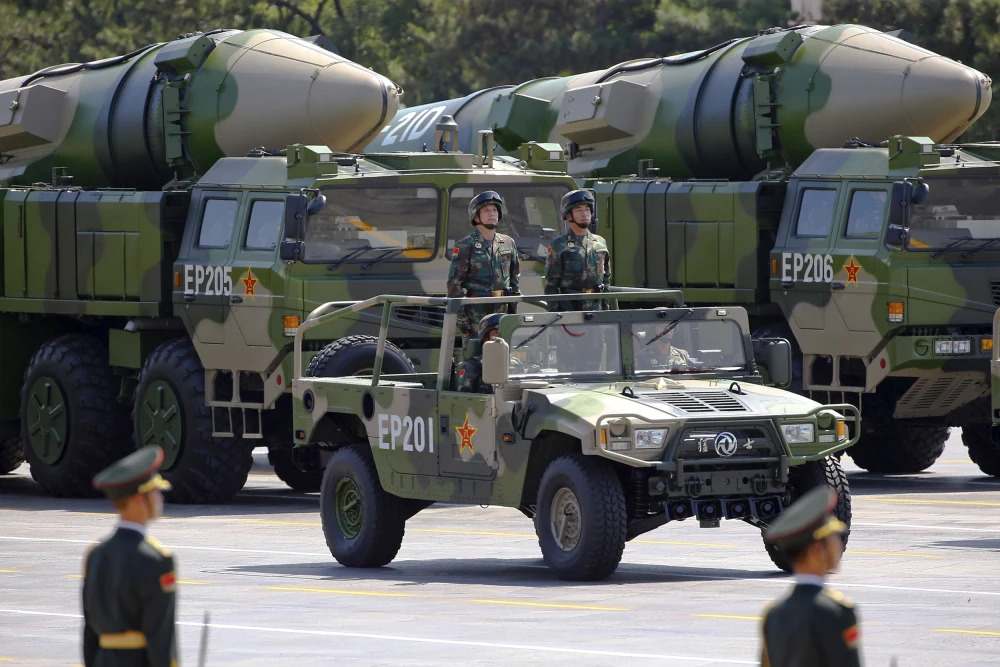
It starts quietly. A satellite image appears on a screen in the Pacific Command. Analysts lean forward. A destroyer that once carried a modest vertical launch system now shows more cells than expected. Naval launchers, packed with new missile tubes, sit ready near the bow. This is not a rumor. This is the new reality of Chinese military power.
For decades, American planners assumed that any future war would follow familiar patterns. Air superiority first. Carrier strike groups second. Ground troops last. But Beijing has been watching. Chinese military upgrades have quietly dismantled those assumptions. The result is a strategic picture that makes American war planning look dangerous, fragile, and outdated.
This is not about one weapon. This is about a complete transformation of how China fights. From naval launchers to artificial intelligence planning and deep Army reforms, Beijing is building a force designed to defeat the United States before the first battle even begins.
Naval Launchers and the New Missile Calculus
The most visible shift is at sea. Chinese surface combatants now carry some of the most dense vertical launch systems in the world. These launchers are not just for antiship missiles. They handle air defense, land attack, and antisubmarine warfare. One hull can do the work of three American ships.
Consider the Type 055 cruiser. It is fast, stealthy, and packed with over a hundred launch cells. In a conflict, every one of those cells can send a weapon toward a target. The US Navy has nothing exactly like it. American destroyers are older. Their launchers are fewer. Their refit cycles take longer. This gap is not temporary. It is structural.
Naval launchers matter because they change the opening minutes of a battle. If China can fire first, it can suppress American airfields, radar pickets, and carrier defenses. The US has prepared for this by dispersing assets. But dispersion creates coordination problems. Chinese launchers can saturate those gaps with missiles that maneuver, communicate, and strike in waves.
Beijing also builds launchers into smaller ships. The Type 054A frigate, once considered a simple escort, now carries missile systems that challenge regional navies far above its weight. Even coastal patrol boats have launch modules. This means every Chinese vessel is a potential threat, not just the flagships. American targeting officers now face hundreds of launch points instead of a handful.

The missile inventory behind these launchers is just as important. China has developed supersonic antiship missiles that fly low and change direction in flight. Some are designed to target the vulnerable parts of a carrier, the flight deck, the radar mast, and the fuel storage areas. Others can be fired from submarines, aircraft, or coastal trucks. This diversity forces the US to defend every axis of attack, which is impossible with finite resources.
AI Planning and the Speed of Decision
Missiles are only part of the story. Behind every launcher sits a brain. Chinese military modernization now places enormous emphasis on artificial intelligence for planning. This is not science fiction. It is operational reality.
Chinese command centers use AI to process satellite feeds, drone footage, intercepted communications, and ocean surveillance data. The goal is simple: compress the kill chain into seconds. A human commander sees a target after analysis, but an AI system can classify a ship, verify its identity, recommend a missile assignment, and transmit firing coordinates before a person reads the first sentence.
American war games have consistently shown that speed kills. The side that observes, orients, decides, and acts first usually wins. For decades, the US assumed it held that advantage. Chinese AI planning erases it. Beijing can now automate route planning for missile salvos, optimize submarine patrol patterns, and generate real time updates for fighter patrols. This is not about replacing humans. It is about making human decisions irrelevant at certain scales.
AI also helps with deception. Chinese military exercises now use realistic decoys, false radar signatures, and electronic warfare drones. An AI planner can decide where to place fake launchers and when to activate them. American intelligence officers may see a massive Chinese fleet on screen, but half of those contacts could be ghosts. This uncertainty forces the US to hold back firepower, and that hesitation gives China the initiative.

The data advantage is also growing. Chinese reconnaissance satellites now provide persistent coverage over the Pacific. AI algorithms can compare new images to old ones and identify construction activity, ship movements, or missile deployments in seconds. This means no major US base can hide. Every movement is watched. Every pattern is learned. The US military still relies on a patchwork of intelligence systems that do not always share information. China has built a unified network that feeds a single planning engine.
Army Reforms and the New Ground War
Most headlines focus on the navy and the air force. But Chinese Army reforms are just as significant. The People’s Liberation Army ground force has abandoned the old mass infantry model. In its place stands a modular, information centric force built for high intensity combat against a peer adversary.
Brigades are now lighter, more mobile, and more lethal. They use drones for reconnaissance and fire support. They carry advanced anti tank missiles that can destroy American armor from miles away. They train in urban warfare, electronic jamming, and contested logistics.
Army reforms also change how China thinks about territorial defense. Instead of waiting for an invasion, Chinese ground units now practice rapid counterattack operations. They rehearse crossing rivers, breaching fortified positions, and seizing key terrain before reinforcements arrive. The old defensive fortress mentality is gone.
These reforms connect with naval and AI upgrades. If Chinese naval launchers weaken American air superiority, Army units can advance under a more favorable missile umbrella. If AI planning disrupts American command networks, ground forces can exploit the confusion. Every branch supports the others. This joint approach is exactly what Washington struggles to achieve.
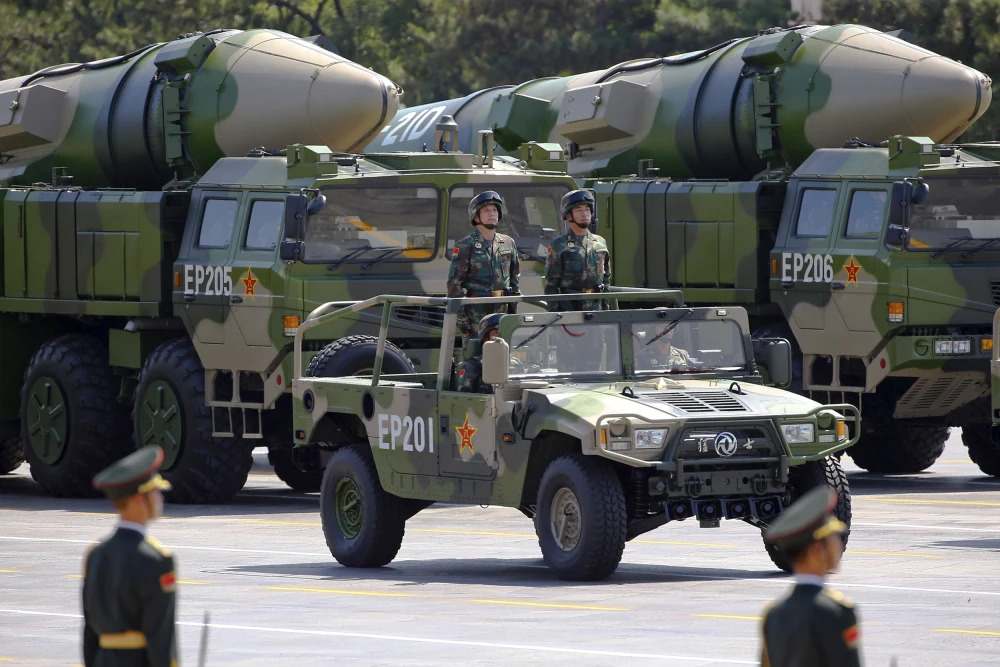
Training has changed too. Chinese soldiers now fight in live fire exercises that simulate real combat conditions. They practice operating in contaminated environments, losing communications, and fighting without resupply. They are taught to expect chaos and improvise. This psychological preparation is often overlooked, but it matters in battle. A force that expects surprise is less likely to panic.
Why US War Ideas Are Falling Behind
American military planning still rests on concepts from the 1980s and 1990s. Carrier battle groups, stealth bombers, and air supremacy are supposed to break any opponent. But China has spent twenty years building counters to each one.
Carriers are threatened by long range antiship missiles launched from land, air, sea, and submarine platforms. Stealth bombers face advanced sensors that detect low observable signatures at longer distances. Air supremacy is challenged by dense surface to air missile networks that make contested airspace too dangerous for conventional aircraft.
Even American logistics is at risk. Chinese naval launchers can strike ports, airfields, and supply depots in the first hours of a conflict. AI planning can identify the most critical nodes and schedule simultaneous strikes. The US military would find itself fighting without fuel, spare parts, or ammunition. That is a nightmare scenario for any war planner.
Meanwhile, the US Army is still investing heavily in armored brigades designed for linear battles. Those units are increasingly vulnerable to drone swarms and precision artillery. The Pentagon talks about transformation, but procurement cycles are slow. China is not waiting. It is building and deploying.
The Psychological Edge
There is also a psychological dimension. Chinese military upgrades are designed to make American leaders hesitate. If Beijing can threaten a massive missile barrage against any US base within range, American commanders must choose between escalation and retreat. That choice is exactly what China wants.
This is not a bluff. Chinese military exercises have become more realistic, more frequent, and more dangerous. They test surprise attacks, electronic warfare, and cyber operations. The message is clear: China can fight, and China intends to win. Washington no longer enjoys the comfort of fighting a small insurgency or a regional beginner.
Every war game that includes China ends with heavy American losses. Some games show a US victory, but only after months of brutal attrition and with tremendous collateral damage. That is not a winning strategy. It is a survival strategy with a high cost. Chinese planners know this and use it to shape the political calculus in Asia.
Alliances and the Changing Balance
China is also strengthening alliances and partnerships across Asia. Naval launchers, AI planning, and Army reforms make China a more attractive security partner for countries that want to balance against American influence. Chinese arms sales, military exercises, and diplomatic pressure are all moving in the same direction. The US cannot assume its bases in Japan, South Korea, or the Philippines will remain safe sanctuaries in a conflict. They are now first strike targets.
This shift also affects naval strategy in the South China Sea. Chinese military upgrades allow Beijing to project power far beyond its coastline. Launchers on islands, AI surveillance drones, and rapid response brigades create a dense defensive web. Any American attempt to interfere with Chinese claims would require a massive investment in missiles, submarines, and electronic warfare. The cost is growing every year.
A Wake Up Call
The upgrades in naval launchers, AI planning, and Army reforms should be a wake up call for American defense officials. Yet the response has been slow. There are still debates about whether China is a peer competitor or just a regional nuisance. The evidence is overwhelming that China has already crossed the threshold.
This is not about panic. It is about recognition. The US cannot wish away Chinese military power. It cannot rely on outdated concepts. It must find new ways to deter conflict, new technologies to counter launchers, and new operational designs that neutralize AI planning systems.
American innovation has not vanished. The US still has the best trained forces, the most powerful economy, and a network of allies. But those advantages mean nothing if military doctrine is frozen in time. China has adapted. America has not kept pace. That gap is the real story, and it is growing every year.
Conclusion
The quiet satellite image at the beginning is not a one time event. It is a window into a new era. Chinese military upgrades have made American ideas of war even more daunting because they attack the very foundations of US power: naval supremacy, decision advantage, and ground dominance. Beijing has built a military that is not merely bigger. It is smarter, faster, and more integrated.
For the United States, the challenge is not just budget or technology. It is imagination. The Pentagon must think in new ways. It must accept that the Pacific battlefield will be crowded, contested, and lethal on the first day. It must prepare for a war where launchers are everywhere, AI makes the first move, and ground forces are just one part of a complex system.
The future is not written. But China is writing its version right now. The question is whether Washington can read it before it is too late.